








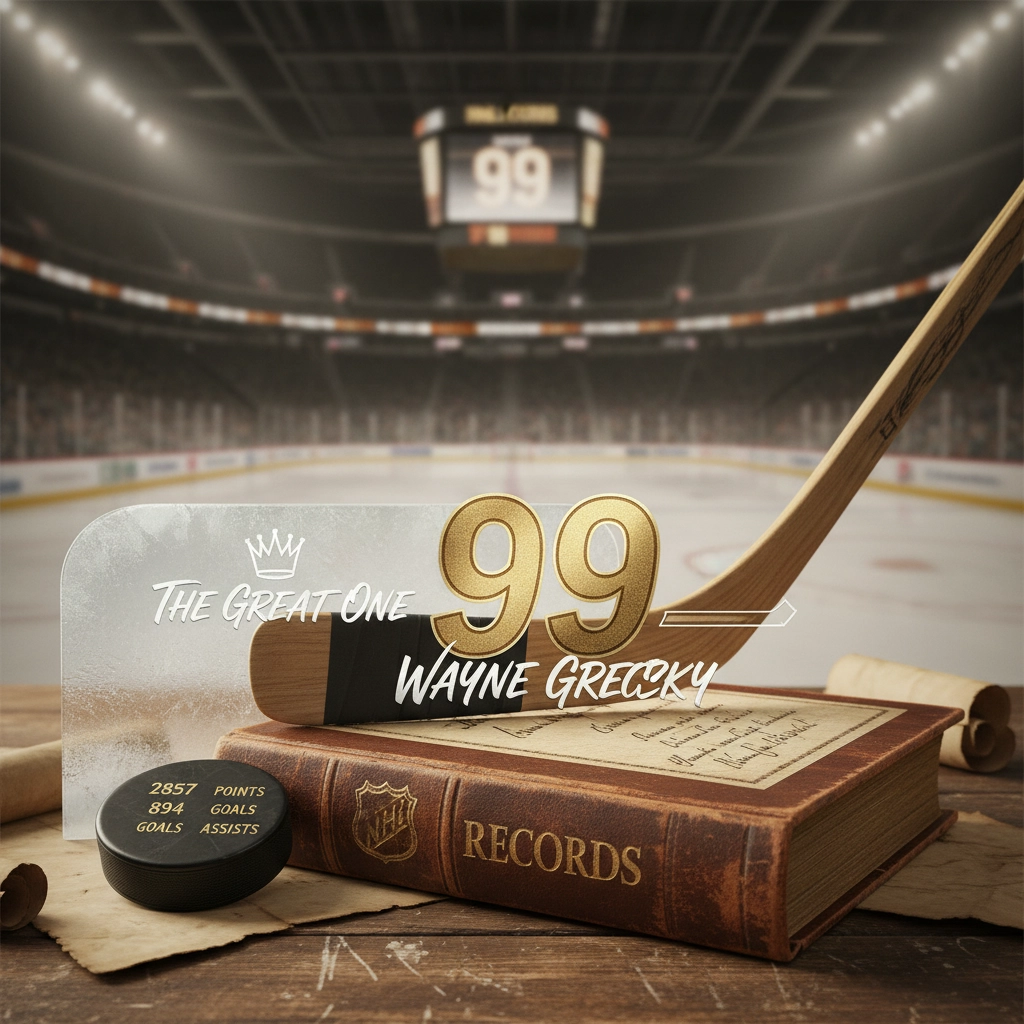
What makes Wayne Gretzky’s records still relevant to you
You may have heard that Wayne Gretzky is “the Great One,” but that nickname becomes meaningful when you look at the numbers he set. Gretzky’s records aren’t just trivia; they define how dominant he was during his career and give you a way to compare eras, players, and the evolution of the game. This section gives you the context you need so the records you’ll read about later make sense.
To understand why the records matter, keep three simple ideas in mind:
- Volume: Gretzky produced huge totals over many seasons, so some records are about career accumulation.
- Efficiency: Some records show how often he scored or assisted relative to games played — a measure of consistency.
- Single-season spikes: Certain records are about one extraordinary season that still stands out decades later.
How Gretzky set early records and what those numbers mean for you
When you first look at Gretzky’s record book, you’ll see categories like goals, assists, and points. Points are simply goals plus assists, so if you want one number to reflect overall offensive contribution, focus on points. Here are a few early-career records and how you should read them:
- Rookie and early-career scoring: In his first full seasons, Gretzky posted point totals far above average. That tells you not just that he was talented, but that he adjusted to the NHL quicker and more completely than most top prospects.
- Assist totals: Gretzky was famous for assists — he saw plays before others did. A high assist count means you were the playmaker creating scoring chances, not just finishing them.
- Consecutive high-output seasons: Look beyond a single year. When you see multiple seasons with exceptional totals, you can infer durability and sustained elite performance.
Simple comparisons to help the numbers click
If you want a quick mental benchmark, compare Gretzky’s seasons to a typical top scorer’s season. For example, a modern 100-point season is excellent; Gretzky made 200+ point seasons look possible. That contrast highlights both the magnitude of his peak seasons and how unique his style was.
Also note the era context: scoring levels, rules, and goaltending styles change over time. When you see a record like “most points in a season,” don’t just memorize the figure — ask how it compares to league averages that year. That will help you appreciate why the numbers were so extraordinary.
Now that you understand the basic categories and why early-career records are important, you’re ready to explore his most jaw-dropping single-season and career records in detail in the next section.
Single-season records that still boggle the mind
Some of Gretzky’s single-season numbers look like they came from a different sport. Two stand out because they change how you think about what’s possible in one year: his single-season points mark and his single-season goal mark. Those aren’t just big; they’re in a different ballpark from what most elite players today produce.
Why these single-season marks are so striking:
– They combine volume and efficiency. A season with 200+ points or 90+ goals requires both extraordinary game-by-game production and a full season of games. Missing time quickly kills the chance to reach those totals.
– They shattered contemporaneous league averages. When Gretzky set those marks, the rest of the league was scoring far less — which makes his totals look even more like outliers than they already are.
– They rewrote the “ceiling” for individual scoring. Before Gretzky, the notion of a 200-point season or a 90-goal campaign was theoretical; afterward, it became a benchmark for what a generational offensive season could look like.
How to read them as a fan: don’t just memorize the numbers. Look at the rate behind them — how many points per game, how many shots, how many assists contributed to goals — and contrast that with modern top scorers. A 100-point season today is elite; Gretzky’s single-season highs make that look like a very good, but not unparalleled, year. That gap is the key to understanding his dominance.
Career totals: the mountain nobody has climbed
Career records are about accumulation and longevity. Gretzky’s career totals sit at the top because he combined peak scoring with durability over many seasons. There are three career categories that tell the complete story: career points, career assists, and career goals. Together they show not just talent but sustained excellence.
Why career records are a different challenge:
– They reward consistency. One massive season helps, but to reach career records you need elite production for a long time.
– They require health and role stability. Gretzky stayed as the central playmaker on competitive teams for years, which kept his opportunity to produce high totals steady.
– They compound advantage. High assists feed high point totals, and being on teams that generate chances amplifies counting stats.
A useful mental shortcut: think of Gretzky’s career as nearly two points per game, season after season. That rate, kept up over a long career, explains how his totals ended up so far ahead of everyone else. For a modern comparison, even the best scorers today who average a point per game still fall well short of his lifetime numbers.
Why some records are more likely to stand forever
Not all records are equally defendable. Single-season spikes can happen again under the right circumstances; career totals are much harder to reach because they require both peak performance and longevity. Several structural changes in the NHL make Gretzky’s biggest numbers especially durable:
– Lower league scoring today: defensive systems, goaltending techniques, and equipment improvements generally suppress scoring compared with Gretzky’s peak years.
– Parity and player movement: roster depth and salary dynamics spread scoring more evenly across teams.
– Different player usage: modern coaches rotate forwards more and emphasize specialty roles, reducing the continuous ice time a single star gets.
So when you see a number that looks untouchable, ask whether it’s untouchable because it was an outlier season or because it required a career-long combination of skill, health, and context. That distinction helps you appreciate why some of Gretzky’s marks will likely remain benchmarks for generations.
Legacy beyond the numbers
Records are tidy ways to measure achievement, but Gretzky’s greatest impact is how those records changed expectations and conversations about hockey. They pushed players, coaches, and fans to rethink what elite play looks like and turned statistical milestones into part of the sport’s culture. If you want to explore Gretzky’s official career summary and primary stats, see Wayne Gretzky on NHL.com.
Ultimately, the value of Gretzky’s records isn’t only in whether they fall. It’s in how they frame debates about skill, context, and the evolution of the game — and how they inspire new generations to chase excellence.
Frequently Asked Questions
Which of Gretzky’s records is considered the most unbreakable?
Many analysts point to his career points total as the most secure because it combines peak scoring and long-term durability. Modern scoring environments, player usage, and career lengths make surpassing that accumulation extremely unlikely.
Could rule or style changes ever make his single-season marks more attainable?
Yes — major shifts that increase league scoring (for example, larger nets, different officiating, or systemic offensive changes) could make spike seasons more common. But such changes would need to be large and sustained to reproduce the specific combination of volume and efficiency Gretzky achieved.
How should fans compare Gretzky’s era to today when judging records?
Compare using rates (points per game, assists per game) and context (league scoring averages, goaltending standards, and team systems). That helps separate player skill from era effects and shows why some records are era-dependent while others reflect individual dominance beyond changing conditions.