






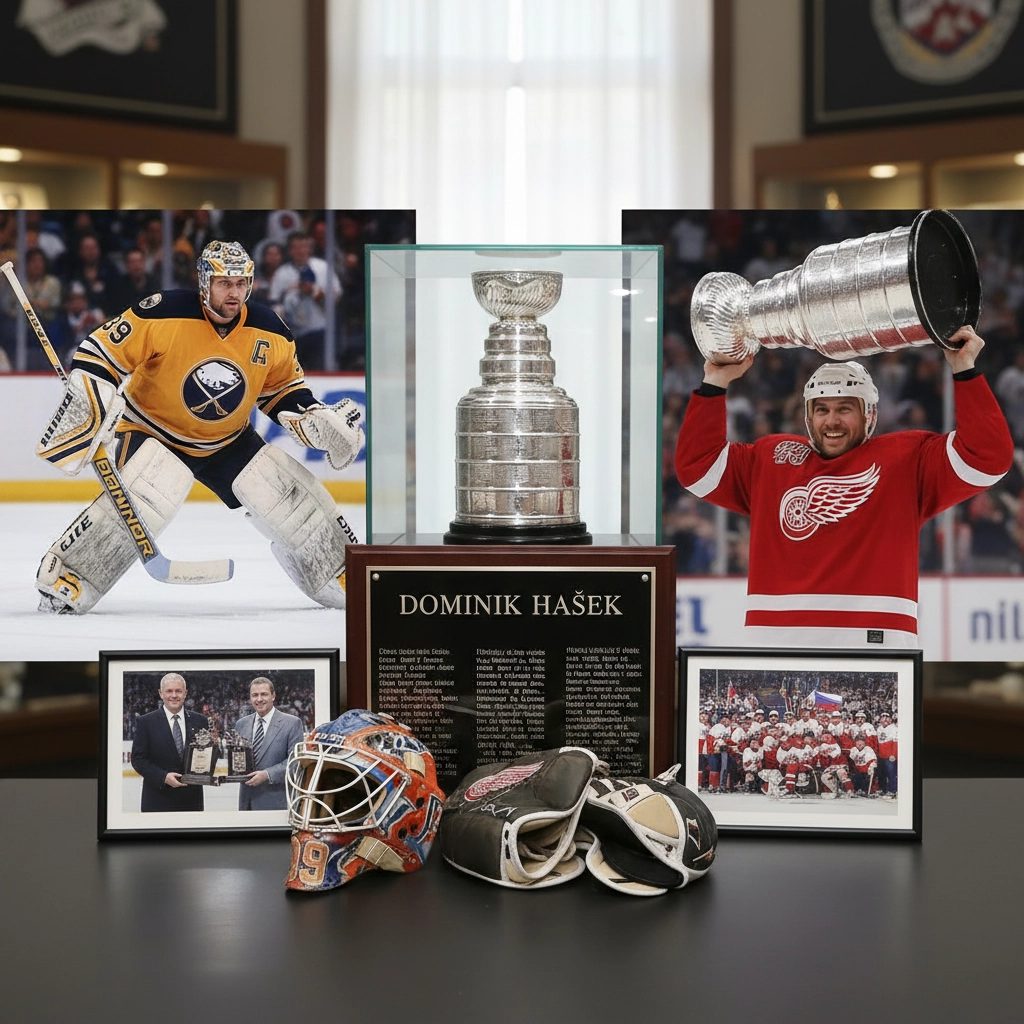
Why Dominik Hašek stands out and what you should know first
When you study modern goaltending, Dominik Hašek is a figure you can’t ignore. Known as “The Dominator,” Hašek redefined the position with unorthodox technique, reflexes that seemed supernatural, and an ability to perform under extreme pressure. To understand his Hall of Fame moments, you first need a clear picture of how his early path, playing style, and breakthrough seasons set the stage for those signature achievements.
From Czechoslovakia to the NHL: Hašek’s early trajectory
You’ll find that Hašek’s career began far from the bright lights of the NHL. Born and trained in Czechoslovakia, he developed a unique blend of positional sense and improvisation that was fostered by the European coaching environments of the 1980s. When you trace his move to North America, the transition wasn’t immediate stardom — it was a steady climb.
- Domestic development: In the Czechoslovak leagues, Hašek honed his reflexes and mental resilience, learning to read shooters and rely on anticipation.
- NHL entry and adjustments: After joining the Chicago Blackhawks and later the Buffalo Sabres, he adapted his game to the smaller rink and faster pace in the NHL, which required quicker lateral movement and more direct puck battles.
- Early recognition: Even before major awards, you could see flashes of brilliance — highlight-reel saves and a competitive grit that signaled his future impact.
How his playing style led to early accolades and attention
To appreciate Hašek’s Hall of Fame induction, you should recognize how his unconventional technique became an asset rather than a liability. Unlike the textbook butterfly or stand-up styles, Hašek mixed scrambles, splits, and sprawling saves with surgical puck-tracking. This unpredictability frustrated shooters and forced opponents to alter their approaches.
During his breakout years with the Buffalo Sabres, Hašek translated that style into concrete results. You can point to a sequence of seasons in the 1990s when his save percentage and goals-against average led the league, earning him Vezina Trophy honors and creating a reputation for stealing games singlehandedly. Key characteristics that defined his early success included:
- Extraordinary reflexes that produced a high volume of highlight saves
- An ability to read play developments and challenge shooters at just the right moment
- Mental toughness in playoff atmospheres and international competitions
Understanding these early chapters helps you see why Hašek’s later Hall of Fame moments — Olympic gold, multiple Vezina and Hart trophies, and defining playoff performances — carried so much weight. In the next section, you’ll dive into those signature moments and the specific games and series that sealed his legacy.
Statistical dominance and the award-strewn seasons that built his Hall of Fame résumé
When you look at Hašek’s trophy case, the numbers tell a clear story: he didn’t just win awards — he rewrote expectations for what a goalie could do on a nightly basis. Over the course of his prime he collected an extraordinary run of Vezina Trophies and back-to-back Hart Trophies, a rare feat for a position normally overshadowed by forwards. Those honors weren’t handed out for popularity; they tracked seasons in which Hašek led the league in the categories that matter most for a goalie and, more importantly, carried teams that otherwise lacked superstar scoring.
What made those award seasons memorable wasn’t only the hardware but how he won them. You saw stretches of games in which opposing teams routinely tallied dozens of shots only to be frustrated by impossible stops, and hauls of highlight-reel saves that turned potential losses into clutch points. Scouts and analysts took note, too: save percentage and goals-against average began to matter more in award conversations because of his influence. For your understanding of his Hall of Fame case, view those seasons as a sustained period in which Hašek changed the way evaluators measured goaltending value.
Nagano 1998 and the Olympic moment that made him a national icon
There’s a difference between being an NHL legend and being a national hero; Hašek achieved both at the 1998 Nagano Olympics. When you think of his long list of career highlights, the Olympic gold stands out because it transcended club loyalties and made him the face of Czech hockey around the world. In a short tournament where every game is sudden and every save can decide a nation’s fate, he delivered the kind of performance that doesn’t just win medals — it creates a collective memory for millions of fans.
Hašek’s play in Nagano emphasized the same traits that defined his NHL peak: split-second reflexes, unshakable focus, and an uncanny sense of timing that frustrated elite shooters. That Olympic run didn’t just add a trophy to the shelf; it cemented his international stature and made clear that his style and mentality translated to hockey’s biggest stages. For many observers, the gold medal remains one of the clearest illustrations of why his Hall of Fame induction was inevitable.
Playoff theatre, the 1999 Finals, and why his legacy isn’t measured only by a Stanley Cup
Playoff moments are where legends are forged, and Hašek created countless of them — spectacular saves in elimination games, entire series where his goaltending carried the Buffalo Sabres beyond what their roster suggested possible. You can point to individual games in which he singlehandedly tipped series outcomes and to postseason runs that are forever associated with his name.
One of the most discussed chapters is the 1999 Stanley Cup Final. The series finale and its controversial ending remain part of NHL lore, and while the Cup ultimately eluded Hašek and Buffalo, his performances throughout the playoffs only amplified respect for his craft. That he never hoisted the Stanley Cup is a notable gap, but it hasn’t diminished how hockey historians and fans evaluate his career. Instead, those playoff theatre moments — the saves that made headlines, the nights he seemed unbeatable — are woven into the narrative that carried him into the Hockey Hall of Fame and into the broader conversation about the greatest goaltenders of all time.
Hall of Fame induction and lasting influence
Dominik Hašek’s election to the Hockey Hall of Fame in 2014 was the formal recognition of a career that reshaped goaltending expectations. Beyond trophies and highlight saves, his impact is visible in how coaches teach positioning, how scouts value save percentage, and how analysts frame a goaltender’s value to a roster. Young goalies still study his footwork, patience and timing; analysts still cite his seasons when arguing for changes in award and evaluation criteria.
Legacy beyond the crease
Hašek left the game in a way few elite athletes do: as a figure whose influence extends into technique, analytics and national identity. He remains a benchmark for elite, game-altering goaltending — not just for the statistics he posted but for the way his performances altered expectations for what a single player at the net can accomplish. For more on his career and honors, see his Hockey Hall of Fame profile.
Frequently Asked Questions
Was Dominik Hašek ever inducted into the Hockey Hall of Fame?
Yes. Dominik Hašek was inducted into the Hockey Hall of Fame in 2014 in recognition of his exceptional career and influence on the position.
Why is Hašek often called one of the greatest goalies despite not winning a Stanley Cup?
Hašek’s reputation comes from sustained individual dominance, multiple Vezina and Hart Trophies, clutch playoff performances, and international success (including Olympic gold in 1998). Those achievements and his transformative playing style cemented his place among the greats even without a Stanley Cup.
How did Hašek’s performance at the 1998 Nagano Olympics affect his legacy?
His play in Nagano elevated him to national hero status in the Czech Republic and demonstrated that his unorthodox style translated on international stages, reinforcing perceptions of his competitiveness and clutch ability beyond the NHL.