






How Dominik Hašek changed the mental blueprint for elite goaltending
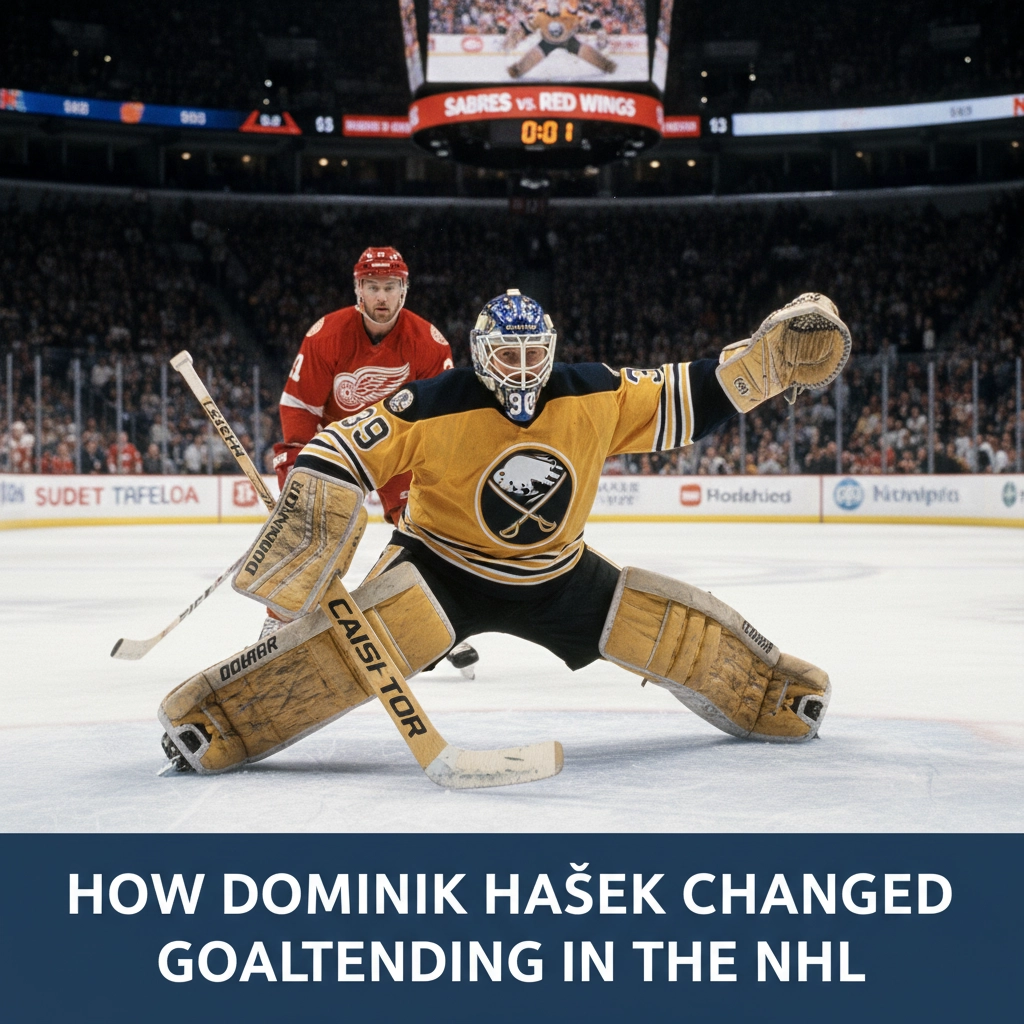
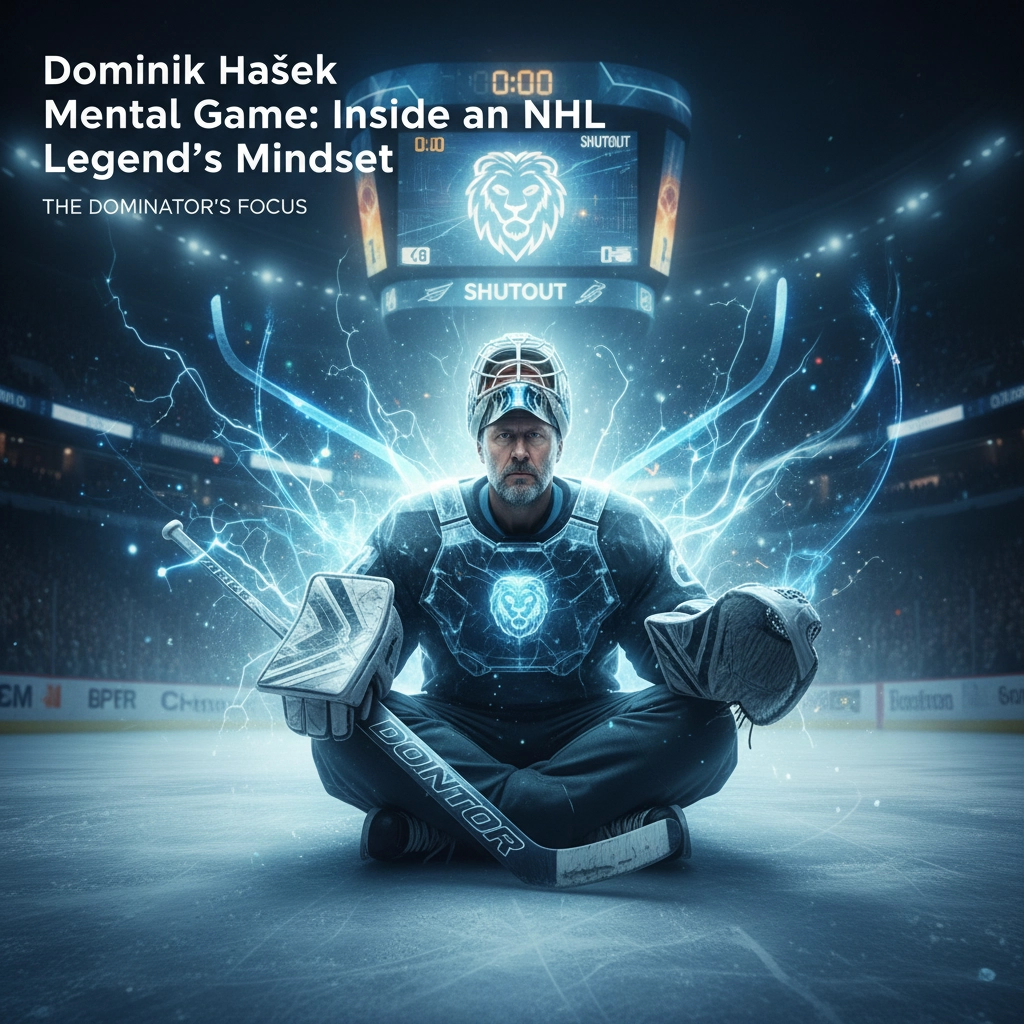
You probably know Dominik Hašek as “The Dominator” — the Czech-born goaltender whose unpredictable saves and string of Vezina Trophies rewrote expectations for NHL netminders. What set Hašek apart was not only his physical flexibility and reflexes, but a mental setup that let him thrive in chaotic, high-pressure moments. When you study his career, you see a mindset built around improvisation, relentless focus, and a refusal to be defined by conventional technique.
As you read on, consider how his approach maps to performance principles you can apply: preparation that fuels confidence, routines that steady nerves, and a mental flexibility that turns uncertainty into advantage. Those themes underpinned Hašek’s peak seasons with the Buffalo Sabres and later in Detroit, where he consistently turned improbable shot attempts into highlight-reel saves.
What you can learn from Hašek’s mental preparation and game focus
Preparation that built confidence
Hašek’s preparation extended beyond physical training. You’ll notice three practical patterns that supported his calm under pressure:
- Detailed visual study: He watched shooters, tendencies, and game flow closely. When you study opponents, you reduce the unknowns and create mental cues to rely on during fast plays.
- Simulation and repetition: He repeatedly practiced scenarios that could go wrong — late rebounds, odd-angle shots, and scramble plays. For you, drilling realistic scenarios builds neural patterns that feel automatic in games.
- Mindset of self-reliance: Hašek trusted his instincts and was willing to improvise. You can cultivate the same trust by rehearsing decision-making under fatigue or time pressure.
Routines and small rituals that stabilized performance
Routines are anchors. Hašek used consistent pregame habits and in-game rituals to keep attention on the moment instead of on outcomes. Some elements you can adopt:
- Establish a short pregame checklist that cues physical and mental readiness (warm-up pattern, visualization of saves, breathing rhythm).
- Use brief reset rituals between plays — controlled breaths, a single visual target, or a quick tactile cue — to clear mistakes and return focus to the next puck.
- Keep your inner dialogue constructive. Hašek’s confidence came from preparation, not from ignoring mistakes; he corrected quickly and didn’t ruminate.
These habits—study, simulation, and ritual—created the conditions for Hašek’s famed improvisation and resilience. In the next section, you’ll examine specific in-game strategies and cognitive techniques Hašek used to read shooters, manage momentum swings, and convert pressure into advantage.
How Hašek read shooters and anticipated danger
One of Hašek’s most underrated skills was his ability to decode an opponent before the puck left the stick. He didn’t rely solely on reflexes; he used pattern recognition and micro-signals — the angle of a stick blade, a shooter’s hip alignment, the way weight shifted — to bias his expectations. That allowed him to position slightly off the textbook angle and react early when a shooter committed to a look or a release.
Practical lessons you can borrow:
- Train perceptual cues: During practice, isolate the visual signals that precede a shot. Have coaches change only the stick position or upper-body angle and force you to call the likely shot type before it’s taken. This sharpens anticipatory vision.
- Use situational templates: Hašek mentally cataloged common attack patterns (e.g., one-timer from the left circle on a power play) so he arrived at the expected spot earlier. Build mental templates for the situations you face most often; those templates let you allocate attention efficiently under time pressure.
- Bias, don’t leap: Anticipation is probabilistic. Hašek inclined toward the most likely outcome while staying loose enough to recover if he guessed wrong. Practice small, reversible commitments — a half-step or a deeper crouch — that buy time without overcommitting.
Managing momentum swings: controlling emotion and tempo
Momentum in hockey can flip in a heartbeat, and Hašek treated emotional swings like an opponent to be managed. Rather than trying to eliminate emotional response, he channeled it. After a bad goal he’d use a tight reset — a breath, a visual cue, a deliberate stance — to break the chain of negative thought and refocus on the next play. After a big save he would narrow focus to the fundamentals to avoid celebratory lapses.
How to apply that approach off the rink (or in other pressure sports):
- Micro-resets between plays: Adopt a one- to three-second ritual (deep breath, finger tap, fixed gaze) that signals “next play.” The ritual interrupts rumination and establishes consistency.
- Chunk the game: Break the contest into micro-goals — one save, one shift, one period. This reduces the perceived scope of pressure and makes recovery from setbacks concrete and actionable.
- Regulate arousal strategically: Use breathwork or movement to up- or down-shift energy. Hašek could tighten focus when the game slowed or ‘wake up’ his reactions late in periods by increasing intensity in warm-up routines.
Turning chaos into advantage: improvisation as a deliberate technique
Hašek’s unorthodox moves weren’t random; they were practiced liberties. By rehearsing non-standard saves and scramble situations, he developed a library of reliable improvisations that he could deploy without overthinking. Improvisation became a tool to create uncertainty for shooters — they couldn’t predict how he’d respond, and that hesitation gave him an edge.
Ways to cultivate useful improvisation:
- Drill controlled chaos: Include unpredictable elements in practice — deflections off mannequins, multiple attackers, or random bounces — so improvisation becomes a trained response, not panicked reaction.
- Limit options: Give yourself two or three safe improvisational moves to choose from in common scenarios. That reduces cognitive load while preserving the element of surprise.
- Reframe mistakes: See attempted improvisations that fail as data, not proof of incompetence. Hašek experimented constantly; his success rate rose because he learned from the misses and refined his repertoire.
The mental edge that defines Hašek
Dominik Hašek’s career reminds us that elite performance often comes from how a player thinks as much as how they move. His habits — reading micro-signals, using tight rituals to reset, and rehearsing controlled improvisation — turned volatility into an asset. Those are not one-time tricks but repeatable practices you can adopt: train your eyes for cues, build small rituals to manage momentum, and make improvisation a practiced option rather than a panic response.
If you want to explore Hašek’s life and career further, a solid starting point is his public biography: Dominik Hašek biography. Study the details, then pick one mental habit from this article to test in practice — iterate, measure, and refine. Over time those small changes compound into a distinct competitive edge.
Frequently Asked Questions
How did Hašek consistently anticipate where shooters would aim?
Hašek combined pattern recognition with attention to micro-signals — stick position, body alignment, and weight shift — and used situational templates for common plays. Rather than guessing, he biased his positioning toward the most probable outcome while keeping his body ready to recover if the shooter did something different.
Can non-goalies apply Hašek’s mental techniques?
Yes. The core practices — training perceptual cues, employing micro-resets between actions, chunking tasks into smaller goals, and rehearsing controlled improvisations — translate to many fields. Professionals in team sports, business, or any high-pressure setting can adopt these habits to improve decision-making and resilience.
Was Hašek’s improvisation just luck or a trained skill?
It was trained. Hašek deliberately practiced non-standard saves and chaotic scenarios so that improvisation became a reliable response. He limited his repertoire to a few practiced options, which reduced cognitive load and made his unconventional moves effective rather than purely spontaneous.