





Why Dominik Hašek’s Saves Are a Masterclass in Unconventional Goalkeeping
Dominik Hašek is one of hockey’s most electrifying and unpredictable goaltenders. His saves combine flexibility, anticipation, and improvisation: a mix of split-second reads, odd body positioning, and equipment use that turned routine plays into highlight-reel stops and clutch moments into career-defining frames.
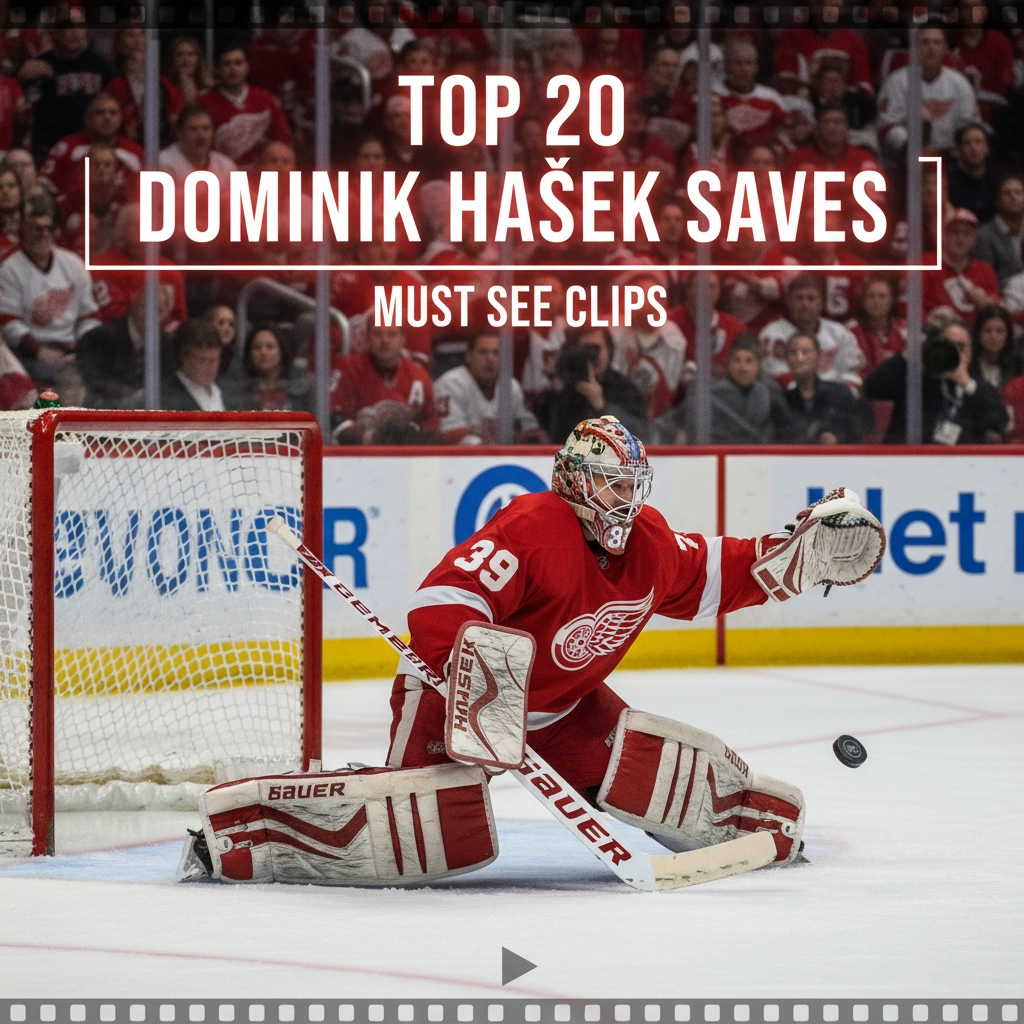
This feature gives context on what makes his style distinct, where his iconic saves occurred, and the criteria used to pick the top 20 clips. Knowing the hallmarks — body positioning, glove and stick work, rebound control, and timing — will help you see why his approach stands apart from conventional technique.
What to Look For Before You Watch the Top 20 Clips
Recognizing the hallmarks of Hašek’s technique
Before the clips, focus on recurring traits:
- Extreme flexibility and willingness to sprawl into unconventional positions.
- Use of nontraditional surfaces (skates, chest, stick) to block shots.
- Controlled or intentionally directed rebounds rather than reflexive freezes.
- Elite puck-tracking through traffic and strong composure in high-pressure moments.
How these 20 clips were chosen and what they represent
The selection balances technical innovation and context: historical significance, mechanical uniqueness, and visual impact across his Buffalo Sabres prime, international play, and late-career moments. As you watch, note whether a stop is primarily technical (angle, rebound control) or situational (penalty kill, breakaway), and how that shapes the decision he makes.
Next: the countdown of the first ten saves that showcase Hašek’s tactical adaptability and playoff pedigree.
Top 20 Clips — Nos. 20 to 11: Tactical Improvisation in Action
- No. 20 — The Two-on-One Acrobat: Abandons a square-up, drops low, and uses a skate blade to nick a trailing pass — timing over traditional positioning.
- No. 19 — Glove Through the Screen: Tracks a late, high release through bodies and snaps the glove up to clamp the puck with minimal rebound.
- No. 18 — Crease Scramble Seal: Contorts to smother a bouncing puck using chest and inner skate, creating a multi-surface barrier in traffic.
- No. 17 — The Retreating Toe Save: Slides back on a breakaway and kicks the pad toe into a low backhand, occupying the dangerous angle unconventionally.
- No. 16 — Penalty-Shot Stunner: Uses subtle stutter and baiting to manipulate a shooter, then explodes laterally to deny a deke.
- No. 15 — Stick-Poke Turned Save: Disrupts with the stick, immediately corrals a ricochet with the pad — stick and skate acting as one defensive layer.
- No. 14 — Behind-the-Net Recovery: Foils a wraparound with a foot-scoop and precise spatial awareness, sealing where the puck might go.
- No. 13 — Screened Point Blast Stop: Absorbs a blue-line rocket with hip-splay and chest, directing the rebound to a safe corner.
- No. 12 — One-Handed Blocker Reaction: Adjusts to a mid-flight deflection with a single-handed blocker knock, then captures the follow-up.
- No. 11 — The Clutch Last-Second Denial: An improvisational paddle-save on a final-second attempt that shifts momentum instantly.
Recurring Themes in These First Ten Clips — What Makes Them Educational
Frame-by-frame, a few principles recur. Improvisation: Hašek frequently uses unconventional body parts to stop pucks shooters don’t expect. Angle management: even when out of textbook position, he often removes the shooter’s target with a precise extension. Rebound philosophy: he prefers directing danger away from high-traffic areas or smothering it with his body. Visual discipline: his head and eyes track the puck through clutter. Psychological play: baiting and tempo control force shooters into rushed decisions. Those micro-decisions — pad vs. glove, smother vs. redirect, small skate adjustments — are coaching gold.
Top 10 Clips — Nos. 10 to 1: Masterclass Moments
- No. 10 — The Double-Stop Reflex: Absorbs a one-timer and instantly pivots to deny a follow-up tip — chaos controlled with economy of motion.
- No. 9 — The Backhand Mirror: Mirrors a close-range backhand with a glove-to-pad contortion that relies on timing over reach.
- No. 8 — The Spin-and-Seal: Times a lateral push against a spinning attacker and seals the post with a skate sweep despite blocked sightlines.
- No. 7 — The Post-Flip Escape: Front-post kick-and-flip to corral a dangerous rebound, neutralizing a second chance with a small, precise movement.
- No. 6 — The Stick-Channel Save: Channels a deflected puck with stick and blocker combo to direct it out of play and end a scramble.
- No. 5 — The Deke-Through-Gloves: Patient glove read and relaxed closure swallow a deke destined for the top corner — delay and commitment in perfect balance.
- No. 4 — The Mid-Game Momentum Kill: Lunges a paddle to shut a cross-crease attempt, forcing a turnover that shifts the game’s frame.
- No. 3 — The Tumble-and-Track: Recovers mid-fall to track and smother a loose puck with an outstretched skate, turning chaos into control.
- No. 2 — The Shootout Houdini: Combines subtle feints with explosive lateral timing to neutralize a veteran sniper’s signature move under shootout pressure.
- No. 1 — The Iconic Full-Extension Stop: A full-extension deny into the corner using every piece of equipment — unpredictable, fearless, and utterly effective.
Final Thoughts on Hašek’s Impact
Watching these twenty stops back-to-back reveals a mindset as much as a method: instinct married to calculated risk and fierce competitiveness. Hašek’s work remains instructive because it shows how personality and technique can coexist at an elite level. To study him, start with an authoritative highlights reel — see Dominik Hašek highlights at NHL.com Dominik Hašek highlights at NHL.com — and watch slowly; the real lessons are in the micro-decisions.
Frequently Asked Questions
Which of these saves is most often cited by players and coaches?
Coaches favor saves demonstrating rebound control and angle manipulation — plays where Hašek redirects danger to low-traffic areas or seals the crease; those translate best to practice.
Are these clips available in a single compilation for study?
Yes. Official league or team archives are the most reliable; fan-made compilations often add slow-motion breakdowns useful for frame-by-frame analysis.
Can modern goalies replicate Hašek’s style safely in today’s game?
Some elements — anticipation, puck-tracking, improvisation — are timeless. But modern equipment and coaching emphasize positional consistency and injury prevention, so contemporary goalies blend Hašek-inspired improvisation with safer, systematic technique.