
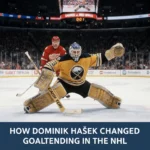




Why Dominik Hašek’s Goaltending Still Demands Your Attention
You may have seen highlight reels of Dominik Hašek making saves that looked more like improvisational theater than textbook goaltending. Yet those same improvisations won him games, MVP awards, and a reputation as one of the most dominant goalies in hockey history. In this section you’ll get context for why Hašek’s unorthodox approach matters: it challenged conventional coaching, redefined technique expectations, and delivered results when execution counted most.
How an “Unusual” Style Became a Competitive Edge
When you study Hašek, you’re not only watching a talented athlete — you’re watching a strategist who used body mechanics, anticipation, and psychological pressure as tools. His flexibility let him make saves that full-time “textbook” keepers couldn’t; his willingness to collapse, sprawl, or spin created more stopping options than fixed-position systems. Coaches initially criticized these choices because they broke standard positional rules, but opponents struggled to shoot against a goalie who routinely erased high-percentage chances with creativity.
From Czechoslovakia to the NHL: Formative Techniques That Shaped a Champion
To understand Hašek’s later cup-winning form, you have to trace the seeds of his approach back to his early years. You’ll learn how his upbringing, training environment, and early professional experience in Czechoslovakia encouraged experimentation rather than strict adherence to one style.
Early Influences and Training Habits That Encouraged Flexibility
In his formative years you would have noticed Hašek practicing unconventional drills: extra flexibility work, reactive reflex training, and situational scrambles instead of rigid stance repetition. Those habits shaped instincts that later became his signature. Instead of always retreating square to the shooter, he often adjusted his depth and angle in unconventional ways — sacrificing textbook posture for better coverage of specific lanes and rebound control.
- Emphasis on flexibility: frequent stretching and unusual warm-ups gave him extraordinary range of motion.
- Reactive drills over pattern drills: practicing irregular puck rakes and scrambles prepared him for chaotic game moments.
- Comfort with improvisation: early coaches tolerated creative saves, letting him refine what worked in live play.
Early Professional Examples You Can Study
Even before he became an NHL icon, you could spot recurring elements: pin-point puck-tracking, use of the pads to smother rebounds, and a willingness to challenge shooters with awkward angles. These traits first produced standout performances in European leagues and later translated to NHL success once he adapted to a faster, more physical environment.
As you move into the next section, you’ll break down specific unorthodox techniques Hašek used in high-pressure playoff moments and how each one directly contributed to championship wins.
Signature Unorthodox Saves You Can Study Frame-by-Frame
When you slow Hašek’s tape down, patterns emerge from what at first looks random. Those “flailing” moments weren’t blind luck — they were repeatable reactions honed by years of drilling unpredictable scenarios. Breakdowns of his most common non‑textbook saves reveal a consistent toolbox of tactics that solved specific problems inside the crease.
- The Sprawl-and-Smother: Rather than remaining upright to track a low, screened shot, Hašek frequently dropped laterally, spreading pads and using the torso and glove to smother the puck. The move sacrifices classical positioning for rebound control — the puck is dead under him rather than turning into a juicy chaos opportunity.
- The Contortionist Pad Play: Flexibility let him angle pads into lanes other goalies left open. Instead of a rigid butterfly, he would twist a knee or ankle to form an irregular block that matched the shooter’s sightline in real time, often turning would‑be five‑hole chances into harmless ricochets.
- The Aggressive Poke and Skate Check: Hašek wasn’t content to be a passive net; he used poke checks and even skate blades to interrupt plays outside the paint. The timing was extreme — an offensive player committed, the puck was touched, and Hašek’s lower body became an active defensive tool.
- The Backspin and Recover: On odd-angle shots or scrambles, he would sometimes roll or fall in ways that repositioned his hands to cover rising rebounds. These recoveries look chaotic but consistently reclaimed dangerous rebounds and bought time for defensemen to clear.
These techniques are easier to appreciate when you watch them repeatedly. In practice they all addressed one recurring problem: how to stop shots that standard position and movement didn’t account for. The consistent thread is utility — each “weird” motion solved a predictable game problem (screens, close-in scramble, odd-angle wrister) in a way traditional technique didn’t.
Playoff Case Studies: How Unpredictability Tilted Tight Series
Unorthodoxy matters most in playoffs because margin for error shrinks and psychological pressure magnifies. Hašek’s style produced tangible effects beyond the highlight reel: it changed shooter behavior, shaped opponent game plans, and altered momentum at critical junctures. Look at how his techniques played out in playoff contexts.
During tight elimination games and overtime periods, shooters repeatedly faced two choices — force a perfect shot against a malleable, improvising goalie or look for lower‑percentage plays. Hašek made the perfect shot a moving target. Opponents who practiced set plays found those plays faltered once Hašek introduced variability: he sprawled where a textbook goalie would stay upright; he reached for pucks defenders expected to clear; he turned rebounds into puck‑stops by engulfing them under his body.
Consider these recurring playoff effects:
- Lower shot accuracy: Shooters hesitated, elevated or rushed, producing more shots that missed the net or produced weak rebounds.
- Momentum swings: A single acrobatic save in a power play or late‑period push could demoralize attackers and embolden his own team — playoff hockey rewards those kinds of momentum shifts.
- Strategic adjustments by opponents: Teams began taking extra passes instead of shooting from suboptimal angles, which slowed their offense and played into Hašek’s preference for controlled, predictable shooting lanes.
Hašek’s playoff legacy isn’t merely that he made miraculous stops; it’s that he forced opponents to alter their most practiced strategies. In series where goals were scarce, those small alterations — fewer clean shots, more hurried attempts, more second guesses — added up. When a goalie’s unpredictability becomes an opponent’s problem, wins and, ultimately, championships become likelier outcomes.
Enduring Impact on the Crease
Dominik Hašek’s career did more than win games — it widened the palette of what goaltending could look like. His legacy is not a rigid playbook to copy stroke for stroke, but a permission slip: be inventive, prioritize results over aesthetics, and drill unpredictable scenarios until improvisation becomes repeatable. Coaches, analysts, and curious fans still return to his footage to rethink positioning, recovery and rebound management through a lens that prizes problem‑solving over orthodoxy.
For any goalie or coach, the practical takeaway is simple: study the why behind the oddities. When a save looks chaotic, break it down into goal, constraint and movement — then experiment in practice with controlled variations. If you want a starting point for deeper research, see Hašek’s official biography and career highlights at Hašek’s Hall of Fame biography.
Ultimately, Hašek’s greatest gift to the sport is the reminder that excellence can be idiosyncratic. Respect fundamentals, but leave room for creativity — and when the game tightens and instincts must take over, let the work you put in off the ice give your improvisation purpose and reliability.
Frequently Asked Questions
How did Hašek’s unorthodox style change shooters’ behavior in playoff series?
His variability forced shooters to hesitate, alter release points, or take extra passes. That hesitation reduced shot accuracy and increased rushed attempts, which in tight playoff games often translated into fewer high‑quality scoring chances for opponents.
Are Hašek’s techniques teachable to modern goaltenders?
Elements are teachable — such as rebound control, aggressive poke timing, and recovery drills — but his exact physical quirks (flexibility, instinctual timing) stem from unique attributes. Coaches can extract the underlying principles and design drills that foster similar problem‑solving skills.
Should young goalies try to imitate Hašek’s most extreme saves?
Not rigidly. Young players should prioritize sound fundamentals and safe mechanics first. Use Hašek’s footage as a study in adaptability and situational decision‑making, then selectively incorporate controlled elements that fit the goalie’s body type and coaching philosophy.