






Why Dominik Hašek still matters when you watch modern NHL goaltending
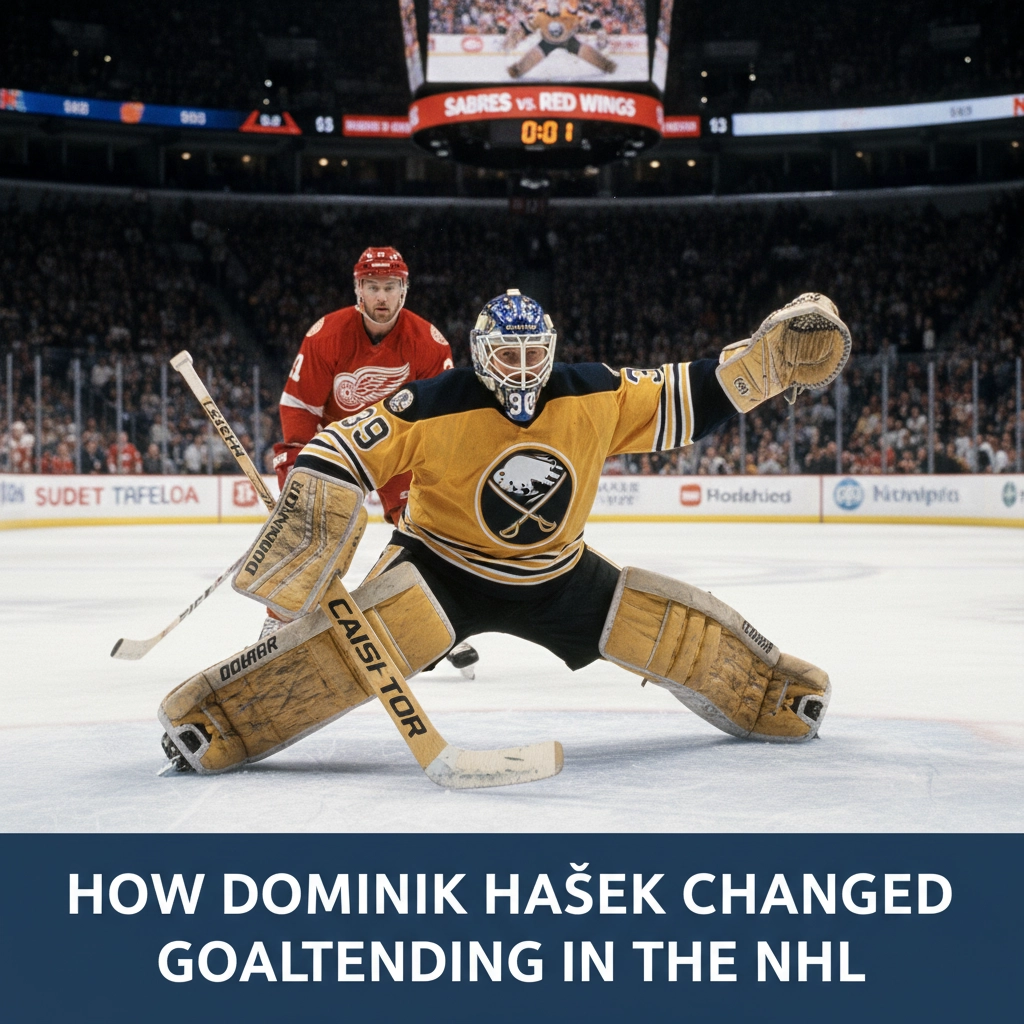
When you watch highlights of Dominik Hašek, what stands out is how unlike any other elite goalie he looks in the crease. You see split saves, awkward-looking scrambles that somehow end in zeroes on the scoreboard, and a refusal to conform to tidy technique. That unpredictability is exactly what made him a game-changer: he forced opponents to alter shooting approaches, pushed coaches to expand how they evaluated netminders, and inspired a generation to prioritize flexibility and reflex over textbook form alone.
You should understand Hašek not only as a decorated player but as a catalyst. His influence stretches from how goalies train their hips and core to how teams structure defensive coverage when a chaotic save is possible. He blurred the line between improvised desperation and repeatable skill, showing that repeatable outcomes can come from nontraditional methods.
How a nontraditional journey shaped an unconventional style
You can’t separate Hašek’s style from his background. He came to the NHL after establishing himself in European pro leagues, entering North America older and with habits already formed. That late arrival meant he didn’t have his fundamentals drilled into him by North American coaching norms as a youth; instead, you see a mosaic of Czech training and on-ice problem-solving. Early stops with NHL clubs exposed him to different coaching philosophies, but he kept adapting rather than adopting wholesale.
What this meant for you watching his career was a steady evolution: saves that seemed like improvisations became signature moves. Rather than being a liability, his unorthodox maneuvers turned into repeatable responses to certain in-game situations—tight-angle chances, chaotic rebounds, and rapid lateral plays.
Key elements of Hašek’s early technique and mindset
- Flexibility and contortion: You notice extraordinary hip and knee mobility that allowed him to cover low shots from odd angles without relying solely on the classical butterfly position.
- Reflex-driven reads: He prioritized reading puck trajectories and shooters’ tendencies in microseconds, often reacting with split-second extremity rather than pre-positioned saves.
- Puck-chase confidence: You’d see him leave the netline to smother plays or fight for rebounds in ways few goalies attempted then, altering how teams taught puck management around the crease.
- Mental resilience: Early in his career he faced skepticism; instead of changing to fit expectations, he leaned into his strengths and made opponents adapt.
Those traits didn’t emerge in isolation—you saw them reinforced by coaching adjustments, teammates’ trust, and his own relentless work on balance and hand-eye coordination. As you follow his story, the next section will examine how opposing teams, goaltending coaches, and equipment makers responded to a goalie who repeatedly made the improbable routine.
How opponents retooled shooting and game planning
Teams that faced Hašek regularly stopped treating him like a standard target and instead devised whole-game plans to force situations where his improvisations were less likely to succeed. Scouts began cataloging the small tells that preceded his split-saves and net departures — stick and pad positions, where his eyes tracked the puck, the moments he favored coming out to challenge — and schemes were built around exploiting those moments.
Practically, that meant more set plays aimed at creating headaches rather than simply generating shots. Pucks were worked into tight angles with layered traffic and second-pass options to punish a goalie who often left unusual rebound footprints. Screen-and-tip sequences increased because Hašek’s reflexes could be disrupted by obscured sightlines and deflections, while plays that forced him to commit early — cross-crease passes, lateral give-and-goes — were emphasized to take advantage of his willingness to gamble with positioning. At the same time shooters learned to target the openings that Hašek’s low, contorted saves sometimes exposed: quick high-glove or over-the-shoulder finishes became more common in direct response.
The result was a chess match: Hašek kept changing, and opposing coaches countered with layered offenses designed not just to beat the goalie once, but to neutralize the kinds of chaotic saves he made repeatable.
How goaltending coaches turned eccentric brilliance into teachable methods
Hašek forced a rethink among coaches about what could be standardized from a seemingly unruly style. Instead of insisting that every goalie look exactly the same in net, many coaches began to deconstruct Hašek’s successes into trainable components — hip mobility, split-second tracking, puck-smothering instincts — and then tailor drills to those elements.
Training rooms adopted a wider array of off-ice work: targeted hip-openers, plyometrics for lateral explosiveness, balance and proprioception drills, and hand-eye reaction training with variable cues. On-ice sessions moved beyond repetition of textbook sequences to include chaos drills designed to simulate the rebound clutter and frantic scrambles where Hašek excelled. Video study shifted, too — coaches now analyze micro-movements and shooter-goalie interactions rather than just broad technique, teaching goalies how to read shooter intent and when to convert instinct into a repeatable action.
Mentally, coaches also embraced the idea that confidence in improvisation can be coached. Structured tolerance for risk — measured and practiced — became a legitimate pathway rather than a liability to be corrected.
How equipment makers accommodated contortion and mobility
Hašek’s success highlighted a design tension: protection versus freedom of movement. Manufacturers responded by engineering gear that allowed more extreme positions without compromising safety. Materials and cut patterns evolved to create flex zones at the hips and knees, slimmer profiles that reduced drag while maintaining coverage, and lighter composites that made rapid, awkward recoveries easier.
Gloves and blockers were reshaped to favor quicker transitions from catch to push, and pads were rethought to slide reliably from odd angles without catching or impeding a goalie’s recovery. Off-ice tools mirrored these changes — balance boards, reaction-light systems, and soft-tissue recovery aids became standard equipment for crease work. The cumulative effect was to legitimize a mobility-first approach: if a goalie could twist into unconventional saves safely and repeatedly, the tools were now there to make it sustainable.
Beyond technique: the cultural shift Hašek provoked
Hašek did more than bend the rules of goaltending technique — he altered how the hockey world values creativity, resilience, and controlled risk. Young players, coaches and equipment designers alike absorbed a lesson that excellence can come from adaptation as much as from instruction. That mindset helped open doors for diverse athletic profiles in net and encouraged a healthier tolerance for experimentation at all levels of the game.
A legacy that still shapes the crease
Dominik Hašek’s impact is felt every time a goalie deviates from orthodoxy to solve an in-game problem. His career serves as a reminder that innovation often arrives wrapped in unpredictability, and that the sport’s evolution depends on both mavericks and those who translate their instincts into teachable practice. For a concise summary of his achievements and timeline, see Hašek’s NHL profile.
Frequently Asked Questions
Did Dominik Hašek invent the unorthodox “flopper” style of goaltending?
No. Unconventional saves and improvisation existed before Hašek, but he popularized and legitimized a highly flexible, contortion-driven approach at the NHL level, making it acceptable for coaches and scouts to value nontraditional athleticism in net.
How did equipment manufacturers change gear because of Hašek?
Manufacturers shifted toward designs that prioritized mobility as well as protection: more flexible cuts at hips and knees, lighter materials that didn’t compromise safety, and glove/blocker shapes that eased rapid transitions. Those changes made extreme positions less risky and more repeatable for goalies who relied on agility and twist-based saves.
Did goaltending coaching philosophies change after Hašek’s success?
Yes. Coaches began breaking down instinctive skills into trainable components (balance, reaction timing, hip mobility) and introduced chaos-based drills and video study focusing on micro-movements and shooter-goalie interactions. They also became more willing to develop a goalie’s decision-making around controlled risk rather than forcing uniform technique.