






Why Jaromír Jágr’s Goals Still Matter to You as an NHL Fan
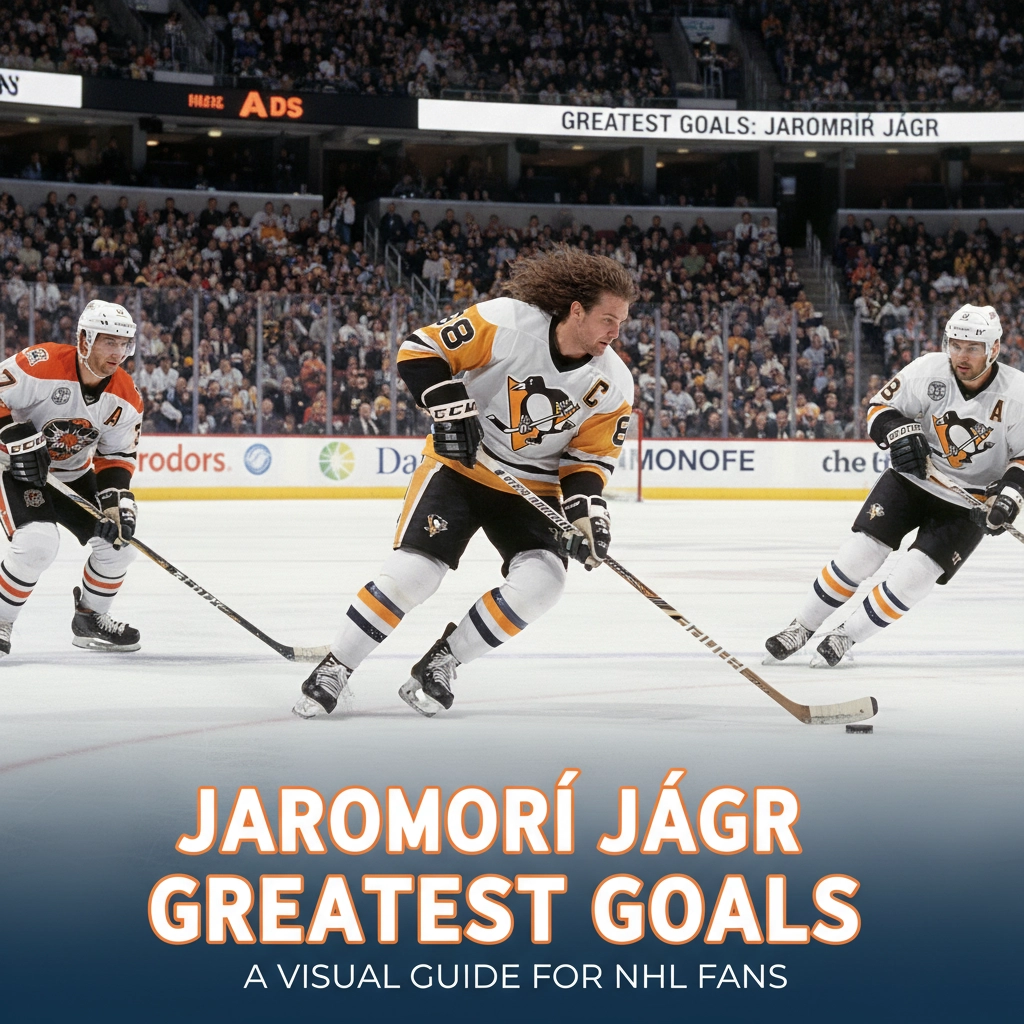
You may remember Jágr for his towering presence and trademark helmet, but what truly cements his legacy are the individual goals that revealed creativity, timing, and elite hockey IQ. In this visual guide, you’ll learn to recognize the technical details and game contexts that made specific Jágr goals timeless. Whether you’re studying playmaking, improving your eye for breakaways, or simply reliving highlights, this section places Jágr’s greatest strikes into a framework you can apply when watching modern NHL play.
Jágr’s scoring repertoire spans rapid one-timers, deft deflections, and theatrical solo efforts. Each goal tells you something about his skating, puck protection, and decision-making under pressure. You’ll see how a single motion—an angular toe-drag, a deceptive head fake, or a precise wrist shot—changes a defensive read and opens the net. By the end of this part, you’ll be prepared to follow the visual breakdowns and slow-motion analyses that come next.
Early Breakthroughs: How Jágr Began Crafting Signature Goals
To appreciate his later masterpieces, it’s helpful to trace Jágr’s early NHL years when his style crystallized. Arriving in the early 1990s, Jágr combined exceptional balance with an unusual hand position on his stick that allowed rapid release and tight puck control. You should pay attention to three consistent traits that show up in his early goals:
- Space creation: Jágr often used lateral movement to shift defenders and create shooting lanes you might otherwise miss on first viewing.
- Quick release: His shot rarely required wind-up; a compact wrist snap exploited even half-open windows in the goalie’s coverage.
- Edge work: He used subtle outside-inside edge changes to buy the fraction of a second needed to elevate the puck.
First Iconic Moments: What to Watch Frame-by-Frame
When you watch Jágr’s first iconic goals, focus on three visual cues. First, note how he reads the defender’s stick and head position before committing to a move. Second, observe how his shoulders and hips deceive the goalie—often one false look to the pad, then a quick redirection. Third, follow the puck-stick relationship: Jágr’s hands stayed close to his torso, which shortened the distance between decision and execution.
One early example you’ll recognize is a clutch playoff goal where a quick toe-drag created the opening for a low blocker shot. In another, Jágr used a behind-the-back feed to unsettle the defensive triangle and finish with a side-netter. By isolating these micro-movements frame-by-frame, you’ll start diagnosing how elite players manufacture space and send the puck to precise locations under duress.
Now that you understand the physical habits and visual cues of Jágr’s early scoring, you’ll be ready to move into the visual breakdowns of his most famous individual goals—analyzing technique, camera angles, and the situational pressures that made each goal a teaching moment for fans and players alike.
Frame-by-Frame: Dissecting a Solo Rush Goal
When you queue up one of Jágr’s classic solo rushes, slow it to 25–50% speed and watch three successive visual phases: setup, deception, and finish. Each phase contains tiny signals that separate a high-percentage NHL finish from a mediocre attempt.
– Setup: Watch how Jágr loads his edges and shoulders. He rarely approaches in a straight line; instead he creates doubt by angling his stride slightly toward the boards before cutting in. Pause on the first full stride after puck retrieval. At that instant look for the tiny shoulder dip toward the outside—this is the bait that tempts the defender to overcommit.
– Deception: The real magic happens within 0.3–0.5 seconds. Scan the stick blade—Jágr’s top hand moves only a few centimeters, but the torque generated by his lower hand and hip rotation is what frees the puck. Look for a micro toe-drag or inside-out pivot of the blade that changes the puck’s vector without telegraphing a full deke. On slow playback you’ll see the goalie’s eyes follow Jágr’s torso, not the puck; that split-second misfocus is what Jágr engineers with his upper-body feints.
– Finish: Finally, isolate the moment of contact between blade and puck. Jágr’s release is compact: wrist flexion and a small upward flick rather than a long wind-up. Track puck trajectory for the first 0.2 seconds—if it rises immediately and to the glove side, that was a premeditated elevation aimed at beating a lateral push by the goalie.
Camera angles matter. The standard broadcast view is great for reading defender positioning; an overhead or coach’s-cam (if available) reveals blade work and the exact line of attack. When you watch, scrub between those angles to see how edge work creates space that isn’t obvious from one view alone. Also note environmental cues—time on the clock, scoreboard pressure, and bench activity—because Jágr often amplified his risk-taking in late-game or high-leverage moments.
If you’re practicing this visually, freeze at three points: 0.5 seconds before the feint, the instant of the feint, and the release. Compare the shoulder and hip alignment across those frames. That micro-comparison trains your eye to spot the same cues in real time when watching contemporary players.
Power-Play Geometry: Timing, Angles, and the One-Timer
Jágr’s power-play goals are lessons in spatial psychology as much as technique. On set plays he manipulated the geometry of the ice—altering passing lanes, forcing the goalie to slide, and creating cross-ice windows for lethal one-timers. When analyzing these goals, break the clip into alignment, pass timing, and shooter posture.
– Alignment: Watch box formation before the entry. Jágr often occupied the half-wall or high slot while his center drifted low, which stretched the penalty-killing unit vertically. Pause as the puck crosses the blue line and map each defender’s shift. The most revealing frame is the moment the puck clears the line; a single millimeter of misalignment by a defender creates a cross-ice seam.
– Pass timing: Jágr’s one-timers relied on synchronized cadence. Listen (or watch the stick motion) for the passer’s two-stage draw: a soft pre-pass that freezes the goalie’s anticipation, then an explosive feed. Slow the feed to check whether Jágr’s blade was already in motion—great one-timers show the shooter’s hands and head committed before the final pass arrives.
– Shooter posture: Jágr’s torso and knee bend determine his shot plane. He frequently opened his torso slightly toward the pass, absorbing the puck on his tape and transferring lower-body power into the shot in one motion. On replays look for minimal puck-to-shot lag; the best examples show under 0.2 seconds between reception and release.
Camera-wise, use the broadcast angle for reading defensive slides and a reverse-angle (behind the net) for observing pass corridors and goalie setup. Note how Jágr’s eyes and stick orientation influence goalies’ depth perception—if a goalie reads a vertical pass, they narrow their edges; Jágr used lateral fakes to widen the target.
Studying these power-play sequences trains you to see contributing factors beyond mere skill: timing, spatial manipulation, and anticipatory body work. Those are the elements that make a one-timer not just spectacular, but repeatable under NHL pressure.
Watching Jágr: A Final Reflection
Great players reward patient viewers. When you slow the tape, switch angles, and let small gestures register, Jágr’s decisions — not just his athleticism — become the highlight. Use the tools broadcasters and coaches offer, and you’ll start noticing patterns that change how you watch every game. For background on his long career and official highlights, see the Jaromír Jágr player profile.
Frequently Asked Questions
How do I practice spotting Jágr-style deception on replay?
Slow clips to 25–50% speed and freeze three frames: just before the feint, at the feint, and at release. Compare shoulder and hip alignment across those frames to isolate the micro-movements that create goalie and defender misreads.
Which camera angles reveal the most about his one-timers and power-play geometry?
The standard broadcast angle shows defensive shifts and ice alignment best; a reverse or behind-the-net angle exposes passing lanes and the exact corridor Jágr exploits for cross-ice feeds and one-timers. Toggle between them to see cause and effect.
Can non-players use these observations to improve their own game?
Yes. Even without on-ice practice, studying timing, torso/hand alignment, and release mechanics builds visual templates. Players can then drill edge control, compact releases, and synchronized passing to translate those visual lessons into muscle memory.