






What Jaromír Jágr’s long NHL run teaches you about extending your athletic prime
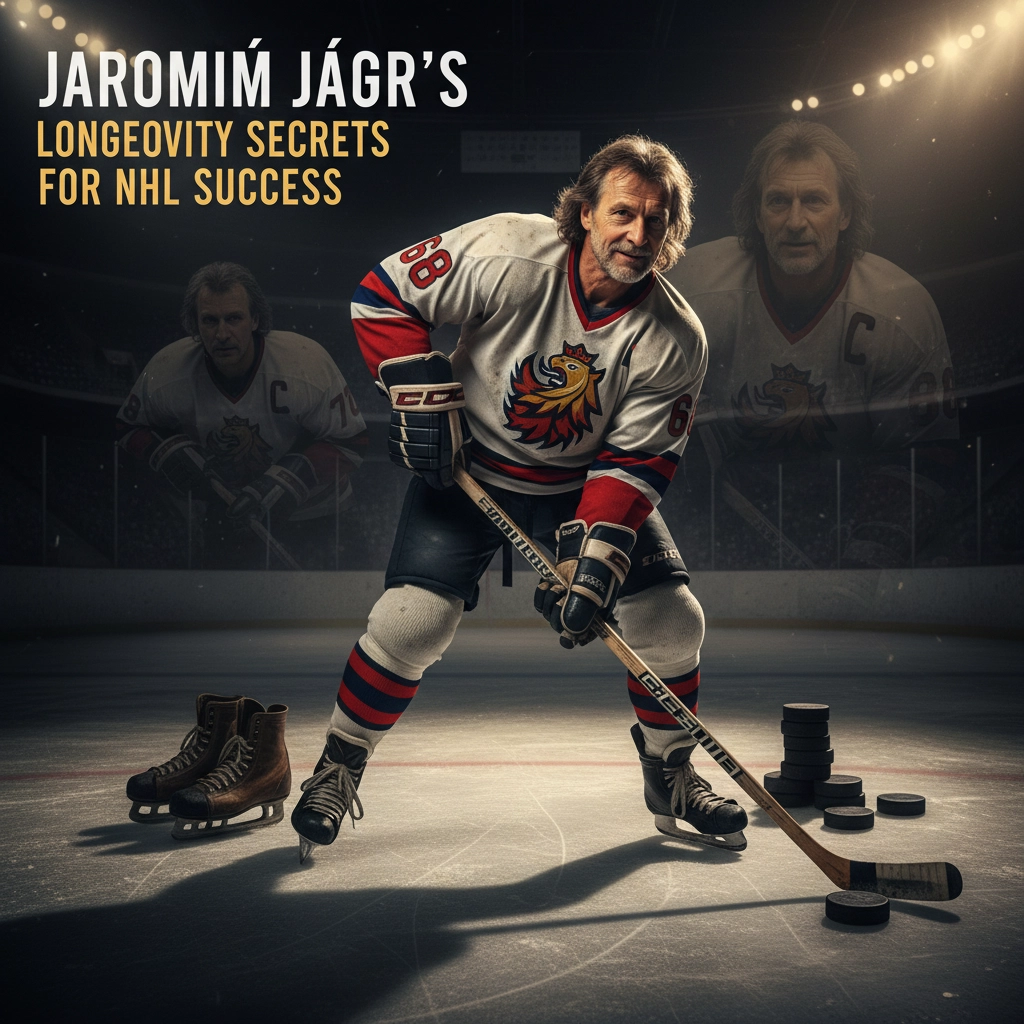
You may think elite longevity is reserved for genetic outliers, but Jaromír Jágr’s career shows that deliberate choices matter. Playing at a high level into his mid-40s, Jágr combined physical preparation, tactical adaptation, and mental resilience in ways that any player, coach, or serious athlete can study and apply. This section frames why his path is relevant to you and previews the practical areas you’ll want to focus on if you want to lengthen your own competitive window.
Jágr’s longevity wasn’t accidental. It was the product of cumulative habits: consistent training that prioritized function over vanity, on-ice adjustments that reduced wear, and a competitive mindset that stayed curious and motivated. When you analyze his career, you should look for transferable principles rather than exact blueprints — your body, sport, and schedule will differ, but the underlying ideas remain useful.
Early foundations Jágr built: training consistency, smart skill work, and lifestyle choices
Long careers are rarely launched in a single season; they are built on early-investment choices. Jágr established several foundational practices while still young that compounded over decades. If you adopt similar priorities, you’ll reduce the risk of early breakdown and create a platform for sustainable performance.
Training with an emphasis on longevity
- Prioritize joint-friendly strength. Jágr emphasized core stability and unilateral strength that support balance and reduce compensatory movement — a lesson you can use by focusing on loaded carries, single-leg work, and controlled rotational exercises.
- Skating efficiency over pure power. You should work on edge work and stride economy. Efficient mechanics let you cover the same distance with less energy and stress on hips and knees.
- Progressive conditioning. Build capacity for repeated high-intensity efforts rather than just max power. Interval work that mimics game demands protects both aerobic base and neuromuscular resilience.
Skill development and tactical adaptation early on
- Refine puck skills so you rely less on speed alone. Jágr’s elite hands and passing vision meant he could remain effective when his top-end speed dipped — you can offset physical decline by deepening your technical toolkit.
- Develop position and anticipation. Reading the play reduces chasing and preserves energy; start cultivating game IQ early through video study and deliberate practice.
Lifestyle choices that accumulate advantage
- Consistent sleep and recovery habits. Establish routines that prioritize sleep and regular recovery modalities to support training adaptation and injury resistance.
- Nutrition aligned with performance and recovery. Focus on adequate protein, nutrient-dense foods, and timing that supports repair rather than temporary weight swings.
- Maintain passion and mental balance. Jágr’s love of the game kept him engaged; you’ll find sustainable performance is easier when motivation is intrinsic rather than solely outcome-driven.
These foundational choices set the stage for mid- and late-career adaptations. In the next section, you’ll explore the specific in-season routines, recovery protocols, and on-ice tactical changes Jágr used to remain a high-level performer as his body changed.
In-season routines and recovery protocols Jágr relied on
What separates long careers from ones that burn out is how you manage the day-to-day stressors of an NHL season. Jágr treated the season as a series of microcycles rather than a single long block: he preserved freshness for games, used recovery deliberately, and kept load predictable. You can incorporate the same principles even if your calendar is less brutal than the NHL’s.
- Structure your week around intensity, not hours. Make game day the primary high-load session and use practices to sharpen rather than to accumulate fatigue. Keep 1–2 low-intensity skate or skill days after games to promote blood flow and technique work without stressing the system.
- Prioritize active recovery. Light aerobic work, mobility circuits, and targeted soft-tissue work the day after a game speed repair. Passive rest has its place, but increased circulation from gentle movement speeds recovery more reliably.
- Manage strength work sensibly. Maintain neuromuscular qualities with brief, high-quality sessions — lower volume, higher intent — during the season. Reserve heavier hypertrophy and volume blocks for the off-season when you can tolerate more soreness and longer recovery windows.
- Use layered recovery modalities. Sleep, nutrition, and hydration are the foundation; adjuncts such as contrast baths, compression, and short-form cryotherapy can be used selectively when travel or back-to-back games spike inflammation. The goal is consistency: pick a small set of modalities you can use reliably rather than chasing every trending therapy.
- Monitor and react to readiness. Simple measures — resting heart rate, sleep quality, perceived soreness — are often enough to guide load adjustments. Jágr’s longevity was supported by being conservative when signs of cumulative fatigue appeared, not by ignoring them.
On-ice tactical shifts that prolonged Jágr’s effectiveness
Jágr didn’t try to out-pace younger players later in his career; he out-smarted them. He adjusted his role and decision-making to exploit strengths that don’t erode as quickly: vision, puck protection, timing, and efficient movement. These tactical shifts are transferable to any player aiming to extend their prime.
- Play smarter, not harder. Anticipation reduces the need for repeated max-effort bursts. Prioritize reading plays, angling opponents, and using pre-skate visualization to be in the right place at the right time.
- Lean into puck possession and protection. When speed declines, control the pace. Excellent hips, a wide base, and simple stick-and-body positioning allow you to shield pucks and draw defenders, creating time for teammates to make plays.
- Refine role-specific skills. Jágr became a power-play fulcrum and a late-game mismatch creator by sharpening a narrower set of high-value skills — quick-release shots, deceptive passing, and net-front presence. Identify two or three high-leverage skills your team needs and make those near-automatic.
- Accept strategic decline and adapt your ice usage. Reduce unnecessary high-risk rushes; instead, focus on controlled entries, cycling, and supporting the puck. You’ll sacrifice some highlight-reel speed but gain durability and efficiency.
- Embrace mentorship as a performance tool. Taking leadership and guiding younger players keeps you involved mentally and strategically, and it shifts some physical burden onto fresher legs without diminishing your on-ice impact.
These mid- and late-career strategies — disciplined microcycles, layered recovery, and tactical retooling — are what let Jágr remain a threat in his 40s. The next part will dive into specific drills, programming examples, and mental habits you can apply to make these ideas concrete.
Drills, programming examples, and mental habits to make it real
Below are practical, time-efficient drills and a sample in-season microcycle you can adapt, plus mental habits that translate Jágr’s principles into daily practice.
-
Quick-release shooting drill: 4 stations around the offensive zone. 6–8 shots per station focusing on puck protection, quick toe-drag dekes, and a single-motion release. Short rest between reps to emphasize skill under mild fatigue.
-
Puck-protection circuit: 2-minute 1v1 rounds in tight quarters (boards to hash marks). Emphasize low center of gravity, hips, and angling to maintain possession. Rotate partners to vary defensive styles.
-
Anticipation shuttle: On-ice reading drill where players react to coach’s visual cues (stick lift, pointing) to simulate play recognition. Goal is to practice moving to high-probability scoring lanes rather than sprinting to the puck every time.
-
Short strength sessions (twice weekly in-season): 2–3 compound lifts (e.g., trap bar deadlift, split squat, pull variations), 3–4 sets of 3–6 reps at high intent, followed by a 10-minute mobility circuit. Keep volume low to preserve freshness.
-
Active recovery routine (post-game day): 20–30 minutes easy bike or pool, 10 minutes of dynamic mobility, and 5–10 minutes of targeted soft-tissue work on tender areas. Prioritize sleep and protein-rich meals that evening.
Sample in-season microcycle (example for a team with three games per week):
-
Day 1 — Game: Max effort; post-game cool-down and sleep prioritization.
-
Day 2 — Active recovery: Light aerobic, mobility, soft tissue.
-
Day 3 — Skill & systems: Low-impact on-ice practice, visual rehearsal, puck-possession drills.
-
Day 4 — High-skill/low-volume strength: Short lift session + quick on-ice shooting/power-play work.
-
Day 5 — Pre-game: Tactical walk-through, situational reps, mental prep.
Mental habits that matter:
-
Process focus: Track daily inputs (sleep, nutrition, perceived readiness) not outcomes; this maintains controllable consistency.
-
Selective experimentation: Try one new recovery or training element at a time and keep only what reliably moves readiness in the right direction.
-
Mentorship mindset: Teach what you practice. Explaining positioning or timing to a younger teammate reinforces those cognitive skills in your own game.
Applying Jágr’s longevity playbook
Longevity is less about a single secret and more about a layered, patient approach: preserve what works, adapt what doesn’t, and be deliberate with where you invest effort. Adopt the microcycle mentality, prioritize quality over quantity, and let role-specific skill sharpening guide your training choices. If you want practical templates and official training resources to adapt these ideas, see NHL training resources.
Frequently Asked Questions
How should players adjust strength training during the season?
Reduce volume and keep intensity high but brief: focus on 2–3 compound movements, 3–4 sets of low-to-moderate reps, performed twice weekly. Aim to maintain neuromuscular qualities rather than chase hypertrophy; reserve heavy volume blocks for the off-season.
Which recovery modalities did Jágr rely on most consistently?
He prioritized sleep, nutrition, hydration, and active recovery like light aerobic work and mobility. Complementary tools such as compression, contrast baths, or short cryotherapy sessions were used selectively when travel or game density increased.
How can older players compensate for lost top-end speed tactically?
Shift toward anticipation, puck protection, and high-percentage plays: refine timing, improve positioning, focus on quick-release shooting and decision-making in the offensive zone, and accept role adjustments that reduce unnecessary high-risk efforts.