








Where the NHL Playoffs Stand and How to Use These Predictions
You’re about to navigate the playoff landscape with a clear framework that balances recent form, underlying metrics, and matchup-specific traits. This guide focuses on round-by-round predictions, but first you should understand the structure and analytical approach that will inform each pick. Knowing how seeding, style matchups, injuries, and goaltending trends interplay will help you make smarter choices or sharpen your bracket.
Quick overview of playoff structure and seeding implications
The NHL playoff format gives you best-of-seven series across multiple rounds: the First Round, Second Round, Conference Finals, and Stanley Cup Final. Home-ice advantage, which goes to the higher seed, often matters more in tighter matchups and can swing series that hinge on special teams or late-game execution. As you evaluate series, consider these immediate implications:
- Seeding vs. momentum: Higher seeds typically indicate stronger regular-season performance, but wild-card teams with late-season surges can upset expectations.
- Travel and scheduling: Compact series with several travel days can favor deeper rosters and disciplined teams.
- Matchup depth: Teams with balanced lines and defensive depth are better equipped for long series that expose weaknesses.
Key metrics and matchup factors to weigh before picking winners
When you make round-by-round predictions, you should prioritize a mix of traditional stats and deeper analytics so your picks aren’t one-dimensional. Below are the primary factors that will be referenced repeatedly in the picks and analysis sections that follow.
What matters most and why it matters to your predictions
- Goaltending performance: Save percentage and goals saved above expectation (GSAx) often determine playoff outcomes more than regular-season scoring totals. Hot goalies can steal series.
- Special teams: Power play and penalty kill efficiencies translate directly to high-leverage moments. Look for teams that can suppress opponent chances on the PK.
- Corsi/expected goals (xG): Possession and shot quality metrics indicate which teams control play and create meaningful scoring opportunities; these metrics help predict sustainable performance beyond hot streaks.
- Injury reports and lineup stability: Missing a top defenseman or a top-six forward changes matchups and increases the value of depth scoring.
- Coaching and in-series adjustments: Coaches who excel at tactical shifts and line matchup changes can flip a series even when talent is evenly matched.
With these criteria in mind, you’ll approach each series by weighing the numbers alongside intangibles like momentum and matchup styles. In the next section, you’ll see first-round matchup breakdowns and round-by-round picks informed by this framework.
First-Round Themes: What Will Decide Most Series
The opening round is where variance is highest and narratives form. Expect a mix of predictable outcomes and surprise upsets: the path a series takes usually comes down to a handful of repeatable factors rather than headline-grabbing moments. When you make picks, prioritize the items below and think in terms of leverage — which advantage most reliably changes game outcomes?
- Goaltending over offense: In seven-game samples, goaltending produces more stable outcomes than scoring. A team with mediocre underlying offense plus a top-tier goalie can routinely outperform a higher-scoring opponent whose save percentage regresses.
- Special teams as swing factors: A 5–10% swing in power-play or penalty-kill conversion over a series equals one to two goals per game in high-leverage moments. Teams with elite PK and neutral PP are underrated first-round candidates.
- Matchup styles matter: Speedy, transition-focused clubs can blow out a heavy possession team on counterattacks, but possession teams can grind those runs down over a series. Look at which club can sustain its preferred game plan when forced off-ice during pressure stretches.
- Depth and penalty minutes: Short benches and frequent penalties compound quickly. Teams with reliable third and fourth lines or disciplined systems are better prepared for the attrition of playoff hockey.
- Coaching and adjustments: Coaching matters more than in the regular season. Expect systems that can neutralize opposition strengths (e.g., matchup defensive forwards, aggressive pinching D) to flip an otherwise even matchup.
Use these themes as tie-breakers when teams look close on paper. If both clubs have similar xG and possession numbers, tilt toward the club with steadier goaltending, cleaner special teams, or superior depth minutes.
Series-by-Series Breakdown Template and Representative Picks
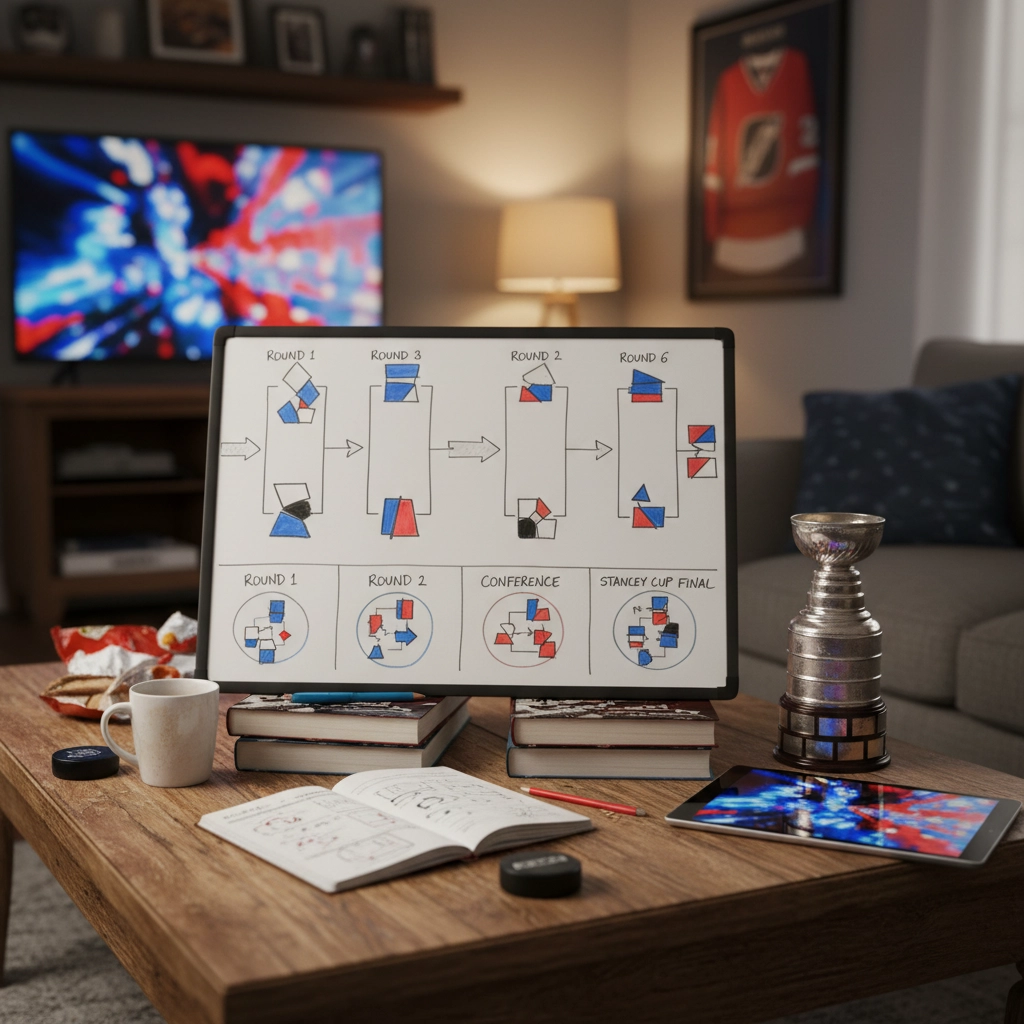
Below is a compact template you can apply to each first-round series, followed by archetypal series picks to illustrate the approach.
- Quick checklist: GSAx and SV% (last 30 games), PP/PK rates, xG share, controlled entries, injury list, recent schedule (rest/travel), coaching matchup.
- Primary narrative: One-sentence summary (e.g., “Hot goalie vs high-event offense”).
- Edge(s): Where the series is decided (goaltending, special teams, depth, matchup style).
- Prediction: Winner and likely series length with confidence level.
Representative picks using that template:
- Top seed vs low seed (1 vs 8): Primary narrative — top seed controls possession and possesses superior depth. Edge — consistent xG share and dependable PK. Prediction — higher seed in 6. Confidence: high if goalie is average-to-better.
- Evenly matched divisional rivals: Primary narrative — similar metrics but rivalry intensity increases mistakes. Edge — coaching adjustments and secondary scoring. Prediction — lower seed upset in 7 if its goalie is trending up; otherwise higher seed in 7. Confidence: medium.
- Hot wild-card vs top defense-first team: Primary narrative — hot offense vs lockdown structure. Edge — structure wins if PK holds; hot offense wins if goalie overperforms. Prediction — defensive team in 6 if PK stays >85%; wild-card in 6 if goalie keeps SV% >.920. Confidence: medium-low (high variance).
- Speed/transition club vs heavy possession club: Primary narrative — transition tests D recoveries. Edge — who forces the opponent into their game; special teams tilt matters. Prediction — possession team in 7 if it can limit odd-man chances; otherwise transition team in 6 on quick strikes. Confidence: medium.
- Goaltender matchup swing: Primary narrative — one elite goalie can steal a series. Edge — GSAx differential. Prediction — team with superior goalie in 7, regardless of seeding. Confidence: high when GSAx gap is large.
Apply the checklist and these archetypal outcomes to each specific pairing. That structured approach keeps picks grounded in repeatable factors rather than recency bias or headline momentum.

Final Notes and How to Use These Picks
Use these round-by-round predictions as a decision framework, not a certainty. The goal is to give you a reproducible way to weigh matchups — prioritize goaltending trends, special teams, and matchup styles — and then update those assessments as new information arrives (injuries, lineup changes, travel, and short-term goalie form).
- Check game-day rosters and injury updates before locking picks; a missing top-pair defenseman or starting goalie changes probabilities quickly.
- Follow goaltender metrics (recent save percentage and GSAx) and team xG share between games to see whether a team’s performance is sustainable.
- Pay special attention to power-play and penalty-kill swings; a series can flip on special-teams performance alone.
- Adjust for schedule and travel: back-to-back games and long flights amplify the value of depth and disciplined line usage.
- Remember variance is highest in the first round; expect surprises and be willing to update picks as series evidence accumulates.
For official schedules, up-to-the-minute injury reports, and stats to track while following these guidelines, visit NHL.com.
Frequently Asked Questions
How should I use these round-by-round predictions when filling out a playoff bracket?
Use the predictions as a starting point and factor in your risk tolerance. If you prefer conservative brackets, lean toward higher-confidence picks (e.g., strong goaltending and clear metric edges). If you want upside, target mid-confidence series where a hot goalie or special teams swing could produce an upset. Always re-check injuries and goaltender status before submission deadlines.
Which metrics matter most during the playoffs to decide if a pick still makes sense?
Prioritize short-term goaltender metrics (recent SV% and GSAx), team expected goals (xG) share, and special-teams rates (PP/PK). Combine those with qualitative factors like matchup style, coaching adjustments, and lineup health to decide whether a series trend is sustainable or likely to regress.
When are upsets most likely, and how do I spot them early in a series?
Upsets are likeliest when a lower-seeded team has a hot goalie, elite special teams, or when the higher seed is dealing with key injuries. Early signs include repeated goaltender outperformance (sustained SV% above career norms), a sudden power-play efficiency spike, or the favorite failing to control possession (declining xG share). Watch these indicators across the first two games to gauge the series trajectory.