







Why Sergei Fedorov’s early seasons still shape how you view modern two-way forwards
You may already know Sergei Fedorov as one of the most versatile forwards of his generation, but understanding how he developed in the NHL helps you see why his best seasons mattered. Arriving from the Soviet system in the late 1980s and debuting with the Detroit Red Wings in 1990, Fedorov combined elite skating, puck skills, and defensive instincts at a time when few European players had fully adapted to the North American game.
In this part, you’ll get context on the transition he faced, the milestones that signaled his ascent, and the early seasons that laid the groundwork for the career peaks we’ll analyze year by year in later sections. Pay attention to the patterns—role evolution, special teams usage, and how coaches leaned on him in critical moments—because they explain not just the totals but the impact he had on wins and team identity.
From Soviet prospect to Red Wings regular: adaptation and opportunity (1990–1991)
When Fedorov first arrived in Detroit, you should think of him as a player with rare tools but still adapting to smaller ice, more physical play, and a faster decision-making environment. Coaches gave him opportunities on the power play and in even-strength minutes early on because his skating and puck protection immediately translated. Rather than a straight rookie reveal, his first NHL season is best read as an adjustment phase that revealed upside:
- Quick integration into the lineup: you can see how coaches trusted him with varied assignments rather than limiting him to sheltered minutes.
- Skill translation: his stickhandling and change-of-pace skating began to yield scoring chances even when he faced experienced NHL defensemen.
- Early two-way promise: defensive responsibilities and backchecking stood out, foreshadowing a career where you couldn’t simply judge him by points alone.
Early growth and increasing responsibility (1991–1993)
By the following seasons, Fedorov’s role expanded. You’ll notice three clear trends if you track game logs and situational usage from this period:
- Escalating offensive opportunity: as he adjusted, quarterbacks on the power play and more prime offensive zone deployments followed.
- More critical defensive matchups: coaches began using him against opponent top lines, which both limited some raw scoring totals and showcased his defensive value.
- Growing leadership on ice: even when not wearing a letter, you could see him influence game tempo and transition play—a precursor to his role as a franchise cornerstone.
These early seasons established the patterns—rapid adaptation, versatile deployment, and a blend of skill and defensive responsibility—that define the rest of Fedorov’s peak years. Next, you’ll get a season-by-season breakdown of his breakout campaigns where those patterns translated into All-Star-level production and team success.
The breakout peak: why 1993–94 cemented Fedorov as an elite two-way star
When you look at the 1993–94 season, treat it as the moment everything Detroit and Fedorov had been building toward converged. The technical adjustments from the Soviet game were no longer experiments; they were refined tools deployed in high-leverage situations. What makes this season stand out isn’t just an uptick in output, it’s the clear synthesis of offensive explosiveness and defensive accountability:
- Offense with intent: you could see him carrying possession through the neutral zone, creating odd-man rushes and finishing plays rather than merely setting others up. That consistency turned flashes into nightly production.
- Defensive recognition: coaches depended on him to shut down opposing top lines without sacrificing his offensive minutes, a balance that few forwards sustained at the time.
- Award-winning impact: league honors that year recognized both sides of his game, signaling to opponents that Fedorov was not only a scoring threat but a complete player who altered matchups and game plans.
For your analysis, this season functions as the inflection point: everything he learned earlier translated into a style opponents had to game-plan for, and Detroit began to shape its roster and systems around a multi-dimensional center who could tilt momentum at both ends.
From star scorer to team fulcrum (1994–1996): evolution, not decline
After a breakout year, it would have been easy for Fedorov to simply chase volume. Instead, you should note how his role matured. Between 1994 and 1996 his usage changed in ways that mattered more than headline stats:
- Situational deployment expanded: he was a Swiss Army knife—power play QB, penalty killer, late-game shut-down forward—so his raw totals sometimes flattened even as his value rose.
- Leadership through play: whether wearing a letter or not, he influenced line chemistry and transition play. Younger teammates learned to read his movement, and coaches leaned on him in tight playoff moments.
- Adapting to team construction: as Detroit added complementary scorers and rugged linemates, Fedorov shifted to fit a winning template rather than dominate it alone, which is why his contributions in this window are best measured by team success and matchup outcomes rather than point-per-game figures alone.
When you assess these seasons, prioritize context—who he faced, how coaches split minutes, and how Detroit’s roster moves redistributed offensive responsibilities. That context explains why his influence remained massive even when the stat sheet didn’t always spike.
Crowning achievements and refined roles: the Cup years (1996–1998)
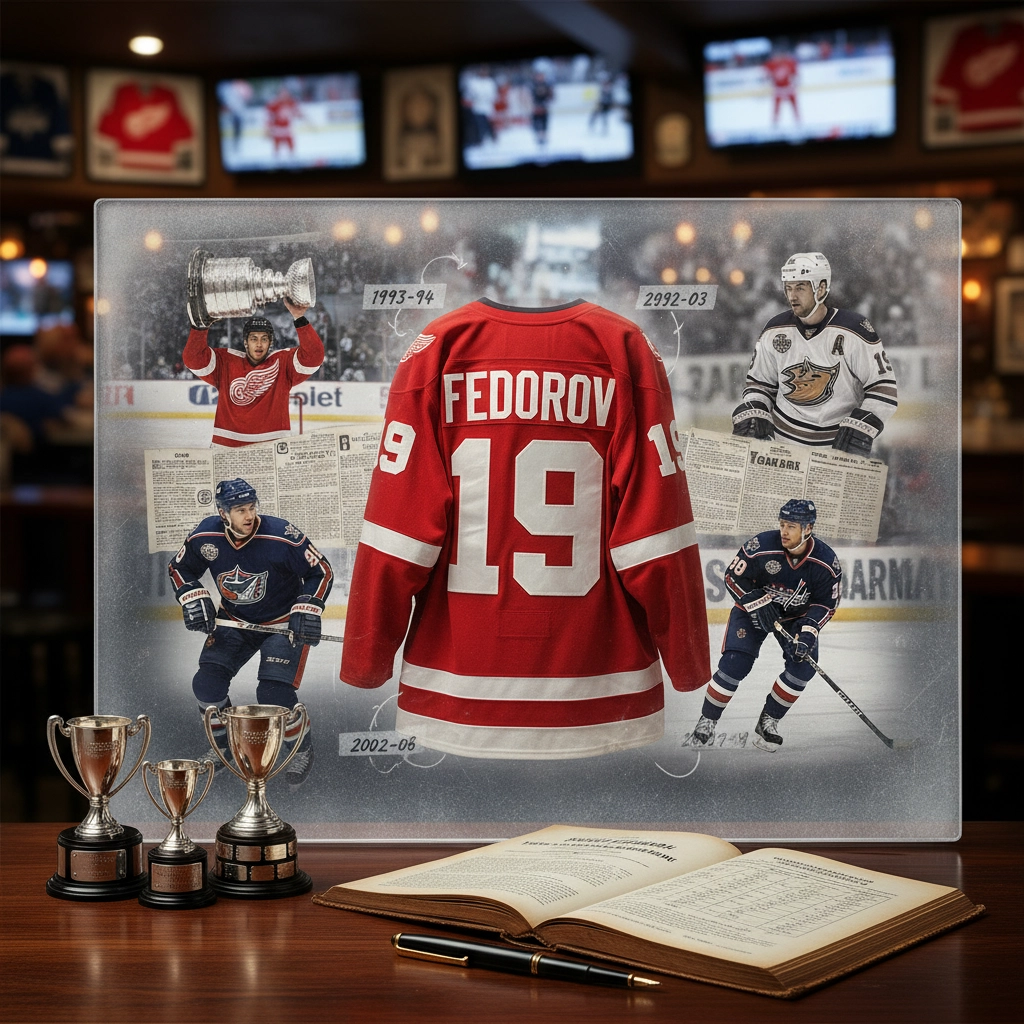
When Fedorov’s career arc arrives at the mid-to-late 1990s, you should read the narrative through two lenses: championship impact and role refinement. During Detroit’s ascent to back-to-back Stanley Cups, Fedorov was a keystone not merely for scoring but for matchup control and transitional speed:
- Playoff-level minutes: coaches trusted him in high-pressure minutes against elite opposition, where his ability to break plays out of the defensive zone proved as valuable as generating offense.
- Complementary excellence: with other stars on the roster, Fedorov often sacrificed top-line volume to create balance—forechecking, recovering puck, and initiating the breakout that powered Detroit’s counterattacks.
- Legacy-defining moments: these seasons reinforced his identity as a complete forward—one who could change a series through a defensive stop, a timely rush, or leadership in the locker room.
For your ongoing year-by-year study, treat the Cup years as the payoff: earlier investments in two-way technique and tactical intelligence yielded team championships, and they showed the full strategic value of a modern two-way forward long before that label became commonplace.
After the Cup years the arc of Fedorov’s career bent toward new challenges—contract disputes, positional experiments, and productive stops in other markets—but the throughline remained the same: elite instincts married to relentless work ethic. Those late-career chapters add texture to how you evaluate his peaks; they don’t redefine them.
Enduring legacy and lessons for the modern game
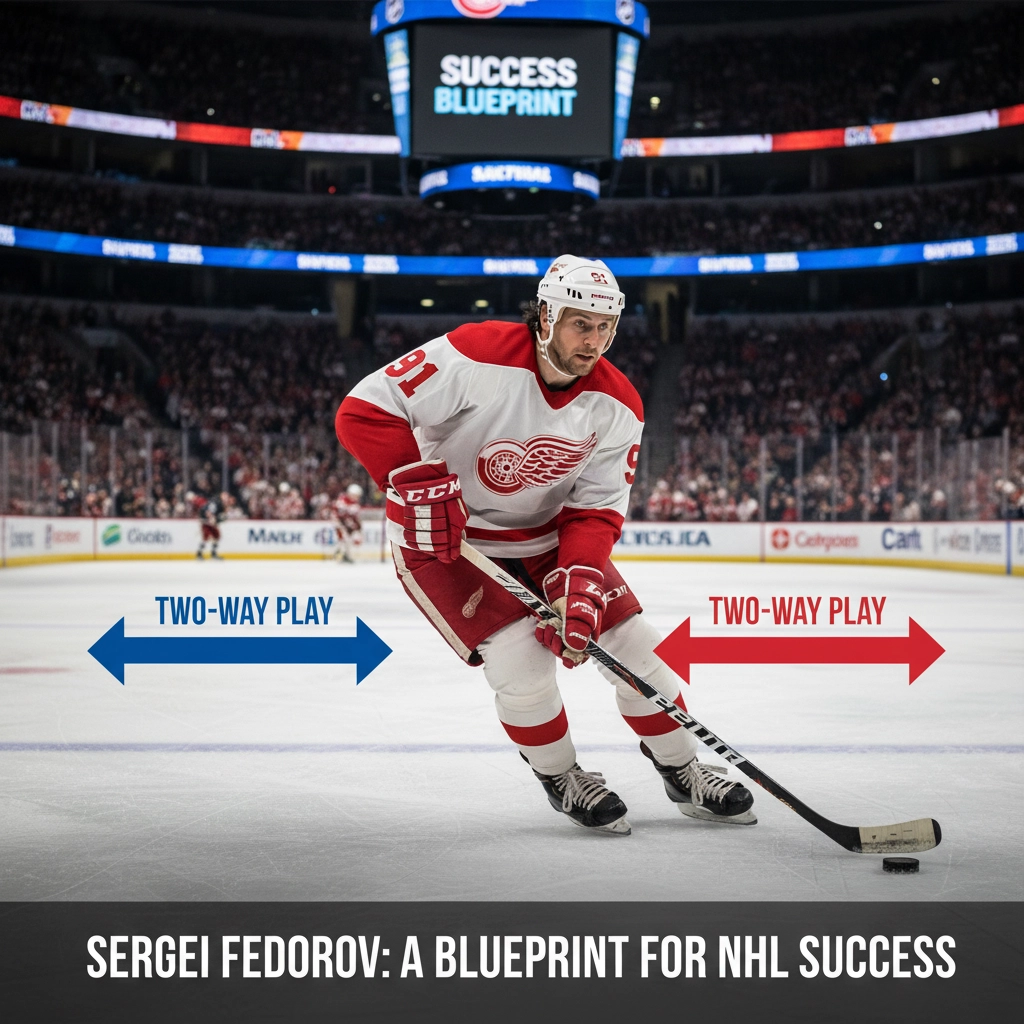
What sticks with you after walking season by season through Sergei Fedorov’s best years is less a list of numbers than a model for how an NHL forward can expand the conventional boundaries of the position. His combination of speed, tactical intelligence and willingness to shoulder defensive burdens helped normalize the modern two-way center long before analytics made that language common. Coaches seeking players who tilt both special teams and even-strength matchups can still point to Fedorov’s career as a blueprint: develop versatility, accept role changes that benefit the roster, and let high-skill execution meet situational responsibility.
For further reading on his honors and career overview, see Sergei Fedorov’s NHL profile.
Frequently Asked Questions
Which season is widely considered Sergei Fedorov’s breakout year?
The 1993–94 season is generally viewed as his breakout: it’s when his offensive consistency and defensive deployment combined to establish him as an elite two-way force and attract major league recognition.
How did Fedorov’s role change between 1994 and 1996?
Between 1994 and 1996 Fedorov evolved from pure scorer to team fulcrum—expanding situational deployment (power play quarterback, penalty killer, shutdown minutes) and prioritizing roster balance over individual volume while increasing his strategic value.
Why are the 1996–1998 Cup years so important to evaluating his career?
Those seasons demonstrated Fedorov’s championship impact: trusted playoff minutes against top competition, sacrifice of some personal statistics for lineup balance, and several decisive plays that underscored his value as a complete forward rather than just a scorer.