





How teammate chemistry turned Gretzky’s vision into record assists
You already know Wayne Gretzky is the NHL’s all-time points leader, but to understand those surreal assist totals you need to look at the players who finished his plays. Gretzky’s game was centered on anticipation and passing: he saw lanes seconds before they opened and delivered pucks with surgical timing. That kind of playmaker only reaches its full potential when linemates and teammates read the ice the same way and execute consistently.
When you study Gretzky’s best seasons, you should focus less on raw talent alone and more on how roles meshed. For example, a winger who consistently drove to the net, a defenseman who pinched at the right moment, or a center who could win draws and hold possession turned Gretzky’s set-ups into goals. The result was an environment that magnified assists: he rarely needed to create alone—his teammates completed the process.
Edmonton Oilers: foundation of Gretzky’s assist masterpieces
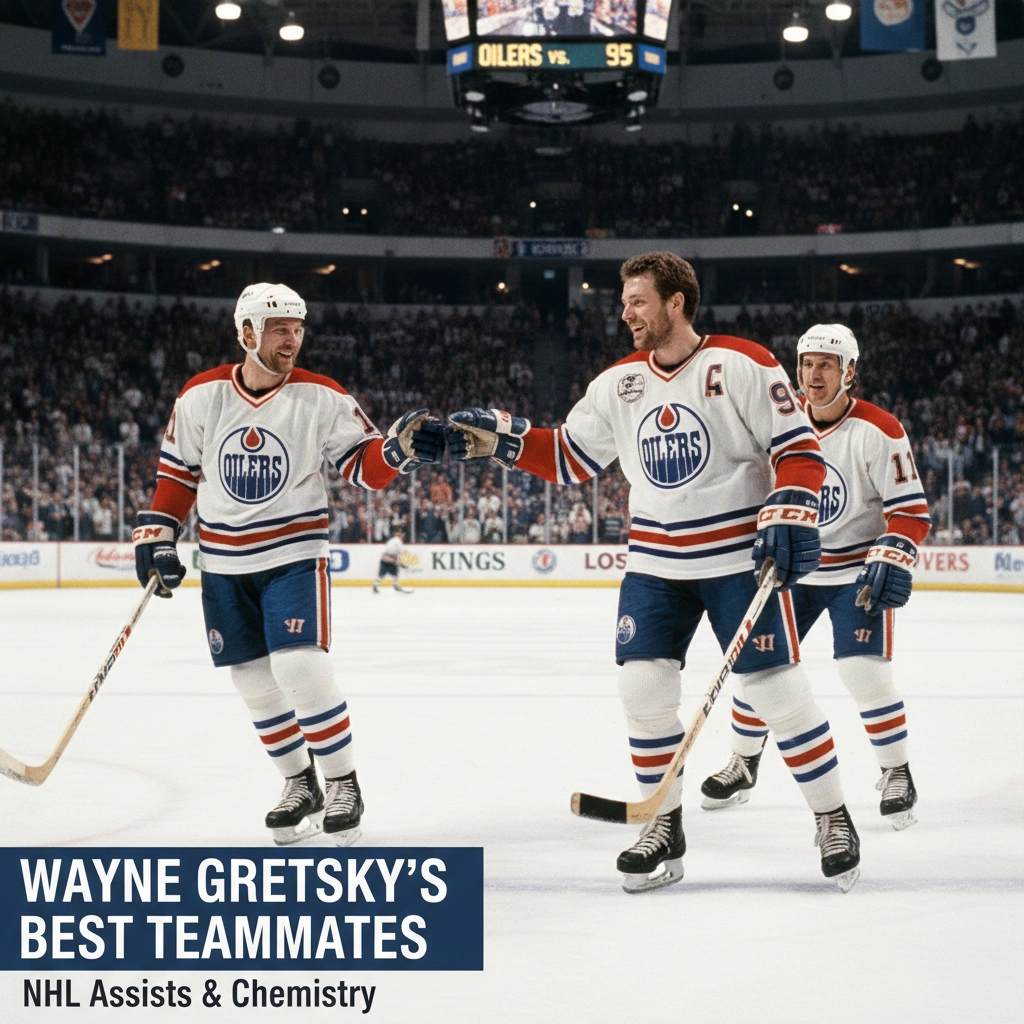
The Oilers of the late 1970s and 1980s provide the clearest case study of assist chemistry. If you want to see how a superstar’s vision combines with complementary skill sets, study this roster. In this section you’ll get a practical look at the specific roles that made Gretzky’s passing so productive.
Jari Kurri — the clinical finisher
Kurri was Gretzky’s ideal winger: he read passes, found soft spots in the slot, and had the finishing touch. When you watch highlight reels, you’ll notice Gretzky threading passes to Kurri on the tape of his stick—often with little more than a flick. Kurri’s calmness in tight spaces meant Gretzky could attempt risky, high-reward passes because Kurri converted them at an elite rate.
Mark Messier — the two-way executor and motivator
Messier offered you a different kind of chemistry: physicality, leadership and a knack for making the simple play at crunch time. As a center and eventual captain, he helped sustain possession and create second opportunities. You can think of Messier as the glue who ensured the team cycled and retrieved pucks long enough for Gretzky’s playmaking rhythm to reset and produce additional assists.
Paul Coffey and the mobile defensemen
Coffey’s offensive instincts from the blue line opened the ice. When you watch Coffey rush the point, Gretzky often occupied the slot or the weak-side lane where a quick cross-ice feed would result in a one-timer or a tap-in. Mobile defensemen like Coffey expanded the attack, giving Gretzky more outlets and creating mismatches that led directly to his assist pile.
- Glenn Anderson: net-front presence who finished chaos created by Gretzky.
- Lee Fogolin & Kevin Lowe: possession-minded forwards/defenders who helped sustain pressure.
- Passive-powerplay formations: allowed Gretzky to survey and deliver rather than force plays.
These interactions between styles—Gretzky’s vision, Kurri’s finishing, Messier’s possession and Coffey’s mobility—created a multiplier effect on assists. Next, you’ll examine how these patterns evolved when Gretzky moved to Los Angeles and how new teammates changed the nature of his playmaking.
Los Angeles Kings: reshaped passing in a shooter’s lineup
When Gretzky moved to Los Angeles the template that made him so deadly stayed the same—anticipation, timing, placement—but the cast around him changed the way those assists were generated. In Edmonton he often relied on curl-and-dip finishes and cycling possession; in L.A. he frequently fed pure shooters and net-drivers, so his passes needed to be faster, flatter, and delivered to a tape that could one-time it past the goalie.
Luc Robitaille and Bernie Nicholls are the clearest examples. Both were natural scorers who thrived on quick-release opportunities; Gretzky adjusted by tightening his puck delivery and favoring cross-ice feeds and slot-zone tape-to-tape passes that created immediate shooting chances. The result: fewer protracted zone possessions and more instantaneous scoring plays. Meanwhile, enforcers and protectors like Marty McSorley gave Gretzky the breathing room to make those riskier plays—opponents had to account for physicality, which opened seams for Gretzky’s vision to exploit.
The Kings also used Gretzky’s power-play IQ differently. Rather than the slow-motion motion plays of Edmonton, L.A.’s PP emphasized creating high-danger chances off hard shots and rebounds. Gretzky’s role evolved into a hybrid: quarterbacking the breakout and then shifting to delivering decisive, surgical passes when the lane opened. In short, the change in teammates pushed Gretzky to convert his expansive vision into higher-velocity, higher-precision assists.
Unsung catalysts: the little things that turned passes into goals
Assist chemistry is rarely only about star power. The teammates who did the dirty work—board retrievals, net-front grunt work, drawing defenders—were as essential as the finishers. In every line Gretzky played with, there were players whose contributions didn’t show on the highlight reel but made his passing viable.
Those role players did three things consistently: 1) recovered pucks under pressure so Gretzky could restart the play, 2) created screens and chaos in front of the net so Gretzky’s passes had targets, and 3) stayed disciplined off the puck to open the ice. When you break down Gretzky’s assist tape, you’ll see a pattern of micro-plays—chipbacks, simple rim-outs, soft bank passes—that set up macro results. Without those subtle actions, many of his tape-to-tape masterpieces never would have materialized.
Late-career adaptation: mentoring vision and situational playmaking
As Gretzky aged, his game lost some foot speed but not its intelligence. He translated years of pattern recognition into situational playmaking: precise saucer passes over sticks, backdoor feeds timed to a step-in, and an uncanny ability to find slivers of open ice. In later lineups he became both a playmaker and a mentor—teaching younger scorers how to read his intent and positioning themselves for finished plays.
That mentorship changed the assist dynamic. Instead of piling up assists solely through overwhelming transition, many of his late-career setups were crafted by pre-snap reads and rehearsed tendencies—Gretzky would angle a pass where a teammate knew to cut, rather than relying on spontaneous genius. It’s a reminder that chemistry isn’t static; great passing adapts to personnel, and Gretzky’s assist totals reflect his ability to do exactly that across multiple team environments.
Measuring chemistry beyond the scoresheet
Numbers tell part of the story, but the full picture of Gretzky’s playmaking comes from watching the little in-between actions: the pre-assist touch that frees a lane, the net-front nudge that blocks a goalie’s sightline, or the delayed cut that transforms a routine pass into a highlight. Those micro-plays were often logged as secondary assists or not at all, yet they were repeatable behaviors that teammates learned to expect and exploit. Modern tracking and metrics—like expected assists (xA) and shot-quality models—help quantify some of that impact, but film study remains essential to understand how chemistry translated into real-time decision-making and sustained scoring runs.
Enduring lessons from Gretzky’s teammates
Gretzky’s career shows that elite passing and elite finishing are mutually reinforcing: vision creates opportunities, teammates convert them, and role players make both feasible. For coaches and players today, the takeaway isn’t just how many assists a superstar racks up, but how line composition, complementary skill sets, and subtle off-puck work amplify every pass. For a deeper look at Gretzky’s career and the teams that surrounded him, see Wayne Gretzky’s NHL profile.
Frequently Asked Questions
Who were Wayne Gretzky’s best finishers for his assists?
Across his career Gretzky fed different types of finishers: in Edmonton it was pure scorers like Jari Kurri and later Mark Messier in complementary roles; in Los Angeles he adjusted to shooters such as Luc Robitaille and Bernie Nicholls. Each pairing highlights how Gretzky tailored passes—soft tape-to-tape feeds for curl-and-dip finishers, and quicker, flatter deliveries for one-timers and net-drivers.
How did Gretzky change his passing when he joined the Kings?
With the Kings Gretzky favored faster, flatter cross-ice feeds and slot-zone tape-to-tape passes to catch shooters in stride. The power play emphasis shifted toward high-velocity shots and rebounds, so his timing and puck placement became more surgical to create immediate scoring chances rather than extended possession schemes.
Can chemistry that leads to assists be measured analytically?
Partially. Metrics like expected assists (xA), primary vs. secondary assist counts, and shot-quality models capture aspects of pass value and chance creation. But many contributing actions—net-front screens, puck retrievals, and timing reads—still require video analysis to fully appreciate how they enable assists. The best evaluations combine analytics with film study.