







When two legends rewrote hockey history: why their early careers matter to you
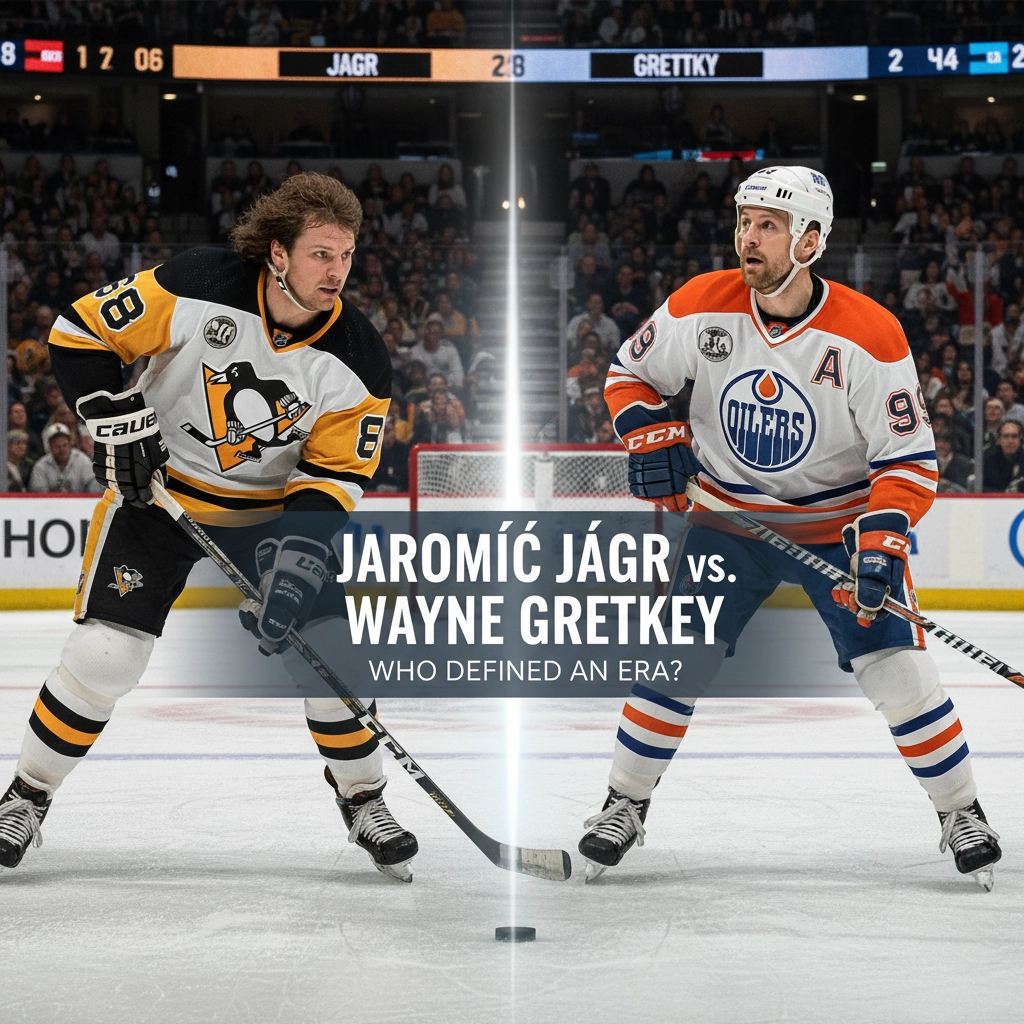
When you compare Wayne Gretzky and Jaromír Jágr, you’re looking at two different revolutions in hockey. Gretzky arrived at the top of the game as the sport modernized in North America; Jágr emerged later as a European force who combined skill with remarkable longevity. Understanding their early records and breakthrough seasons helps you see how each player set the stage for the statistics and cultural impact that followed.
How Gretzky burst onto the NHL scene and set benchmark records
You’ll notice that Wayne Gretzky’s early years were defined by numbers that felt impossible at the time. After joining the NHL with the Edmonton Oilers in 1979–80, he quickly established a pace of playmaking and scoring that outstripped peers. Some of the milestone achievements from his early peak seasons include:
- Single-season scoring records that still stand as benchmarks — most famously his 215 points in one season and a single-season high of 92 goals.
- Dominating the scoring race repeatedly and becoming the face of a high-powered Oilers dynasty that won multiple Stanley Cups in the 1980s.
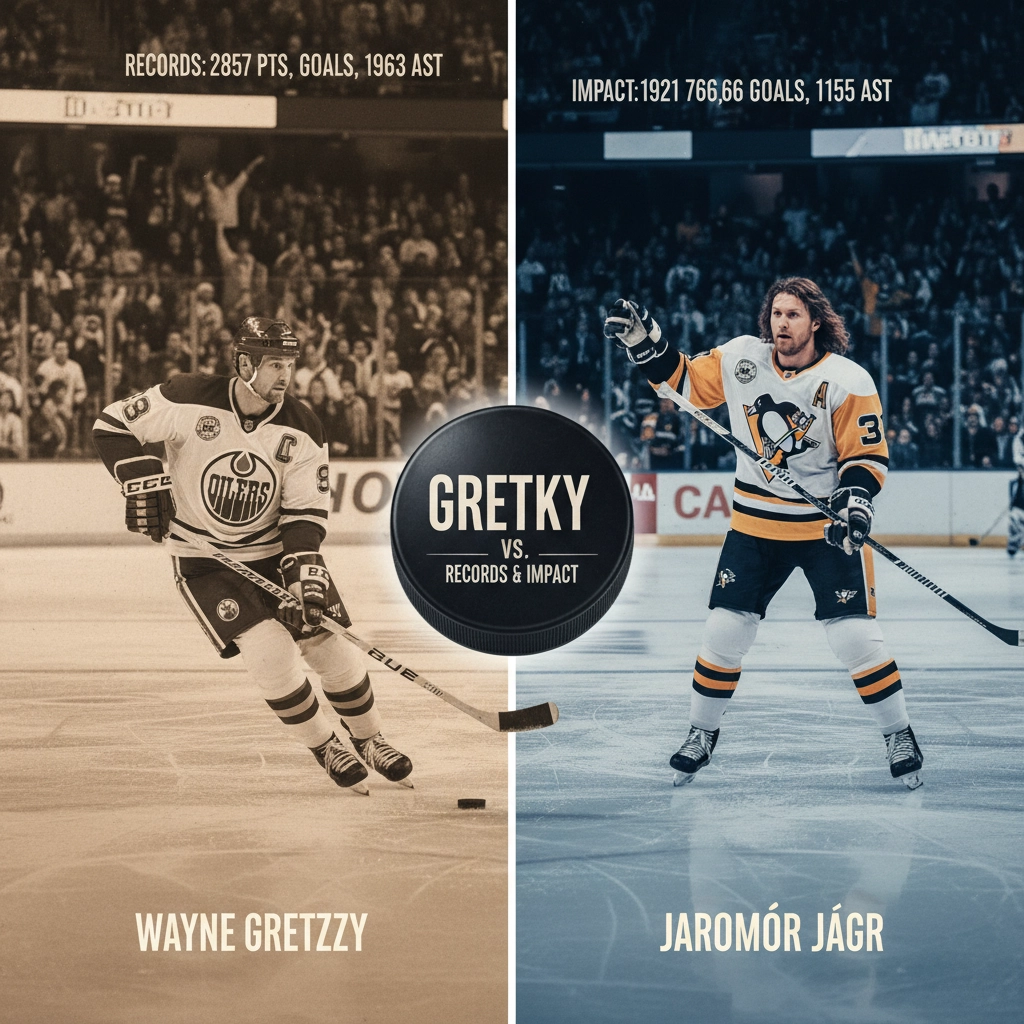
- Setting career marks that you still use as reference points: Gretzky finished with the most career points (2,857), most career assists (1,963), and most career goals (894) in NHL history.
In practical terms, Gretzky’s early records changed how teams valued playmaking and space on the ice. When you look at tactical shifts in the 1980s, many were reactions to the way Gretzky exploited passing lanes and puck possession.
What Jágr’s early breakthroughs taught you about skill and adaptability
Jaromír Jágr’s path into the NHL came later and from a different hockey culture. Making his mark in the early 1990s with the Pittsburgh Penguins, Jágr combined power, puck protection, and a lethal shot. Early in his career you could point to several defining elements:
- Immediate offensive impact: Jágr became a top scorer soon after arriving, helping his team to Stanley Cup success and establishing himself as a reliable, high-volume producer.
- Remarkable single-season scoring feats — including a 62-goal campaign — that demonstrated his ability to dominate inside-the-zone scoring.
- Longevity and consistency: whereas Gretzky redefined peak performance, Jágr showed how a player could adapt his game over decades and continue producing at a high level.
For you as a reader, Jágr’s early seasons illustrate a different model of greatness: one built on physical resilience, adaptability to changing league styles, and the influence of European-trained skills on North American hockey.
Having looked at how each player began and the records they set early on, you’re ready to examine a deeper, side-by-side comparison of their full career totals, awards, and the longer-term impact each had on hockey’s tactics and global growth.
Head-to-head in the box score: career totals and honors that frame their legacies
When you look beyond peak seasons to full-career outputs, the contrast between Gretzky and Jágr helps you separate peak dominance from sustained excellence.
Wayne Gretzky’s numbers sit at the extreme end of historical comparison: the all-time points leader, the assist king, and the owner of several single-season and career marks that remain benchmarks for any offensive player. Those totals translate into repeated league honors and playoff success that underline why his statistical case is so often described as unprecedented.
Jaromír Jágr’s totals tell a different but equally compelling story. He accumulated nearly two thousand NHL points across a career that spans eras — from the high-scoring 1990s to the tighter defensive 2000s and back into a veteran role in the 2010s. Jágr’s goal scoring, ability to lead in offensive categories at various points in his career, and his seasons of elite production under different teammates and systems, all speak to adaptability and resilience rather than a single era’s domination.
Awards and official recognitions reinforce the numbers. Gretzky’s trophy cabinet reflects sustained league-wide supremacy: scoring titles, MVP awards and multiple Stanley Cups during Edmonton’s dynasty years. Jágr’s honors underscore top-tier performance across a longer arc — early championships, scoring titles in his prime, and individual season awards that proved he could be the league’s best at multiple junctures. Both players also share hockey’s highest institutional recognition: Hockey Hall of Fame induction, marking their influence on the sport’s official memory.
For you, the takeaway here is simple: Gretzky’s totals define an apex that reshaped statistical expectations; Jágr’s totals define extraordinary longevity and the capacity to remain elite despite changing contexts. One rewrote the record book; the other kept rewriting his own story across decades.
How each reshaped tactics, markets, and the global game
Beyond numbers and hardware, the lasting impact of Gretzky and Jágr is measured in how the game evolved because of them — in coaching adjustments, fan geography, and how young players learned to play.
Gretzky forced teams to rethink space, puck support and transitional offense. Coaches adjusted systems to either replicate Edmonton’s free-flowing movement or to stifle it — which in turn led to new defensive innovations. Off the ice, Gretzky’s move to Los Angeles is a canonical example of a single player accelerating market growth: television interest, youth participation in non-traditional markets, and NHL expansion in the Sun Belt all trace a line back to his presence in California.
Jágr’s influence shows up differently. As a European superstar who blended strength, stickhandling and relentless conditioning, he became a role model for European players and North American prospects alike. His success encouraged NHL teams to scout and trust European skill sets, increased the league’s international presence, and helped normalize long careers fueled by off-ice training and adaptability. Jágr’s persistence — returning from contract disputes, playing in Europe and the KHL, then returning to contribute in the NHL — also showcased new career pathways for top players.
For you watching today’s NHL, both legacies are visible: offensive creativity mixed with elite puck management, the global pipeline of talent, and a league that markets personalities as well as play. Gretzky changed how teams built offense; Jágr changed how players built careers. Together they expanded hockey’s tactical playbook and its global footprint — and that continues to shape how the game is coached, sold, and played across the world.
Legacy in perspective
Comparing Wayne Gretzky and Jaromír Jágr ultimately tells you as much about how we measure greatness as it does about the players themselves. Conversations about records, style, and influence are ongoing because both men reshaped expectations: Gretzky by stretching what dominance could look like, Jágr by stretching what a career could look like. That duality — apex versus longevity — is what keeps debates alive and what continues to teach players, coaches, and fans about the many shapes a remarkable career can take.
Their on-ice feats are preserved in official histories and halls of fame; for authoritative bios and honors, see the Hockey Hall of Fame. Off the ice, their influence remains visible in coaching philosophies, international recruitment, and the commercial growth of hockey worldwide. Those are the ripples that last longer than any single season.
Whether you lean toward Gretzky’s record-setting peaks or Jágr’s relentless durability, the clearest takeaway is this: the sport is richer for having both kinds of legends. Their careers invite us to celebrate different forms of excellence rather than force a single answer to who is “the greatest.”
Frequently Asked Questions
Who holds more NHL records: Wayne Gretzky or Jaromír Jágr?
Wayne Gretzky holds more single-season and career NHL records, including the all-time points and assists records. Jágr, while among the all-time leaders in points and goals, is most notable for career longevity and consistency rather than the breadth of single-season or career records that Gretzky set.
How did Gretzky and Jágr influence the global growth of hockey?
Gretzky helped expand hockey’s U.S. footprint through high-profile moves and market impact, particularly with the NHL’s growth in non-traditional markets. Jágr, as a European superstar with sustained success, encouraged NHL teams to scout globally and helped normalize long careers that included play in multiple leagues, boosting international player pathways.
Can you compare Gretzky’s peak to Jágr’s longevity directly?
They are comparable only with clear context: Gretzky’s peak redefined offensive benchmarks in shorter windows of dominance, while Jágr’s career demonstrates adaptability across eras and systems. Comparing them is informative, but it’s more useful to evaluate each player by the different kinds of excellence they represent.