






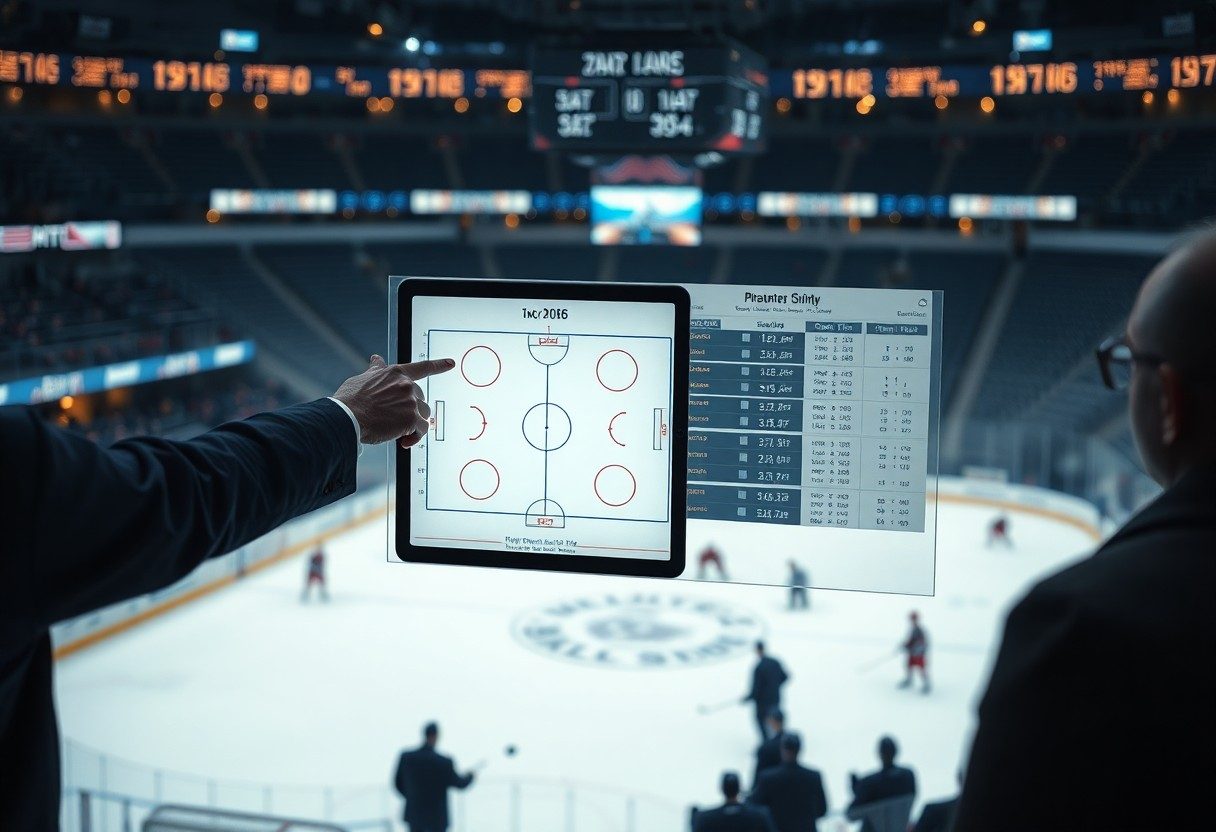
Over the season, assess lineup stability, recent trends and matchups to forecast outcomes; prioritize goaltender form, power-play and penalty-kill efficiency, and up-to-the-minute injury reports. Combine statistical models with situational factors like travel, rest, and head-to-head history to produce disciplined, evidence-based predictions that separate noise from real advantage.
Understanding Hockey Game Types
Different formats – regular season, playoffs, international, junior, and exhibition – change variance and predictive value: the NHL 82-game slate dampens randomness, best-of-seven playoffs amplify matchup edges and goaltending, while short international tournaments increase fatigue and bench-depth importance.
| NHL (Professional) | 82-game regular season, deeper rosters, physical play, smaller rink (200×85 ft) favors forecheck and hits |
| AHL (Pro development) | 72-game schedule, frequent call-ups, inconsistent line combos, useful for evaluating prospect impact |
| NCAA (Amateur) | ~34-game season, eligibility limits, younger players, higher variance and scouting-driven outcomes |
| CHL / Juniors | ~68-game seasons for ages 16-20, elevated scoring volatility, rapid roster turnover |
| IIHF / International | Compressed tournaments, wider rinks (60×30 m), short turnarounds that reward depth and special teams |
- Travel and recovery days shift expected performance.
- Rink size alters style-wider surfaces boost puck possession teams.
- Goaltender form (last 10 starts save%) often outweighs season averages.
- Special teams efficiency (PP/PK) swings game outcomes in tight matches.
- Roster stability – injuries and call-ups matter more in short tournaments.
Professional vs. Amateur
Professional squads operate year-round with deeper rosters (active game-day groups >20) and consistent systems; expect steadier metrics such as team save% and power-play rates near the league mean (NHL PP often ~18-22%). Amateur clubs have shorter seasons, wider performance swings, and lineup disruption from academics or eligibility rules, increasing model variance when projecting winners.
League Differences
Leagues differ in schedule length, rink dimensions, penalty enforcement and overtime formats: the NHL 82-game grind rewards depth, while European leagues with fewer games shift value to coaching and spot matchups; officiating tendencies and overtime rules also change scoring rates and upset probabilities.
Assume that European rinks are wider (60×30 m) and tournaments often compress games, so teams emphasizing puck possession and skating generally outperform physical, dump-and-chase styles in those contexts.
Key Factors to Consider
Focus on measurable edges: home/away splits, special teams rates, goaltender SV% and recent form, and current injury reports – for example, home teams win roughly 55-60% of NHL games, a power play above 20% is elite, and goalies under .900 SV% drag team odds down.
- Home/Away Splits
- Special Teams
- Injury Reports
- Goaltender Form
- Head-to-Head
This synthesis separates confident picks from guesses.
Team Performance History
Examine recent streaks, last 10-game records, and travel; teams on a 5+ game winning streak often sustain higher expected goals and confidence. Compare the last 10 games’ GF/GA, and note rest: a team coming off zero days’ rest after an away back-to-back shows measurable fatigue. Highlight last-10 GF/GA and rest differential for immediate predictive value.
Player Statistics and Injuries
Check TOI, points-per-60, Corsi/CF%, and special-teams contributions for top-6 forwards and top-4 defensemen; prioritize top-line TOI and a goalie’s GSAA. Active injuries to a center or starting goalie typically shift matchup probabilities more than fourth-line absences, so weigh lineup confirmations the day of puck drop.
Dive deeper into injury impacts by tracking which role is lost: absence of a top-line center usually reduces a team’s expected goals and power-play efficiency more than a winger loss, while a backup-starting goalie swap can change win probability by an estimated 6-10 percentage points depending on form. Analyze replacement TOI trends, line shuffling (who takes the draws), and recent PK/PP success without the injured player; incorporate public practice reports and coach comments to gauge whether the team will retain structure or be forced into risky deployments.
Tips for Assessing Matchups
Analyze head-to-head trends, goaltending matchups, and each club’s special teams percentages; evaluate pace, zone starts, and recent injuries. Compare tangible metrics-last 10 games record (e.g., 7-2-1), goal differential per game, and starter save percentages like .920 vs .905-to quantify edges. Consider travel, rest, and matchup history between coaching systems. Knowing how those variables interact often separates confident picks from guesses.
- Goaltending save % and workload
- Special teams PP/PK rates
- Recent form (last 10/5 games, goal differential)
- Injuries & absences to top-six or top-pair defenders
Home vs. Away Games
Home advantage influences matchups through last change, familiar ice and crowd impact; historically home teams win about 55% of NHL games. Travel distance, time-zone changes and back-to-back status depress road performance-overnight flights and long hauls matter. Always check each team’s home/road splits, recent road trips, and how special teams differ away versus at home when sizing up odds.
Recent Team Form
Assess recent form with last 10 games record, goal differential, and underlying shot metrics like expected goals (xG). A 7-2-1 stretch with +8 goal differential indicates genuine momentum, while neutral records with negative xG suggest luck-driven wins. Also track which goalie is starting-unexpected starter changes can flip probabilities quickly.
Weight indicators: prioritize goal differential and xG over raw wins for sustainability, using rolling 10-game trends plus a 5-game lens for hot streaks. Monitor special teams shifts-a penalty kill falling below 75% or a power play rising above 25% materially alters short-term value. Factor roster moves: losing a top-line scorer for multiple games often reduces team xG by roughly 0.3-0.6 per 60, impacting matchup strength.
Step-by-Step Guide to Analyzing Games
| Step | What to Check |
|---|---|
| 1. Pre-game lines | Confirm starting forward/defense pairs, confirmed goalie, and late scratches |
| 2. Form & fatigue | Last 10 games, back-to-back status, travel schedule (0-2 rest days) |
| 3. Injuries & roster moves | Identify missing top-six players or top-pair defensemen and any suspensions |
| 4. Special teams | Compare power play and penalty kill percentages (season and last 10 games) |
| 5. Situational factors | Home/away splits, recent head-to-head trends, and goaltender matchups |
Researching Team News
Check the official morning skate reports and team social feeds for injury updates and line confirmations; a missing top-six forward or a scratched top-pair defenseman can swing expected scoring. Factor in confirmed goalie starts-teams typically drop ~10-15% win probability with an unexpected backup-and note back-to-back nights, travel from long flights, and last-10 form (e.g., 7-3 vs 3-7) to weight current momentum.
Evaluating Head-to-Head Records
Review the last 10-15 meetings for patterns: a 10-5 split indicates a meaningful edge, especially if goal differential is large (e.g., +12). Separate home/away results, check for consistent line matchup success, and include goaltender performance in those games-if one goalie has a .930 save rate vs the opponent, that’s significant. Highlight any recurring special teams advantage in those matchups.
Dig deeper by splitting meetings by venue and era: examine the last three seasons separately versus older data to avoid overvaluing a one-off trend. Analyze micro-edges such as which team wins more board battles in the offensive zone, how often each side scores first in those games (first-goal rate), and goalie-specific head-to-head stats (GAA and SV% in direct meetings). If a team has outscored the other by >10 goals across the last 8 games and also dominates power-play chances, mark that positive imbalance as a strong indicator, while noting any lineup changes that might reverse it.
Pros and Cons of Various Strategies
Pros and Cons by Strategy
| Pros | Cons |
|---|---|
| Moneyline: low variance; easy unit sizing; best for underdogs where +EV exists. | Moneyline: small favorites yield low ROI; requires large sample size to smooth variance. |
| Puck Line (-1.5): boosts payout on favorites; useful when model predicts dominant wins. | Puck Line (-1.5): higher variance; often needs >60% hit rate to be profitable at -110. |
| Totals (O/U): exploits late market inefficiencies; weather and rest data improve edges. | Totals (O/U): lines move fast; public biases around days and teams increase noise. |
| Futures: large payouts; hedgeable across season; good for long-term value detection. | Futures: capital tie-up; injuries and variance can erase early +EV positions. |
| Props: narrow inefficiencies; strong if you have player-level data (shots, special teams). | Props: market depth shallow; sharp lines disappear quickly as books adjust. |
| Live Betting: capture momentum shifts; can exploit pacing, penalties, goalie pulls. | Live Betting: requires split-second decisions; latency and emotional bias increase losses. |
| Statistical Models: objective edge; backtests (e.g., 3-season sample) reveal ~5-12% ROI when robust. | Statistical Models: overfitting risk; out-of-sample decay common without regular recalibration. |
| Intuitive Betting: fast, flexible; useful in markets where models lack contextual info (lineup scratches). | Intuitive Betting: high subjectivity; recency bias and overconfidence materially increase variance. |
Different approaches trade volatility for edge: models deliver consistent +EV when they hit historical benchmarks (55-60% on targets), while live and prop plays can spike ROI quickly but add severe drawdowns. Focus on matching strategy to bankroll and time horizon; leverage Kelly sizing or fractional Kelly to protect against ruin while maximizing growth.
Statistical Analysis
Models that use player-level inputs (Corsi, expected goals, goalie SV% by situation) and out-of-sample testing outperform naive picks; a properly cross-validated model that hits ~58% on moneylines across 1,000 bets typically shows a measurable edge, while noting that seasonality and roster moves require continuous retraining and parameter checks.
Intuitive Betting
Experienced bettors spot context misses-late scratches, travel fatigue, coaching tendencies-and capitalize when books lag; intuition works best as a filter to override a model when specific, verifiable facts shift win probability significantly, not as the primary decision engine.
To use intuition safely, quantify its impact: track intuition-led bets separately, measure variance and ROI, and set strict limits (e.g., max 10% of units). Avoid basing wagers on single-game hot streaks; instead combine intuition with objective signals like target-driven value >+5% edge and situational data (back-to-backs, special teams percentages) before committing stakes.
Common Mistakes to Avoid
Many bettors misjudge short-term noise and overlook matchup data: overreacting to a two-game slump, ignoring a team’s 5v5 possession gap, or dismissing special teams trends can cost votes. Use season splits, head-to-head records, and sample sizes-teams often regress to mean over 3-7 games-so weigh recent form against long-term indicators. Analysts who mix situational context with numbers pick winners more consistently, and small edge aggregation beats gut calls.
Overvaluing Last-Minute Changes
Late scratches and benchings grab headlines but rarely flip outcomes alone; a swap of a depth forward usually moves expectations negligibly, while a starting goalie change can shift win probability by several percentage points. Study role replacement quality-top-six vs fourth-line-and validate against season sample sizes before adjusting lines. Treat singular lineup news as a modifier, not a model reset.
- lineup changes – assess player role and replacement quality, not just the headline.
- starting goalie – carries more weight; quantify impact with past 30-60 game splits.
- Thou must avoid overreacting to a single late update.
Ignoring External Factors
Travel, rest days, rink size, and crowd effects materially alter performance: teams on long road trips or back-to-back games often underperform baseline metrics by about 3-6%, and smaller rinks can boost high-tempo teams’ scoring by measurable margins. Integrate travel, rest, and home advantage into projections rather than treating schedules as noise to improve accuracy.
- travel – consider time zones and itinerary intensity when modeling fatigue.
- ice quality and rink dimensions – favor teams built for speed on compact ice.
- Thou should quantify external effects before discounting them.
More detail: quantify schedule impact by adding small adjustments-analysts commonly apply a 0.02-0.05 expected-goals (xG) penalty for long-haul travel or back-to-back play and a 0.01-0.03 boost for extended rest; case studies show teams losing >4 hours of local time on multi-city trips see reduced shot quality and decision speed. Incorporate these offsets into models and test them across seasons to avoid overfitting while capturing real-world variance.
- rest – extra days off often increase xG and save percentage slightly.
- time zone shifts – larger shifts correlate with decreased shot quality in several analyses.
- Thou must back-test any external-factor adjustment before deployment.
Conclusion
Conclusively, applying a disciplined blend of form analysis, matchup evaluation, injury and roster scrutiny, special-teams and goaltending metrics, and advanced stats yields the best chance to pick hockey winners. Weight context-home/away, schedule fatigue, and coaching tendencies-seek value rather than certainty, and adjust assessments as new information arrives.
FAQ
Q: What pre-game factors should I analyze to increase my chances of picking the winner?
A: Prioritize starting goalie status, recent team form (last 5-10 games), injuries and lineup changes, and rest/travel schedules (back-to-backs and long road trips). Check special teams performance (power play and penalty kill rates), head-to-head trends and matchup history, and home-ice advantage specifics (team splits by venue). Combine box-score context with advanced metrics such as expected goals (xG), Corsi/Fenwick for possession, and PDO to identify teams over- or under-performing relative to underlying play. Adjust for sample-size noise-short-term spikes can reverse-and factor coaching tendencies and situational motivation (playoff push, rivalry, contract years). Use these layers to form a weighted pre-game edge rather than relying on any single stat.
Q: How should I evaluate goaltending and special teams when deciding a pick?
A: Treat goaltending as a game-level multiplier: confirm the starter, review their season and recent save percentage, high-danger save rate, workload, and history versus the opposing team. A hot or cold goalie can swing outcomes more than skater form. For special teams, compare team power play and penalty kill efficiencies over multiple sample windows, examine how teams generate/manipulate penalties, and identify which team’s strengths exploit the other’s weaknesses (e.g., a high-traffic power play vs a weak penalty kill). Also consider discipline-teams that draw or take few penalties change expected scoring rates. Combine goalie and special-teams edges into your expected goal differential to refine the pick.
Q: How can I combine analytics and market signals to make smarter picks and manage risk?
A: Build a simple model that weights underlying metrics (xG, shot quality, special teams, rest, goalie status) to produce an implied win probability, then compare that to market odds to find value. Monitor line movement and handle-early sharp money or late public swings can reveal information. Shop lines across books to capture better value and use unit-sizing and staking plans to manage bankroll risk. For live decisions, watch possession trends, score effects, and goaltender pull situations; avoid overreacting to small-sample volatility. When edges are marginal, prefer lower-risk bets (moneyline on favorites with small units, totals or puck-line hedges) rather than forcing picks with no edge.