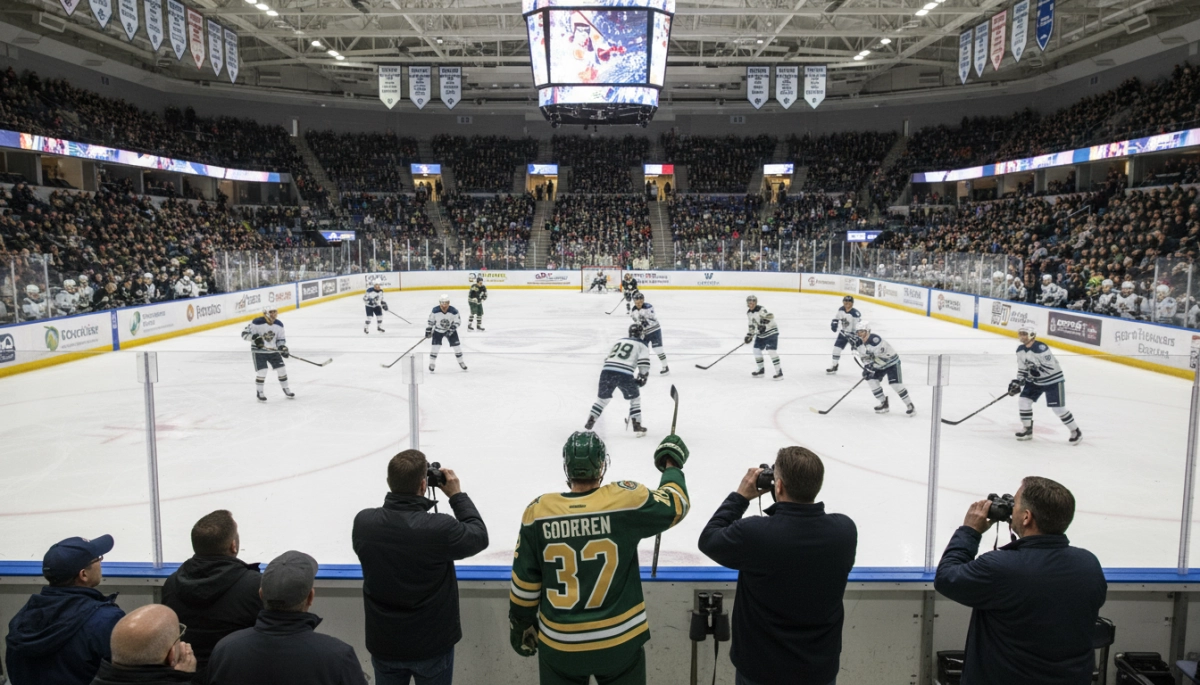








Why certain college hockey programs rise to national prominence
You follow scores, brackets, and NHL draft lists and have probably noticed that a handful of college programs consistently occupy the top of polls and rosters. Understanding why some programs become perennial threats requires looking beyond wins and losses. You’ll find that geography, recruiting pipelines, coaching stability, facilities, and institutional commitment all shape sustained success. This section explains the historical and structural context that lets a program move from occasional contender to true powerhouse.
Historical momentum and local hockey culture
In many parts of the United States, hockey grew from community rinks, youth travel clubs, and high school rivalries. Programs that emerged early in that culture—often in New England, the Upper Midwest, and parts of the Northeast—benefited from deep local talent pools. When you trace a powerhouse’s lineage, you typically see decades of community engagement: alumni who become donors, former players who return as coaches, and fan bases that create sustained pressure to invest in the program.
Conference alignment and national exposure
The conference a team plays in affects recruiting, media coverage, and postseason opportunities. If you want to understand why a program is consistently top-ranked, pay attention to the strength of its conference schedule and the exposure that brings. Conferences with television deals and guaranteed marquee matchups allow teams to showcase talent to scouts and recruits, reinforcing a winning cycle.
Traits you can use to spot a college hockey powerhouse
Not every successful season signals a long-term powerhouse. You can evaluate programs using consistent, observable traits. These markers will help you assess which teams are built for sustained dominance and which are likely enjoying a temporary peak.
Key organizational and on-ice indicators
- Recruiting reach: Powerhouses regularly attract top recruits from high-level junior leagues and national programs. You’ll notice rosters featuring players drafted by the NHL or invited to national development camps.
- Coaching continuity: Long-tenured coaching staffs with successful systems create player development pipelines. If you see coaching turnover, the program may slide; stability often correlates with consistent results.
- Player development track record: A history of alumni progressing to the NHL or pro leagues signals strong development. You can use draft picks, professional contracts, and international roster appearances as metrics.
- Investment in facilities: Modern training centers and rink upgrades matter. Facilities influence recruiting and day-to-day preparation, and programs that reinvest typically maintain competitive advantages.
- Postseason performance: Consistent deep runs in conference tournaments and the NCAA tournament indicate a program that performs under pressure.
With these contexts and traits in mind, you’re ready to examine the specific programs that exemplify those qualities, starting with those that have combined history, resources, and coaching into sustained national prominence.
New England dynasties: How Boston-area programs set the standard
New England’s college hockey scene reads like a who’s who of American programs—steeped in tradition, rivalries, and an almost ritualized approach to recruiting. Programs in and around Boston benefit from dense youth hockey networks and prep school pipelines that produce technically skilled, well-coached players who are already accustomed to intense, cold-weather competition. That translates into rosters stocked with NHL draftees, frequent national rankings, and consistent NCAA tournament appearances.
What distinguishes the Boston-area powerhouses isn’t just the talent pool; it’s institutional culture. Longstanding rivalries—week-to-week games that feel like postseason battles—sharpen teams and attract media attention. Athletic departments in this region also prioritize hockey as a marquee sport: dedicated fundraising, upgraded practice facilities, and high-profile non-conference schedules that boost Pairwise profiles and national visibility. Add in alumni networks that funnel donations, internships, and coaching talent back into the program, and you see why these teams rarely fall far from contention. For recruits, a program here offers not just development but exposure—weekly head-to-head matchups against top opponents and the sense of stepping into a program with both history and expectation.
Upper Midwest and the frozen heartland: Depth, development, and community roots
The Upper Midwest—Minnesota, Wisconsin, and the Dakotas—remains the backbone of American college hockey. In these states, hockey occupies a central place in community identity. That community investment shows up in high school leagues, summer development programs, and a web of junior clubs that feed college rosters. Programs in this region leverage local familiarity with the game to recruit systematically: they know the coaches, have relationships with junior leagues, and often convert late bloomers into pro-caliber players through structured development plans.
Facilities and fan culture are crucial here as well. Many schools play in rinks filled night after night, and that game-day energy helps retain recruits and energize alumni giving. Boards and administrations in the region often treat hockey as a program worthy of long-term investment—what you get is stable coaching staffs, patient development funnels, and consistent postseason presence. For players, the appeal is clear: immediate access to playing time, a path to pro opportunities, and the backing of communities where hockey matters year-round.
The Rocky Mountain axis and the rise of western programs
Colorado and the broader Mountain West have reshaped the national landscape over the past two decades. Programs in this corridor benefited early from strategic investments—new arenas, aggressive recruiting into the Western junior systems, and smart non-conference scheduling that increased Pairwise credibility. These teams paired strong recruiting with analytics-driven coaching hires and a willingness to travel nationally to build brand recognition.
What’s notable about the western surge is how quickly programs translated investment into results: increased NHL draft visibility, deeper NCAA runs, and the creation of new regional rivalries that fuel ticket sales and recruiting. The region’s relative geographic isolation forced programs to innovate—emphasizing player development, video resources, and national scouting reach—to compete with traditional power centers. As a result, the Rocky Mountain axis now routinely produces teams that challenge for national titles and recruit at a top-tier level, demonstrating that programmatic ambition plus institutional support can establish new powerhouses outside hockey’s historical heartlands.
Modern disruptors: analytics, NIL, and the transfer portal
College hockey’s landscape is being reshaped by off-ice forces as much as on-ice strategy. Advanced analytics inform coaching decisions and player evaluation, the transfer portal allows programs to retool rosters quickly, and NIL deals give schools new tools to recruit and retain talent. These disruptors favor organizations that adapt quickly—those with nimble staff structures, clear player development plans, and strong brand identities. Expect the next decade to reward programs that combine traditional strengths (culture, community, facilities) with modern operational agility.
The road ahead for college hockey powerhouses
Power shifts will continue as resources, innovation, and demographic changes intersect. Traditional strongholds will remain influential, but look for ambitious programs outside the historic centers to erupt into contention when investments align with smart coaching and recruiting. Fans who want to follow the evolution of the sport can track season-by-season metrics and postseason outcomes; official calendars and championship details are available through the NCAA site at NCAA Men’s Ice Hockey. Ultimately, college hockey’s future will be defined by programs that balance heritage with forward-thinking strategies—those that can both honor the game’s roots and embrace the tools shaping tomorrow’s winners.
Key Takeaways
- Long-term dominance arises from a mix of local talent pipelines, institutional support, and coaching stability.
- New factors—analytics, NIL, and the transfer portal—are accelerating change and creating opportunities for rising programs.
- Watch for geographic shifts as western and nontraditional programs convert investment and innovation into national competitiveness.