





Why Olympic Ice Hockey Occupies a Category of Its Own
Olympic ice hockey is more than another entry on the international calendar. For many players, representing their country at the Winter Games is the pinnacle of a career — something entirely apart from league titles or even a Stanley Cup championship. The tournament brings together nations across a two-week window of pressure that no regular season or playoff run can replicate.
Ice hockey has featured at the Winter Olympics since 1924. The women’s competition debuted at the 1998 Nagano Games. Both tournaments have grown considerably in competitive depth, global viewership, and political significance — particularly as debates about NHL player participation have shaped the event’s identity in ways no other sport quite mirrors.
How the Olympic Ice Hockey Tournament Is Structured
The tournament combines a group stage with a knockout phase. The men’s tournament typically features twelve teams; the women’s competition eight. Both move through a preliminary round-robin before the top finishers advance to a medal round bracket. Strong group stage performances earn direct quarterfinal entry, while a stumble forces teams into a high-pressure qualification game first.
From the quarterfinals onward, the format is pure single-elimination. One game, one result — no series to recover from. The team that loses a semifinal drops into the bronze medal match, while the two winners meet for gold. That compressed, winner-takes-all structure is central to Olympic hockey’s intensity.
Overtime and Shootout Rules
Preliminary round ties are typically decided by shootout. In the medal rounds, overtime periods precede any shootout, preserving knockout integrity. A shootout deciding a gold medal has happened before and remains one of the most dramatic conclusions the sport can produce.
How Nations Earn Their Place
Qualification is administered by the International Ice Hockey Federation through a tiered process that reflects the sport’s global spread. The host nation receives an automatic berth, and IIHF world rankings serve as the primary mechanism for seeding teams into direct spots or pre-Olympic qualifying tournaments.
For nations in the middle or lower tiers of the rankings, the path runs through regional qualifying tournaments — short, high-stakes events where a single loss can end a nation’s Olympic cycle. For players from smaller hockey countries, simply reaching the Games can represent a generational achievement.
Regional Pathways and IIHF Rankings
European hockey commands the majority of available spots, reflecting the depth across Finland, Sweden, Switzerland, the Czech Republic, and Slovakia. The Asian pathway gained visibility at the 2018 Pyeongchang Games, which featured a unified Korean women’s team — a joint North and South Korea roster — underscoring how hockey occasionally finds itself at the intersection of sport and diplomacy in ways most competitions never approach.
The Men’s and Women’s Competitions: Different Landscapes
While both tournaments share the same structural framework, they exist in genuinely different competitive environments. The women’s tournament has been dominated by Canada and the United States, who have met in every Olympic gold medal game since 1998. Countries like Finland, Sweden, and Switzerland have made real strides, but the gap from the podium’s top two steps remains significant.
That imbalance has generated debate. Critics argue a lopsided final diminishes drama. Supporters counter that the quality between Canada and the United States is exceptional by any measure, and the rivalry delivers genuine spectacle regardless of the scoreline.
Development Gaps and the Push for Parity
The IIHF has made expanding the women’s game a stated priority, investing in development programs across Europe and Asia. The growth of professional leagues for women — including the Premier Hockey Federation in North America — has given elite players outside North America more competitive experience than previous generations ever had. Whether that translates into Olympic medal contention within the next few cycles remains open, but the trajectory is measurably different from a decade ago.
On the men’s side, eight or more nations are realistically capable of winning gold in any given tournament. That depth is part of what makes the men’s draw compelling — and why NHL participation has loomed so large over the event’s identity for nearly three decades.
NHL Participation and Who Defines the Best Tournament in the World
No single issue has shaped Olympic men’s hockey more than whether NHL players compete. For the 1998 Nagano Games, the NHL paused its season and sent its full roster of elite players to Japan for the first time in the modern era. The result was widely considered the highest level of international hockey ever assembled — Gretzky, Forsberg, Hasek, and virtually every defining player of a golden generation competing under national flags in a knockout format with everything at stake.
The NHL continued through the 2014 Sochi Games, producing tournaments that generated enormous global audiences and some of the most memorable moments in international hockey history. The 2010 Vancouver gold medal game between Canada and the United States, decided by Sidney Crosby’s overtime goal, is frequently cited as one of the greatest games ever played at any level.
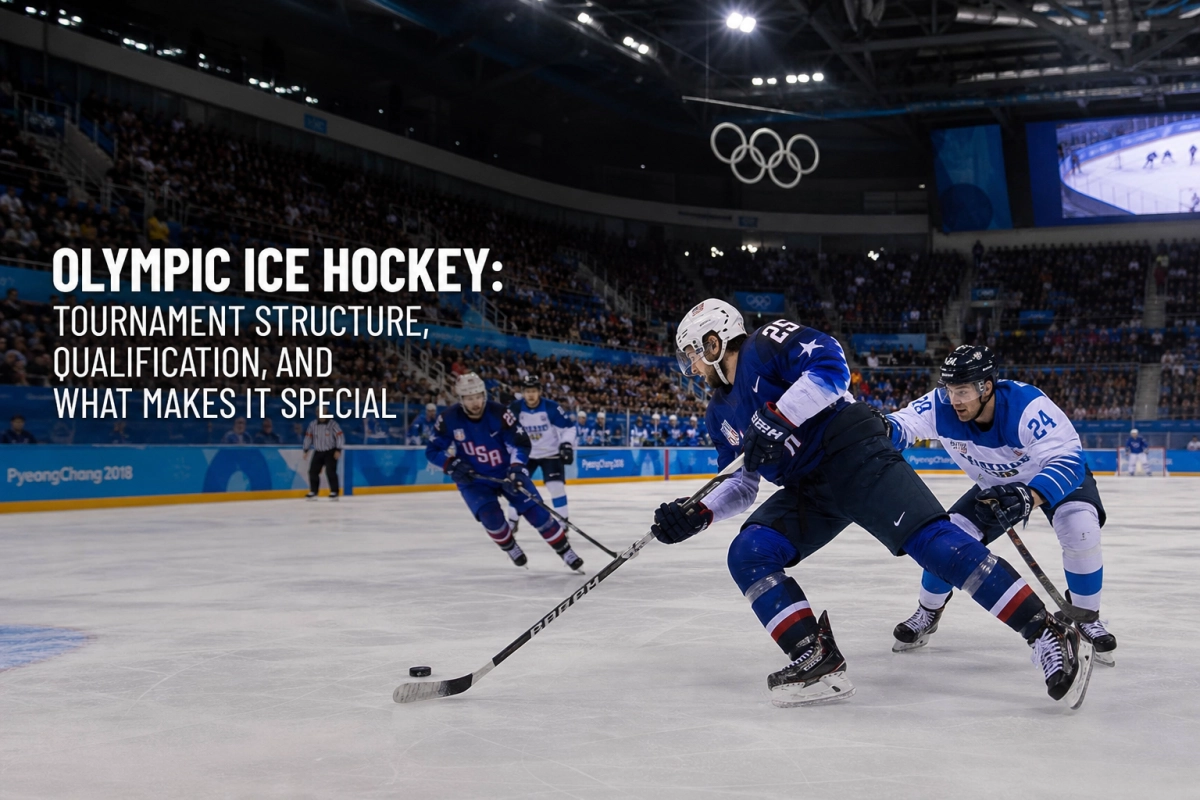
Then the NHL withdrew ahead of the 2018 Pyeongchang Games after failing to reach an agreement with the IOC on travel costs, insurance, and scheduling. For the first time since 1994, the Olympic men’s tournament proceeded without its best players — competitive and genuinely contested, but missing the quality ceiling that NHL participation provides.
The NHL returned for the 2026 Milano Cortina Games following an agreement reached in 2024, a decision met with significant enthusiasm. For many active NHL players who had never experienced a fully participatory Olympic tournament, the announcement represented a restoration of something the sport had been missing.
Why the Olympics Still Matters Even Without the NHL
Even during cycles without NHL players, Olympic hockey retained meaning that the annual IIHF World Championship cannot replicate. The Olympic stage reaches audiences who follow hockey through no other medium. The flag, the anthem, and the weight of representing something larger than a franchise carry a gravity that tournament structures alone cannot manufacture. Players who competed in Pyeongchang spoke about the experience with genuine pride, even knowing the talent ceiling was lower.
The World Championship, held in May after the Stanley Cup Playoffs begin, loses its best players from the strongest clubs. The NHL-organized World Cup of Hockey assembles elite talent but lacks the Olympic context that makes stakes feel different in a way that goes beyond sport. Neither carries the same weight of occasion.
What the Olympics Gives Hockey That Nothing Else Can
Olympic ice hockey endures as the sport’s most significant international stage because of what surrounds the competition, not only what happens during it. It compresses extraordinary pressure into a format with no margin for error, places the sport inside a global event that commands attention from casual viewers, and forces players to set aside franchise allegiances in favor of something defined entirely by where they were born.
For nations outside the traditional powers, a single Olympic appearance can shift a program’s development — inspiring young players, attracting investment, and changing how a country sees the sport. For established hockey nations, the Games are a quadrennial reckoning where historical legacy and present-day performance are measured together.
The tournament’s structural elegance produces outcomes that regular competition rarely delivers. Underdogs advance. Favorites stumble. Careers are defined in a single overtime period. The Olympics does not simply host ice hockey — it distills it into something the sport always promises and only occasionally delivers. That is why, regardless of which players are available or which nations qualify, the conversation about Olympic ice hockey never really goes quiet.