







Why national lists of hockey legends help you understand the game
You follow hockey for the speed, skill, and stories, and looking at famous players by country helps you see how the sport developed in different places. A national lens shows you not only who the stars were, but how cultural, political, and developmental systems produced those stars. When you read a country-based list, you’ll connect names to eras, styles of play, and the programs that fed professional leagues and international teams.
This approach also makes comparisons fairer: rather than ranking every player against one global standard, you can appreciate how a player changed hockey inside their own national context — whether by inspiring youth participation, elevating the national team, or transforming the way the game is coached. You’ll learn to spot patterns, like how certain countries emphasize skating and puck possession while others prize physicality or tactical discipline.
How fame is judged and early highlights from North America
Before you dive into lists of names, it helps to know the criteria used to call someone “famous.” You’ll find players included because of some combination of these factors:
- International success: Olympic medals, World Championships, or dominant performances in international tournaments.
- Professional impact: Records, MVP awards, championships, and long-term influence in top leagues (NHL, KHL, etc.).
- Cultural influence: Players who changed how hockey is perceived, increased participation, or became national icons.
- Longevity and consistency: Careers that maintained elite performance over many seasons.
With those standards in mind, start your journey in North America, where professional leagues and international competition shaped modern hockey.
Canada: the foundational icons you’ll expect to see
- Wayne Gretzky — often the first name you’ll encounter; his records and point-production redefined offensive excellence.
- Gordie Howe — a symbol of longevity and toughness; you’ll see his name associated with multiple generations of players.
- Bobby Orr — the defenseman whose skating and offensive output changed how defense is played.
- Mario Lemieux — a dominant force whose skill and resilience made him a transformative figure in late 20th-century hockey.
- Hayley Wickenheiser — representing women’s hockey, she expanded the game’s visibility and international success for Canada.
United States: pioneers and contemporary stars you should know
- Mike Modano — a link between youth development in the U.S. and long NHL success, especially among American-born players.
- Chris Chelios — durable defenseman whose career longevity and leadership are frequently cited.
- Patrick Kane — an example of modern skill and offensive creativity who helped bring prominence to U.S. forwards.
- Pat LaFontaine — notable for elite scoring and impact before injuries cut his peak years short.
Armed with this framework and these North American touchstones, you’re ready to explore how other regions — from Russia and Sweden to Finland and the Czech Republic — produced their own all-time greats; next, you’ll look at the European powerhouses and the Soviet-era legends who reshaped international hockey.
Soviet Union and Russia: architects of system hockey and dazzling skill
The Soviet program reshaped international hockey with a collective approach that emphasized skating, passing, and relentless conditioning. When you study Russia’s all-time greats, look for players who combined extraordinary individual technique with team-first hockey — and, in later decades, those who translated Soviet schooling into NHL success.
– Vladislav Tretiak — the unmistakable face of Soviet goaltending; Olympic and World Championship dominance made him an icon of an era.
– Valeri Kharlamov — a sublime skater and goal-scorer whose flair defined the Soviet forward prototype in the 1970s.
– Boris Mikhailov — captain and workhorse whose leadership and international record made him a national symbol.
– Viacheslav Fetisov — a defenseman who combined mobility and intelligence; influential in bridging players from the USSR to the NHL and in reforming player rights.
– Igor Larionov — the “Professor” of puck possession; his vision and passing helped modernize how forwards thought the game.
– Pavel Bure — the “Russian Rocket,” whose sheer speed and scoring instincts made him a superstar in North America and abroad.
– Alexander Ovechkin — a modern icon whose scoring, physicality, and international commitment kept Russia in headlines for decades.
– Evgeni Malkin — a complete offensive center who represents the post-Soviet generation’s blend of NHL excellence and international success.
The arc from Soviet-era state teams (the Central Red Army club, Dynamo) to the independent Russian stars in the NHL illustrates how political and structural change affected playing styles and career paths.
Sweden, Finland, and the Czech Republic: national schools of technique and resilience
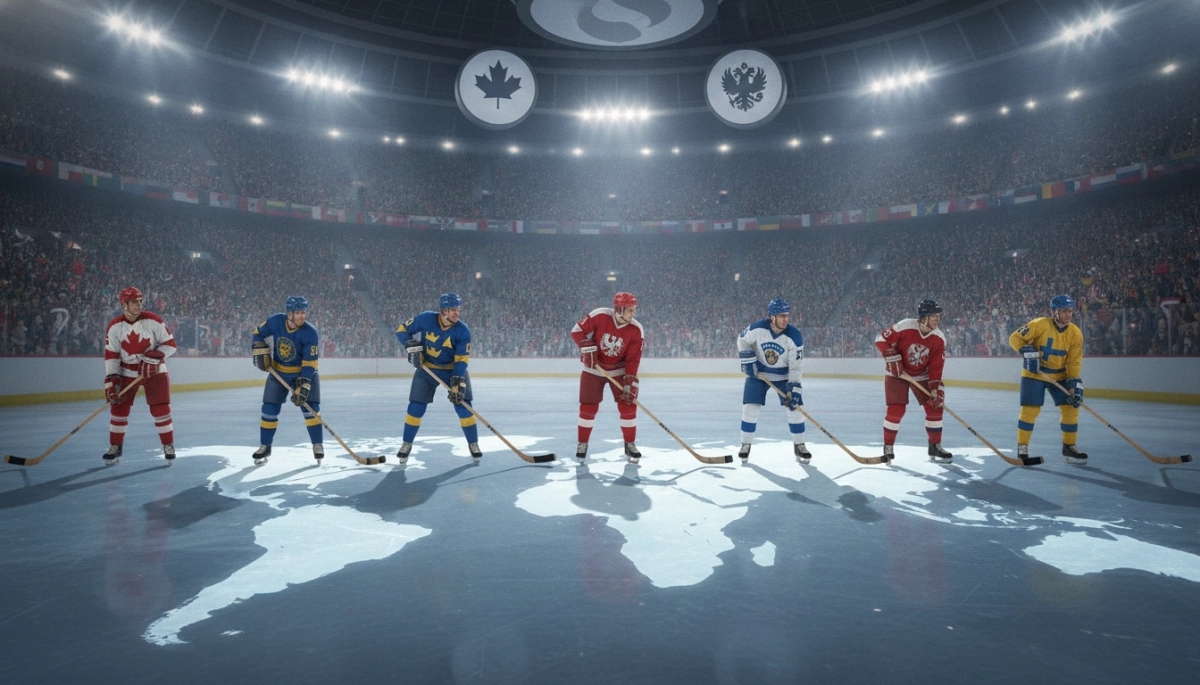
These neighboring hockey nations produced stylistic distinctions you can spot on the ice: Sweden’s structured two-way play and coaching pipeline, Finland’s goaltending tradition and work ethic, and Czech Republic’s creativity and craft. Each country has its household names who embodied those attributes while achieving success at club and international levels.
– Sweden:
– Börje Salming — one of the first European defensemen to succeed long-term in the NHL; a trailblazer for Swedish players.
– Nicklas Lidström — the textbook defenseman whose positional play and consistency set a new standard.
– Peter Forsberg — a mercurial playmaker whose intensity and skill defined late-90s Swedish hockey.
– Henrik Lundqvist — a culturally significant goalie who brought Swedish calm and elite performance to the NHL.
– Finland:
– Teemu Selänne — “The Finnish Flash,” whose goal-scoring and Olympic performances inspired a generation.
– Jari Kurri — a potent winger whose NHL championships and partnership with Wayne Gretzky elevated Finland’s profile.
– Saku Koivu — leadership and resilience (including his comeback from illness) made him a national hero.
– Czech Republic:
– Jaromír Jágr — longevity and production across decades; a symbol of Czech skill and individuality.
– Dominik Hašek — an unorthodox, wildly effective goalie whose international and NHL accolades are unparalleled.
– Petr Čech? (note: Petr Čech is soccer) Instead, mention Peter Šťastný — a pioneer who helped open the NHL door to players from Czechoslovakia.
These stars reveal how robust domestic systems, plus cross-border club play and NHL opportunities, diversified styles while preserving national identities.
Other European contributors and the rise of global talent
Hockey’s modern map extends beyond the historic powers. Emerging and mid-tier hockey nations have produced players who altered expectations at home and on the world stage, helped by scouting, the KHL, and expanded international competition.
– Anže Kopitar (Slovenia) — an exemplar of leadership and two-way play who single-handedly raised hockey’s visibility in Slovenia.
– Zdeno Chára (Slovakia) — towering defenseman whose leadership and longevity inspired a generation.
– Marian Hossa (Slovakia) — a skilled winger noted for clutch play and international consistency.
– Roman Josi and Mark Streit (Switzerland) — examples of Swiss development producing top-pairing defensemen and NHL leaders.
– Leon Draisaitl (Germany) — a modern offensive force who demonstrates how German development now yields elite NHL talent.
These names show hockey’s globalization: talent now emerges from diverse systems, and national lists help trace those development stories as the sport continues to evolve internationally.
Emerging trends and the next generation
Hockey continues to evolve as technology, coaching methods, and global scouting reshape who becomes famous and why. Expect to see more players from nontraditional markets, a faster-paced, skill-first style across leagues, and growing parity in international tournaments. Women’s hockey is also expanding its footprint, creating new national icons and inspiring broader participation.
- Youth development: expanded academies and international exchanges are widening talent pools.
- Analytics and training: data-driven coaching is changing how players are evaluated and developed.
- Cross-border careers: leagues like the NHL, KHL, and European circuits will remain interconnected pathways for rising stars.
Parting rinkside thoughts
Names on national lists do more than celebrate individual skill — they map cultural priorities, developmental successes, and moments that captivated fans. Whether you’re a longtime follower or a newcomer, let these lists guide you to games, stories, and seasons that deepen your appreciation of the sport.
For authoritative schedules, historical records, and international context, check resources such as the International Ice Hockey Federation.