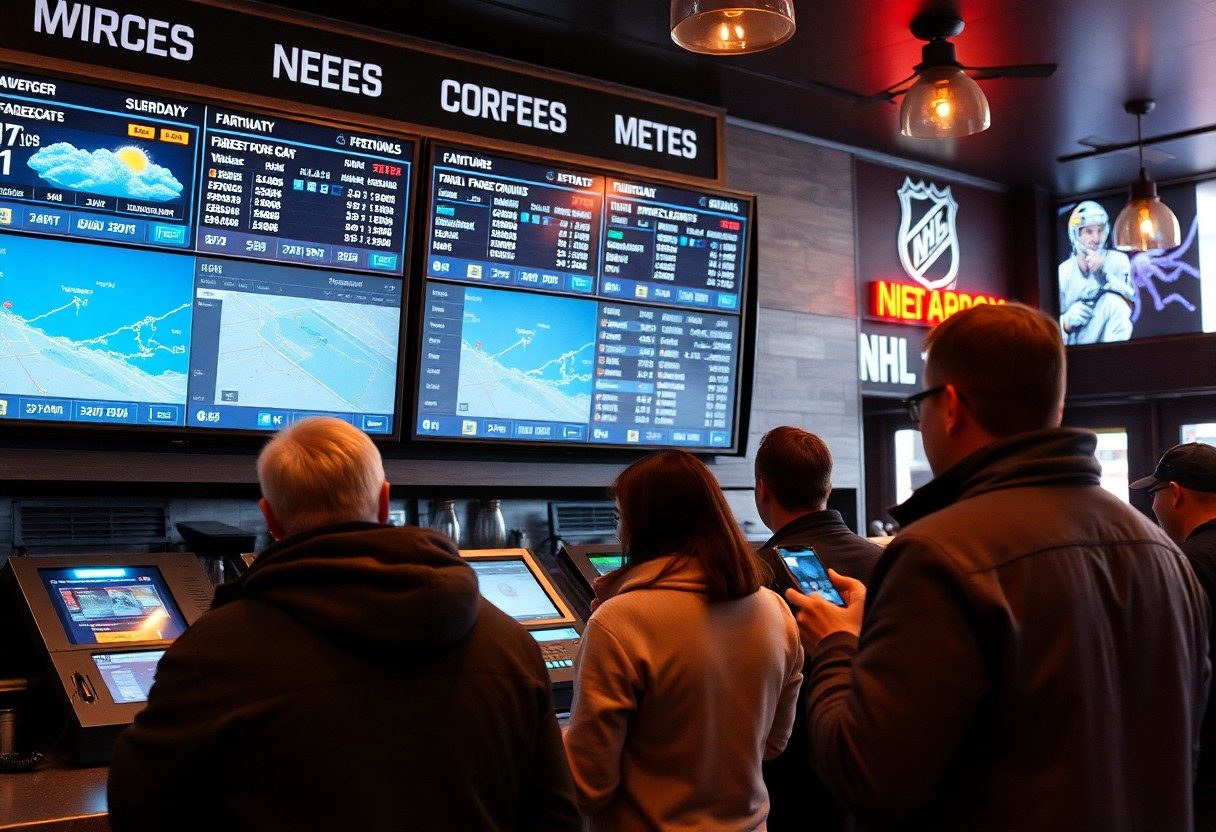









How to interpret today’s NHL playoff odds and why early movement matters
You’re looking at a crowded market during the NHL playoffs: moneylines, puck lines, totals, and futures all adjusting in real time. To interpret what you see, focus on the relationship between price (the odds) and implied probability. When a favorite’s juice tightens or a line moves a half-goal, that’s the market updating expectations. You need to separate noise—late retail bets, injury rumors, public sentiment—from meaningful shifts that reflect new information or professional (sharp) activity.
Odds providers and sportsbooks publish different formats and update speeds, so compare several books and monitor exchanges if you can. Early lines established when books open will often change as sportsbooks balance liability; sharp action tends to trigger faster, larger moves. As a rule, the earlier and more sustained the move, the more likely it’s being driven by strong money rather than casual bettors.
Signs sharp bettors are influencing lines today
Sharp bettors and syndicates leave footprints you can learn to read. You’ll rarely see sharp action announced; instead, you should watch for behavioral cues across markets. Here are the most reliable indicators:
Key indicators of sharp money
- Rapid line movement with little public attention — a moneyline or puck line shifts significantly before a game becomes widely discussed.
- Reverse line movement — the line moves toward the public favorite while the public is placing money on the underdog, suggesting books are reacting to large, professional bets.
- Consistent movement across multiple sportsbooks — identical or parallel moves at several books indicate a coordinated influx of bets rather than one shop balancing risk.
- Sudden changes in alternate markets — props, period lines, and totals moving in tandem with main markets can reflect sophisticated hedging by sharps.
- Line holds despite lopsided public betting — if a book resists adjusting even though the handle favors one side, they may have been offset by sharp bets earlier.
When you spot these signals, you should act quickly; sharp-driven moves often lock in within hours or even minutes. Also pay attention to timing: market-opening moves typically come from professional shops, while late-afternoon or pre-game spikes can be a mix of last-minute sharps and heavy public action reacting to new information.
Which games and markets you should watch first today
Start by scanning matchups with close spreads, unsettled goaltending situations, or key injury questions—those are where corners of the market move easiest. Futures (series prices) react slower but can show where sharps are taking a long view; sudden swings in series odds are as telling as single-game lines. For in-game betting, monitor totals and period lines; sharps will exploit game-flow inefficiencies faster than the public.
Next, we’ll break down specific game-by-game movements, quantify where the largest sharp bets landed today, and show you how to use timing and price action to anticipate further shifts.

Game-by-game snapshots: where the big money landed today
Below are representative snapshots from today’s market action that illustrate how sharps left their marks. These are condensed case studies — watch for the same footprints in your own book screens.
– Series A — Tight Home Favorite (Moneyline tightened from -130 to -165): The opener priced the home side as a narrow favorite; within two hours several books shortened the price while handle remained split. That reverse line movement, coupled with identical moves across three leading books, signaled early professional interest. Alternate markets moved too: the -1.5 puck line shifted from +180 to +145, and period-one totals moved down a half-goal. Interpretation: sharps preferred the favorite and hedged across alternate markets, likely due to an anticipated early-period dominance or a matchup advantage on the home side’s top line.
– Game B — Goalie Uncertainty (Total collapsed 6.0→5.0): When word leaked that the projected starter was questionable, public money poured onto the underdog at +200. Instead of the books inflating the favorite, totals and props saw the biggest movement: team-to-score props for the underdog and first-period scoring lines jumped. Several sportsbooks held the moneyline longer than expected while slashing the total and moving alternate team totals — a classic sharp footprint that suggests professionals anticipated a shortened game script or matchup-driven scoring reduction rather than a straightforward upset.
– Game C — Late Sharp Spike (Puck line swung -2.5→-1.5): About 90 minutes before puck drop, the puck line moved a full goal in the favorite’s direction with minimal retail attention. This was mirrored across bookmakers and followed by immediate layoff action on totals and period props. When you see a late coherent move this size, expect books to quickly reprice live lines and in-play juice; sharps were positioning for in-game hedges.
These snapshots highlight three repeatable patterns: parallel cross-book moves, correlated alternate-market activity, and timing (early vs. late). When all three align, the probability that the move is sharp-driven increases substantially.
How to translate timing and price action into actionable plays
Knowing that sharps have been active is only half the battle — you need clear actions tied to the pattern you observe.
– Early, sustained move toward a side: If multiple books shorten a team early and keep it short for hours, that often represents true edge. Consider betting the same side early rather than waiting for public money to inflate the price. Use smaller initial stakes and add only if movement continues.
– Reverse line movement: When the line moves toward the public favorite while retail is on the underdog, the sharp choice is often the side receiving concurring line support. This is an instance to probe for value; take a position or buy a better alternative market (e.g., -1.5 puck or player shooting props) that mirrors sharp intent.
– Correlated alternate-market action: If props and period lines move with the main market, sharps are hedging. Rather than mirror the public, consider taking the correlated alt market (e.g., first-period puck line or team totals) where the book’s pricing inefficiencies tend to persist longer.
– Late spikes: Treat late coherent moves as high-probability but low-duration opportunities. If possible, place the bet quickly or set an alert to jump on live-market inefficiencies created when books reweight liability.
Position sizing matters: follow unit sizing tied to confidence—sharp-patterned moves deserve higher but still disciplined stakes; ambiguous or isolated shifts warrant caution.
Now that you can read the footprints sharps leave and convert timing and price action into plays, the remaining work is execution. Set your processes—alerts, book-screens, staking rules—and stick to them while the market moves. Discipline, speed and selective aggression will separate consistent winners from the rest of the crowd.

Putting it into practice
Make the edge actionable with a short checklist you can rely on during playoff swings:
- Set alerts on multiple books for early and late line moves so you can act quickly.
- Track line history and correlated alternate-market movement before committing bigger units.
- Use strict unit sizing tied to the clarity of the sharp pattern; avoid impulse increases after public flurries.
- Favor markets where sharps tend to hedge (period lines, team totals, alternate puck lines) when the main market looks inefficient.
- Keep a running log of bets and outcomes to refine when certain sharp signals produced real edges.
- Reference live aggregated odds and line history when you need a cross-book view — for example, check NHL odds and line history to validate parallel moves across sportsbooks.
Frequently Asked Questions
How can I distinguish sharp money from public action in real time?
Look for rapid, parallel line movement across multiple reputable sportsbooks, reverse line movement where the line moves toward the public favorite despite retail betting on the underdog, and coordinated shifts in alternate markets (props, period lines, totals). Early sustained moves with little social discussion are a strong indicator of sharp action.
Should I always follow line movement and bet the side sharps seem to favor?
No. Use line movement as one input among many. Favor situations where movement is corroborated across books and markets, fits matchup data (goaltending, injuries, travel), and matches your staking rules. Blindly following every move increases exposure to contrarian public spikes and books’ balancing tactics.
When is the best time to place playoff bets based on sharp activity?
Early-morning to midday moves often reflect professional shops and can present sustainable value; late coherent spikes (90–120 minutes before puck drop) are high-probability but short-lived and require quick action. Choose timing that matches your ability to execute and the market signals you trust most.