






How Sergei Fedorov Redefined the Modern Two-Way Forward
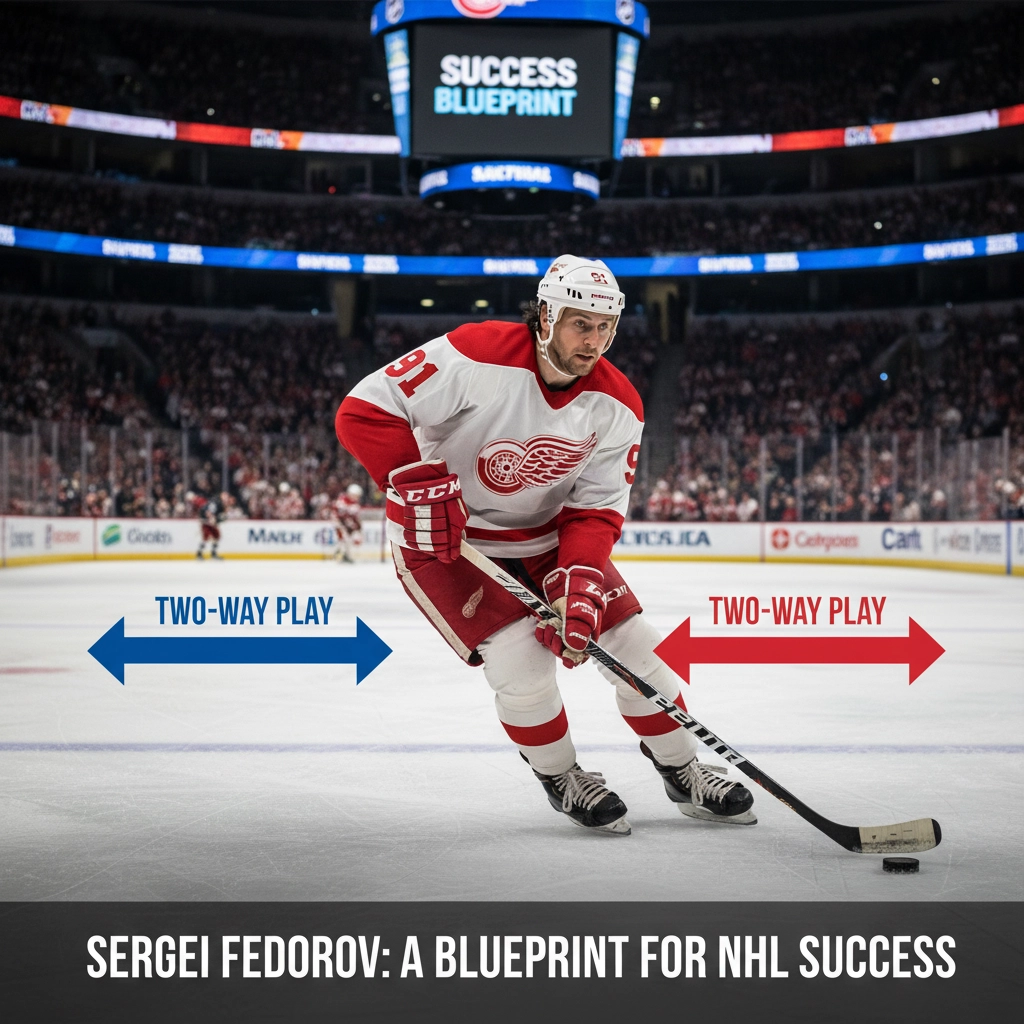
You already know that the NHL rewards players who can impact both ends of the ice. Sergei Fedorov did more than reward that trend—he helped set the standard. As a uniquely mobile center and occasional wing, Fedorov combined elite skating with disciplined defensive reads and a relentless transition game. Studying his style gives you a concrete framework to become the kind of player coaches trust in every situation: power play, penalty kill, late-game protect-the-lead moments, and full-tilt rushes.
This section explains the components of Fedorov’s two-way play and how you can start adopting the same habits. You’ll focus on the observable skills—skating, positioning, puck management—and on-the-ice habits—anticipation, communication, and role clarity—that turned a skilled scorer into a complete, game-changing presence.
Key Elements of Fedorov’s Two-Way Game You Can Copy
Breakdown helps you prioritize what to train. Fedorov’s game separates into a few repeatable elements you can practice and measure:
- Explosive and efficient skating: He used short, powerful crossovers and superb edges to close gaps, join rushes, and recover defensively. You should practice accelerations out of pivots and tight turns to mirror this mobility.
- Smart gap control and angling: Rather than relying on brute force, he forced opponents into low-percentage plays by controlling the space between himself and the puck carrier.
- Seamless transition instincts: Fedorov often turned defensive recoveries into offense with one or two decisive passes or a quick carry. That decision-making—when to pass, when to skate—is teachable.
- Reliable puck protection and outlet choices: He rarely turned the puck over in dangerous areas, choosing safe exits that created clean offensive chances.
- Situational awareness and role flexibility: He read teammates and opponents, adjusting his role in the defensive zone vs. the offensive rush without compromising structure.
Practical Habits and Early Drills to Build a Fedorov-Like Foundation
Start with simple, repeatable habits you can do in practice or during team sessions. These form the backbone of game-time instincts:
- Drill tight turns, backward crossovers, and first-step acceleration for 10–15 minutes each skating session.
- Practice controlled gap drills with a coach feeding the puck; focus on angling the attacker to the boards rather than lunging for the hit.
- Work on outlet accuracy under pressure: small-sided drills where you must make a 2–3 second decision to pass or carry.
- Replay and annotate short game clips of your shifts to identify hesitation points—Fedorov minimized hesitation through repetition and situational rehearsal.
- Develop communication cues with linemates for backchecks and support positions so you’re consistently in the right place at the right time.
With these components and habits in place, you’ll build a solid base for two-way impact; next, we’ll examine specific game-film sequences and step-by-step drills that recreate Fedorov’s best plays so you can practice them in game-like settings.
Recreating Fedorov’s Signature Sequences: Drill Progressions You Can Run Tomorrow
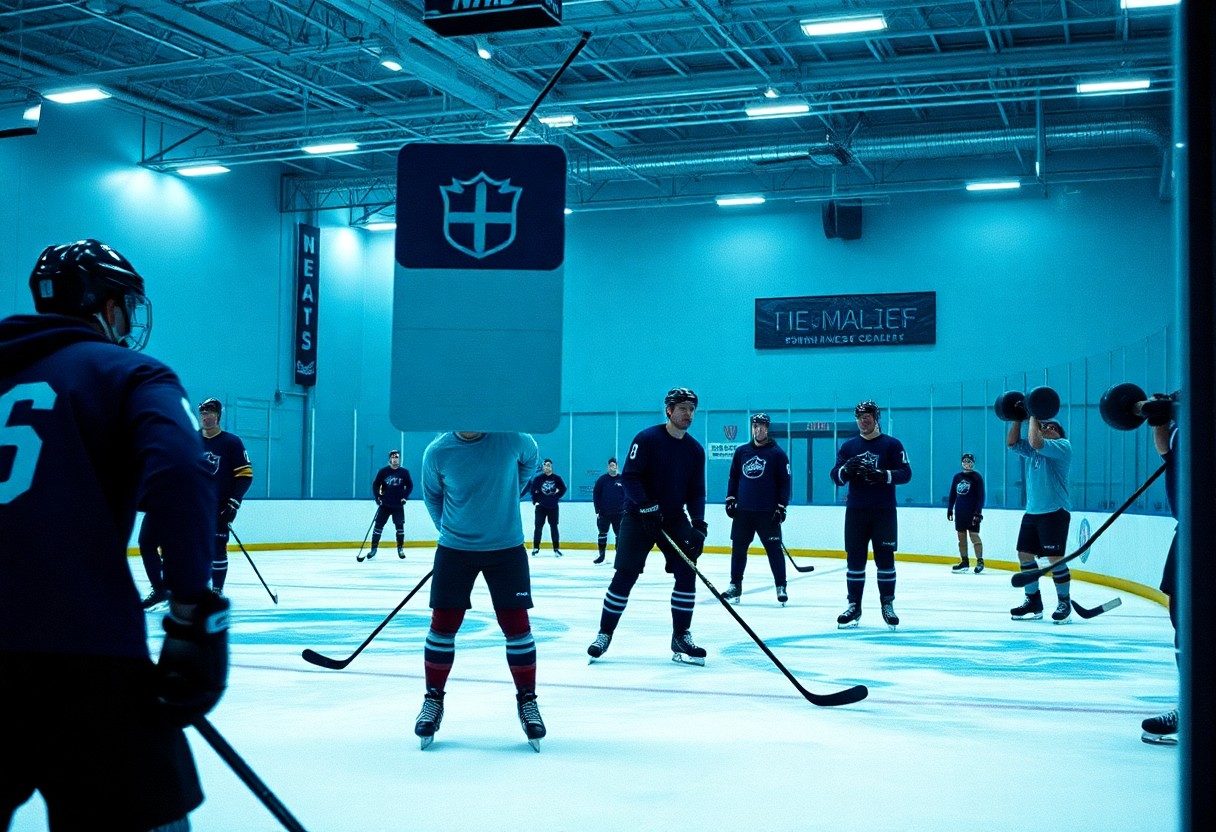
Below are three game-like sequences drawn from Fedorov’s most repeatable plays, with step-by-step progressions and coaching cues so you can practice the decision-making as well as the mechanics.
1) Fast Break Turnover → Central Carry → Quick Outlet
– Setup: 3v2 offensive-to-defensive transition. Start with three attackers retrieving a loose puck in their zone; two defenders break out.
– Objective: Force the turnover, carry through center ice, then choose one of two outlet options under 2–3 seconds.
– Progression:
– Phase A (control): No opposition pressure — emphasize smooth crossovers, protective puck tucks, and head-up scanning for outlets.
– Phase B (live pressure): Add defenders; force the ball-carrier to decide between a rim/pass or a tempo-carry at game speed.
– Coaching cues: “Head up every stride,” “protect with inside shoulder,” “one decisive move — commit.”
– Reps/measure: 8–10 reps, measure successful outlet completion and number of neutral-zone turnovers forced.
2) Gap Control, Angling, and Retrieval
– Setup: One defender vs attacker starting at the hash marks; puck is rimmed to the corner with a coach as passer.
– Objective: Maintain a controlled gap, steer attacker to the boards, then execute a safe outlet or quick counter.
– Progression:
– Mirror footwork and angling drills (no puck).
– Add puck retrievals and contain the attacker without lunging.
– Finish with a pressured breakout pass to a trailer.
– Coaching cues: “Short choppy crossovers,” “force weak side,” “stay on toes — don’t reach.”
– Reps/measure: 10 attempts — track forced turnovers and successful exits.
3) Small-Area Puck Protection and Exit Under Pressure
– Setup: 2v2 inside the defensive zone with a coach ready to pinch or backcheck.
– Objective: Protect the puck along the boards, find a rim or chip-out, or draw pressure to free a teammate for an outlet.
– Progression:
– Start slow to work on body positioning, then escalate to live small-area competition.
– Coaching cues: “Lower center of gravity,” “use hip to shield,” “look to trailer.”
– Reps/measure: 6–8 sets — count turnovers in high-danger areas and successful controlled exits.
Run these drills regularly and keep them short (10–15 minutes each). The aim is muscle memory for decisions — Fedorov’s advantage wasn’t isolated skill but the speed and confidence of repeating the right reads.
From Practice to Performance: On-Ice Cues and Role Management During Games
The bridge from practiced reps to consistent game impact is learning the in-game cues that should trigger Fedorov-style actions. Focus on recognition rather than mimicry.
– Neutral-zone triggers: If the puck carrier’s head is down or a defender is late on support, commit to the carry. If the opponent squeezes into the middle, delay and funnel to a rim pass.
– Defensive triggers: When the puck chips to the corner and your winger is trailing, tighten the gap immediately; when a centering pass is attempted from the half-wall, cheat slightly inside to intercept lanes.
– Special teams cues: On the power play, rotate into seams quickly but keep one pivot deep as an outlet. On the PK, pressure the puck early if you can force a quick, weak clearance; otherwise clog lanes and be ready to counter.
– Energy and shift management: Fedorov picked his moments to gamble offensively. Track your shift count and use the first half of a shift for high-intensity reads; in the latter half, prioritize safe plays.
– Communication: Simple vocal cues (“I’ve got middle,” “rim it,” “hold”) and hand signals keep the structure intact so your risky plays don’t create chaos.
Pair these cues with video habit loops: after every game, log 3–5 instances where you made the right read and 2–3 where hesitation cost you possession. Over weeks this targeted reflection recreates Fedorov’s instinctive timing and makes two-way decisions automatic.
Putting the Blueprint Into Practice
Action, not admiration, turns a blueprint into a habit. Pick one sequence from the drills above and commit to short, focused reps three times a week; pair those reps with the in-game cue checklist and a one-minute video or self-reflection after each session. Prioritize decision speed over flashy execution — the goal is making the right read reliably under pressure.
Track two simple metrics each week (e.g., successful exits per session and turnovers forced) and adjust progressions when your numbers stall. For additional structured drills and progression ideas, check resources like NHL Player Development.
Frequently Asked Questions
How often should players run these Fedorov-style drill progressions?
Short, frequent practice beats occasional long sessions. Aim for 2–4 focused drill sessions per week (10–15 minutes per drill) plus game-speed repetitions during team practice. Consistency builds the decision-making speed that defines two-way impact.
Can youth or recreational players safely use these drills, or are they pro-only?
They’re adaptable. Reduce tempo, space, and contact for younger or less experienced players, and emphasize fundamentals (skating stance, puck protection, head-up play) before adding live pressure. Coaching cues and simplified progressions keep the work developmentally appropriate.
What are the simplest ways to measure improvement and ensure drills transfer to games?
Use a small set of objective measures: successful controlled exits, forced turnovers, and completed outlets per session. Supplement with post-game video clips and a two-line habit log (what went right, what to improve). Over weeks, the decision frequency and cleanliness of execution will indicate real transfer.