







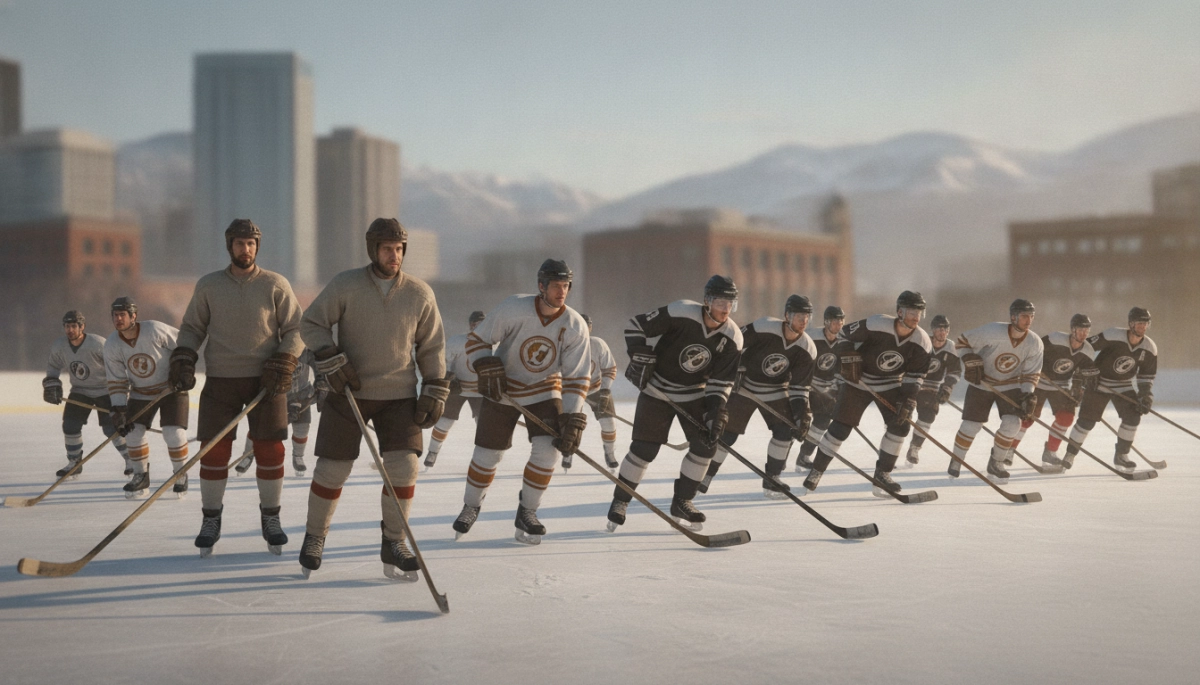
How the game’s first heroes shaped what you love about hockey
When you watch a fast break, a pinpoint pass, or a highlight-reel goal, you’re seeing ideas and skills developed by the game’s earliest stars. Hockey didn’t arrive fully formed; it evolved through players who pushed speed, creativity, toughness, and strategy. Understanding those pioneers helps you appreciate why certain moves, positions, and rivalries still define the sport.
Early figures in hockey were not only exceptional athletes but also rule-influencers, team builders, and public personalities who expanded the game’s appeal across Canada, the United States, and later Europe. In the sections that follow, you’ll meet several of these foundational players and learn the concrete ways they changed hockey.
Early pioneers who set enduring standards
Below are a handful of the most influential early players. For each, you’ll find what made them stand out and how their legacy persists in the way you watch and play hockey today.
-
Hobey Baker — elegance and sportsmanship
You’ll recognize Hobey Baker as one of the first hockey celebrities. Active in the 1910s, Baker combined speed, stickhandling, and exemplary conduct on the ice. His emphasis on fair play and athletic grace helped frame hockey as a sport of skill as well as grit, inspiring early amateur and college programs across North America.
-
Georges Vezina — the prototype of the elite goaltender
As goaltending techniques were in their infancy, Georges Vezina brought calm consistency and positional intelligence that set a benchmark. You still see his influence in modern goalie fundamentals: reading plays, controlling rebounds, and staying square to shooters. The Vezina Trophy, awarded to the NHL’s top goalie, preserves his name for a reason.
-
Howie Morenz — speed, heart, and the rise of the superstar
Howie Morenz electrified fans in the 1920s and 1930s with a combination of blistering speed and creative offense. He helped popularize the notion of a single player as a ticket-seller and media draw, accelerating hockey’s evolution into a spectator sport with marketable stars.
-
Eddie Shore — physicality and defensive innovation
Eddie Shore brought intensity to the blue line. Tough and strategic, he redefined what you expect from an elite defenseman: physical dominance, puck retrieval, and the ability to influence the game without scoring. His style informed future generations of two-way defenders.
-
Frank and Lester Patrick — organizers who rewrote the rules
While not all on-ice stars, the Patrick brothers were critical pioneers. They introduced rule changes, playoff formats, and innovations like the forward pass (in earlier forms) that you now take for granted. Their administrative work created structures that allowed star players to flourish.
Why these early names still matter to your view of modern hockey
These pioneers established playing styles, professional standards, and audience expectations that influenced how teams were built and how talent was evaluated. When you look at a current superstar’s speed, a goalie’s technique, or a defenseman’s physical presence, you can trace many elements back to these early innovators.
Next, you’ll explore how the sport transitioned from these beginnings into its mid-century golden era and meet the famous players who bridged the gap to the modern stars you know today.
Mid-century icons who defined hockey’s golden era
Between the 1940s and the 1960s, hockey matured into a cultural institution. Stadiums filled, broadcast schedules expanded, and a handful of transcendent players became household names — not just for their statistics but for the way they changed expectations about skill, leadership, and the spectacle of the game.
Maurice “Rocket” Richard was the first pure goal-scoring terror. His speed, intensity and playoff heroics made him the face of a generation and turned the postseason into an event fans tracked with feverish attention. Richard’s temperament and on-ice dominance helped cement the idea that superstar players could carry a franchise’s identity.
Gordie Howe embodied longevity and all-around excellence. “Mr. Hockey” was equally dangerous as a scorer, playmaker, and physical presence; his style popularized the expectation that great forwards must be complete players — able to battle in corners, contribute on special teams, and play heavy minutes season after season.
Jacques Plante changed goaltending with a single, practical innovation: the mask. After adopting facial protection in the late 1950s, Plante demonstrated how equipment could extend careers and alter positional technique, paving the way for modern goaltending gear and a more positionally sound style of play.
Jean Béliveau represented the combination of skill and dignity that institutions wanted to promote. His leadership, playoff poise and understated excellence taught teams the value of character and consistency, contributing to the mythos around franchise heroes.
These players made hockey more than a regional pastime; they made it a shared cultural touchpoint, set the statistical and behavioral standards young players chased, and helped hockey evolve from gritty pastime to polished professional sport.
Expansion, international influence, and the bridge to modern stardom
The NHL’s expansion in 1967, plus the arrival of televised games and growing international competition, created the conditions for a new kind of star — faster, flashier, and more global. Several players and moments from the 1960s and 1970s served as bridges to the modern era.
Bobby Hull brought the power forward archetype into focus with a blistering slapshot and an offensive instinct that forced defenses to adapt. Hull’s scoring exploits and marketability foreshadowed the era when individual talent could drive ticket sales and media attention.
Bobby Orr redefined defense. By turning the blue line into an offensive launch point — flying through the neutral zone, creating scoring chances, and dominating transition play — Orr rewrote positional expectations and inspired coaches to value mobility and creativity in defensemen.
The growing international presence — players like Börje Salming from Sweden and the shock of the 1972 Summit Series against the Soviet Union — exposed North American hockey to different tactics, conditioning, and puck-control philosophies. That cross-pollination accelerated stylistic changes in training, skating technique, and team systems.
Together, expansion, innovation in equipment and coaching, and international competition set the stage for the modern superstars you’ll read about next: players who combined the physicality of the old guard with the speed, skill and global reach of a truly modern game.
Modern superstars and the game’s present
Wayne Gretzky — the record-setter
Known simply as “The Great One,” Gretzky transformed offensive expectations with unparalleled vision and consistency. His assist-heavy style altered how teams created offense and how players value playmaking.
Mario Lemieux — skill, size, and resilience
Lemieux combined elite skill with physical presence and overcame serious health challenges to remain one of the game’s most dominant performers. He showed how rare talent can reshape a franchise’s identity.
Jaromír Jágr — durability and individualism
Jágr’s longevity and unique style kept him productive across eras and leagues, demonstrating that adaptability and a strong work ethic can extend elite careers well beyond conventional expectations.
Sidney Crosby — leadership in the modern era
Crosby represents the modern complete player: elite skill, defensive responsibility, and leadership under pressure. He illustrates how a franchise cornerstone can define sustained success on and off the ice.
Alex Ovechkin — the pure goal scorer
Ovechkin brought old-school scoring instincts into the analytics age, blending shot volume and elite finishing to rewrite goal-scoring benchmarks for power-forwards.
Connor McDavid — speed as a new baseline
McDavid’s combination of top-end speed and decision-making has accelerated the sport’s pace, pushing teams to prioritize skating, transition offense, and conditioning in player development.
The ongoing story of hockey
Hockey’s history is not a closed book but a living story written by every generation of players, coaches, fans and communities that keep skating rinks warm and youth programs active. From backyard pond hockey to packed arenas and international tournaments, the sport evolves while preserving the threads—skill, grit, creativity, and community—that make it distinct.
If you want to explore the people and moments that shaped the game in more detail, the Hockey Hall of Fame is a great starting point for deeper reading and archival material. Keep watching, playing, and debating — the next legendary name could be skating in your local rink right now.