







How Finnish hockey philosophy creates consistent on-ice behavior
You’ll notice a distinct throughline when you watch Finnish teams: discipline first, creativity second. Finnish coaching culture emphasizes repeatable patterns and shared responsibilities so every player knows their role without hesitation. That clarity allows teams to react as a unit rather than relying on individual improvisation. As a coach, player, or analyst, understanding that philosophy helps you see why Finland consistently punches above its weight in international tournaments and club competition.
At the heart of this philosophy is a system-driven approach that values positioning, timing, and small-game details. You don’t need an exotic tactic to be effective — you need a structure that minimizes risk and maximizes collective strengths. The following sections break down the foundational elements you’ll encounter when studying Finnish systems.
Core building blocks: structure, pressure, and role clarity
When you examine game footage, look for three recurring themes that underlie Finnish tactics: structural balance, proactive pressure, and clearly defined roles. These elements interact to produce efficient transitions and resilient defensive shapes.
Structural balance: defense as a team concept
- Compactness: You’ll see tight spacing between defensemen and forwards in danger zones so passing lanes are limited and recoveries are faster.
- Layering: Finnish teams use staggered lines of coverage — first pressure, second containment — to funnel play into low-danger areas.
- Responsibility switching: Players are trained to hand off coverage cleanly when teammates engage, reducing exploitable gaps.
Proactive pressure and the neutral zone
You’ll often hear that Finland “wins the neutral zone.” That’s because their systems prioritize controlled aggression: applying pressure early to force predictable exits, then taking possession in spaces where you can create high-quality entries. Key patterns include:
- Structured forecheck options (e.g., 1-2-2 or aggressive pinches) that are chosen based on opponent tendencies.
- Priority on stick and body positioning to steer attackers wide rather than allowing direct lanes to the middle.
- Quick, rehearsed breakout sequences that exploit overcommitments by the opposition.
Role clarity: training habits that persist under pressure
One thing you’ll appreciate is how players rarely make position-based errors under pressure. Coaches in Finland spend abundant practice time on micro-decisions: when to join the rush, when to stay home, how to support a puck carrier without cluttering lanes. This results in fewer turnovers and more consistent puck support across five-man units.
These early sections set the tactical foundation: controlled structure, attacking through the neutral zone, and drilled role awareness. In the next section you’ll examine how these principles are applied in specific systems — from defensive zone coverage to power-play schemes — and how they are taught during practice sessions.
Defensive-zone systems: shaping danger and inviting mistakes
In the defensive zone Finnish teams focus less on flashy blocks and more on controlling where the play happens. The goal is simple: keep pucks to the outside, deny clean looks, and force low-percentage plays. That is achieved through predictable, teachable principles rather than ad-hoc heroics.
- Funneling and lane priority: Players position to steer attackers into the boards and behind the net, protecting the slot and hemline. Defensemen angle their skates and sticks to close the middle, while forwards take away the high-danger seams.
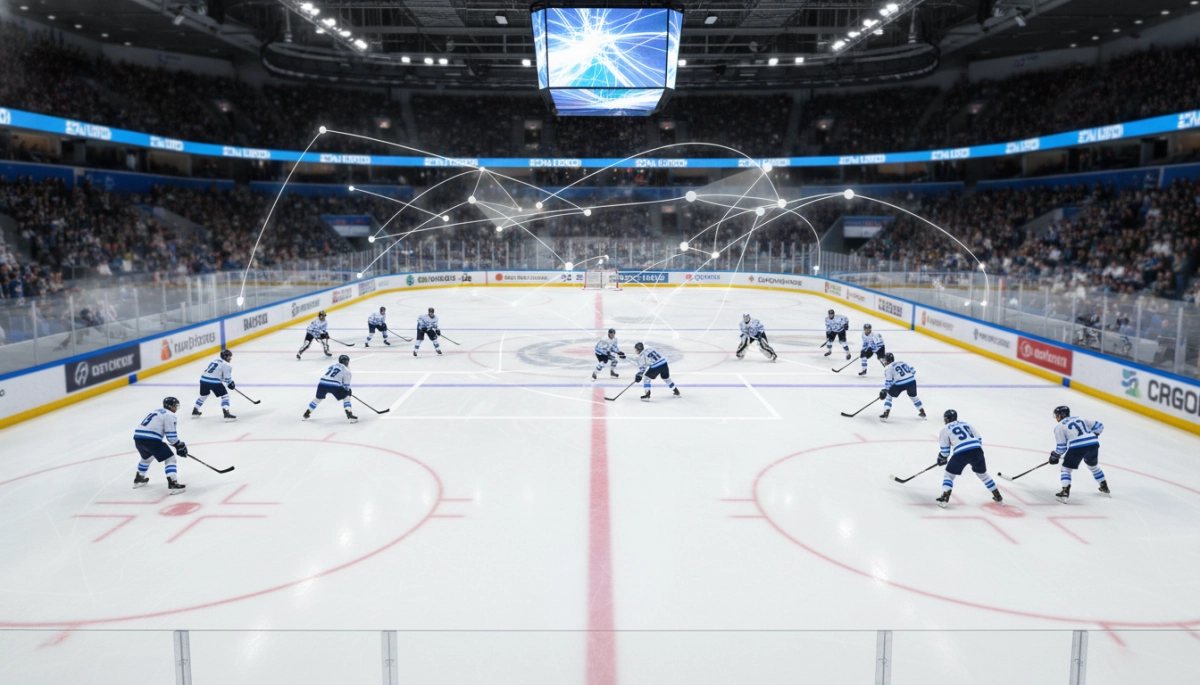
- Vertical and horizontal layering: One layer applies pressure to the puck carrier; the next is responsible for support and the gap; the third prevents cross-ice or backside threats. These layers shift as a unit so coverage rarely breaks down one-on-one.
- Clean handoffs and predictable rotations: When a winger pinches or a defenseman steps up, there’s a rehearsed backfill. These exchanges are made with small, audible cues and practiced footwork to avoid leaving shoot-first lanes.
- Active stick work and low-block tempo: Instead of sprawling shot-blocking, Finnish teams emphasize stick engagement to intercept passes and create quick turnovers that lead to controlled breakouts.
Defensive-zone discipline also extends to special situations: defending odd-man rushes is about maintaining gap and forcing the play wide; defending the net-front is a team responsibility where physical box-outs and sightline control are prioritized over risky pokes.
Attack templates: structured entries, possession, and power-play choreography
Offensively the aim isn’t to surprise with chaos but to manufacture high-quality chances through rehearsed patterns. Finland’s entries, zone cycles, and power-play looks are designed to create shot lanes and high-danger rebounds while minimizing turnovers.
- Controlled entries: Players use options more than improvisation — rim, chip-and-chase, support-driven carry — chosen based on how the opponent defends the blue line. Support players always create outlet and rim lanes to prevent turnovers.
- Possession-first cycling: Once in the zone, movement is methodical: support on the half-wall, diagonal reads, and timing for net-front threats. The cycle’s purpose is to shift coverage and open the middle for slot passes or point shots.
- Power-play structure: The umbrella and overload are common, but Finnish versions emphasize puck retention and dynamic point activation. Defensemen rotate in and out of the half-wall for one-time or two-time threats, and cross-ice movement is used to create sightlines rather than simply spinning the puck.
These attack templates scale from youth to pro levels because they’re simple to teach but hard to defend when executed with skater-to-skater timing and stick work.
Practice design: training the micro-decisions that win games
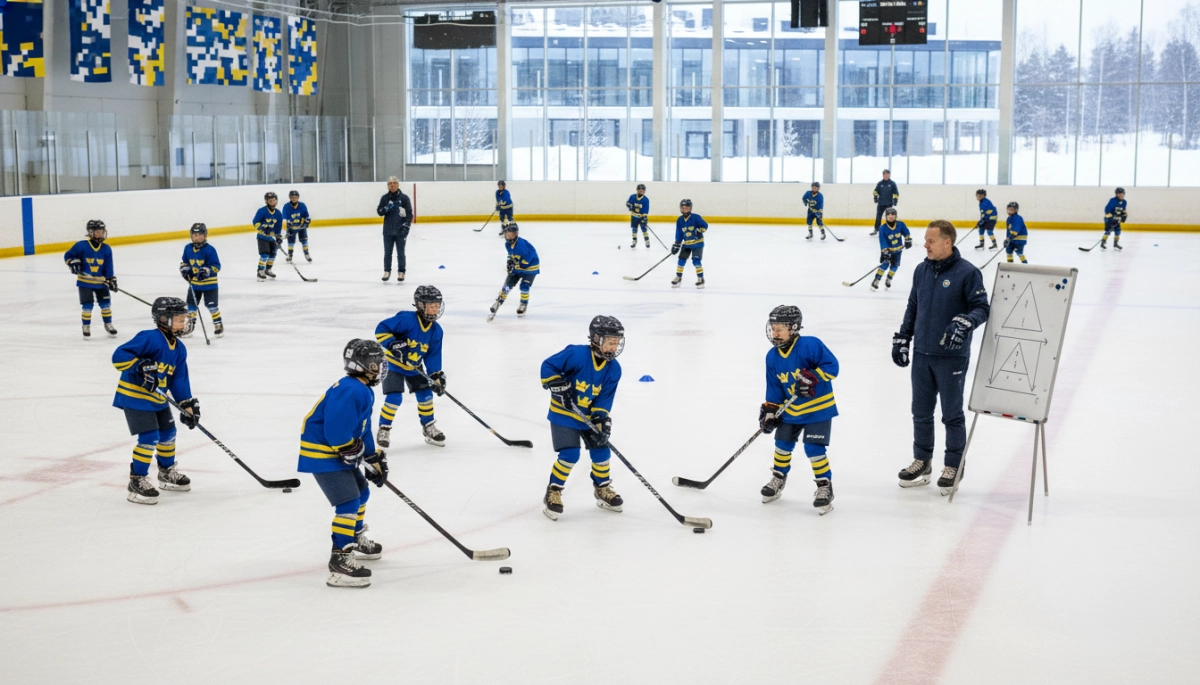
What makes these systems stick is how they’re practiced. Finnish coaches design sessions that isolate specific decisions and then reintegrate them into full-team situations so habits form under pressure.
- Progressive constraints: Drills often start with limited options (e.g., no stretch passes, or must use a rim) so players learn correct reads, then remove constraints to test decision speed under game-like stimuli.
- Small-area games: High-repetition, low-space competitions (3v3, 4v3) accelerate learning of timing, support positioning, and quick turnovers that lead to counter-attacks.
- Scenario scripting and video feedback: Coaches script odd-man rushes, zone exits, and power-play entries, then immediately review clips with players to reinforce correct choices and habits.
- Measurement and mental cues: Simple metrics (entries completed, turnovers, quick recoveries) and consistent cue language create shared expectations so players can self-correct in real time.
Through repetition, constraints, and immediate feedback Finnish teams convert tactical concepts into instinctive behaviors—so when game intensity spikes, players don’t think about the system, they execute it.
Applying Finnish principles beyond the scoreboard
Finnish systems are as much about culture as tactics: they privilege repeatable behaviors, clear communication, and continual refinement. Coaches and players who adopt this mindset focus less on one-off plays and more on the daily habits that produce reliable results. That shift—from chasing isolated solutions to building shared routines—changes how teams operate under pressure.
If you want to experiment with these methods, start by simplifying: isolate one micro-decision per practice, measure it, and reinforce a single cue until it becomes automatic. Use constraints to create learning pressure, then gradually reintroduce complexity so players learn to transfer the habit into real games. For further coaching materials and drills inspired by Finnish development, consult the Finnish Ice Hockey Association.
Ultimately, the value of this approach isn’t only measured in wins. It’s measured in consistency, clarity, and the capacity of a team to make the right choice when it matters most. Embrace the process, iterate patiently, and let structure enable creativity rather than constrain it.
Key Takeaways
- Prioritize teachable, repeatable habits: constrain practice to build automatic micro-decisions.
- Structure enables creativity—clear roles and layered pressure reduce risk and create high-quality chances.
- Measure, cue, and iterate: simple metrics and consistent language accelerate tactical learning.