






When the Puck Drops: Why Live Betting Changes the Playoff Game
Live betting during the NHL playoffs forces you to react to a living match rather than pre-game predictions. You’ll see lines swing after a single shift, and playoff intensity amplifies small advantages — a hot goalie, a dominant power play, or a momentum swing after an early goal. In this environment, totals and props become some of the most exploitable markets because sportsbooks must price hundreds of micro-events in real time.
As you watch, focus on what actually moves value: shot volume, zone time, line deployment, and officiating tendencies. The playoff pace is different from the regular season — coaches shorten benches, deploy top lines more often, and managers lean on special teams. That changes how totals and player props behave and creates short windows when you can find +EV (expected value) opportunities.
How to Approach Totals and Props in Real Time
Prioritize Contextual Metrics over Raw Stats
When you’re deciding whether to take the over on a game total or back a player to score, raw goals and points are lagging indicators. You should prioritize contextual, in-game metrics that predict scoring likelihood:
- Shot volume and shots on goal — sustained pressure usually precedes goals.
- High-danger chances — look for rebound chaos and slot looks rather than perimeter shots.
- Offensive zone time and sustained possession — extended zone time often forces defensive mistakes.
- Faceoff control in the offensive zone — especially important after stoppages and power plays.
Read Special Teams and Goaltender Signals Fast
Power plays and goaltender form swing markets quickly. If a team draws a penalty early and converts, the implied scoring probability for subsequent minutes changes drastically. Conversely, a goalie that makes several high-quality saves in a row can suppress totals and player shot props.
- Track which penalty killers are getting matched against offensive lines; that influences prop value for top-scoring players.
- Watch rebound control and lateral movement. A goalie who gives up rebounds invites higher danger shots and boosts totals and shot-based player props.
- Note early fatigue: heavy forechecking or long shifts from key forwards can create late-period scoring chances or make bench decisions that affect prop opportunities.
Exploit Line Changes, Matchups, and Timing
You can find edges by timing bets to coincide with favorable matchups. Coaches will change who faces whom after a goal or a period break. If you see the opposing team’s weak defensive pair on the ice for an extended shift against your top power forward, a short-term player prop becomes more valuable.
- Target props when top-line time-on-ice spikes after an injury or a coach’s tactical change.
- Use small, quick wagers on minutes or shot props when a power-play unit remains intact after a stoppage.
- Be conservative around the opening minutes of each period — lines are volatile; wait for a stable pattern before placing larger stakes.
With these real-time principles in mind, you’ll be better positioned to separate noise from actionable signals; next, you’ll learn which live tools and feeds to use to track those signals and how to size bets around short windows of value.
Essential Live Tools and Data Feeds to Track Value
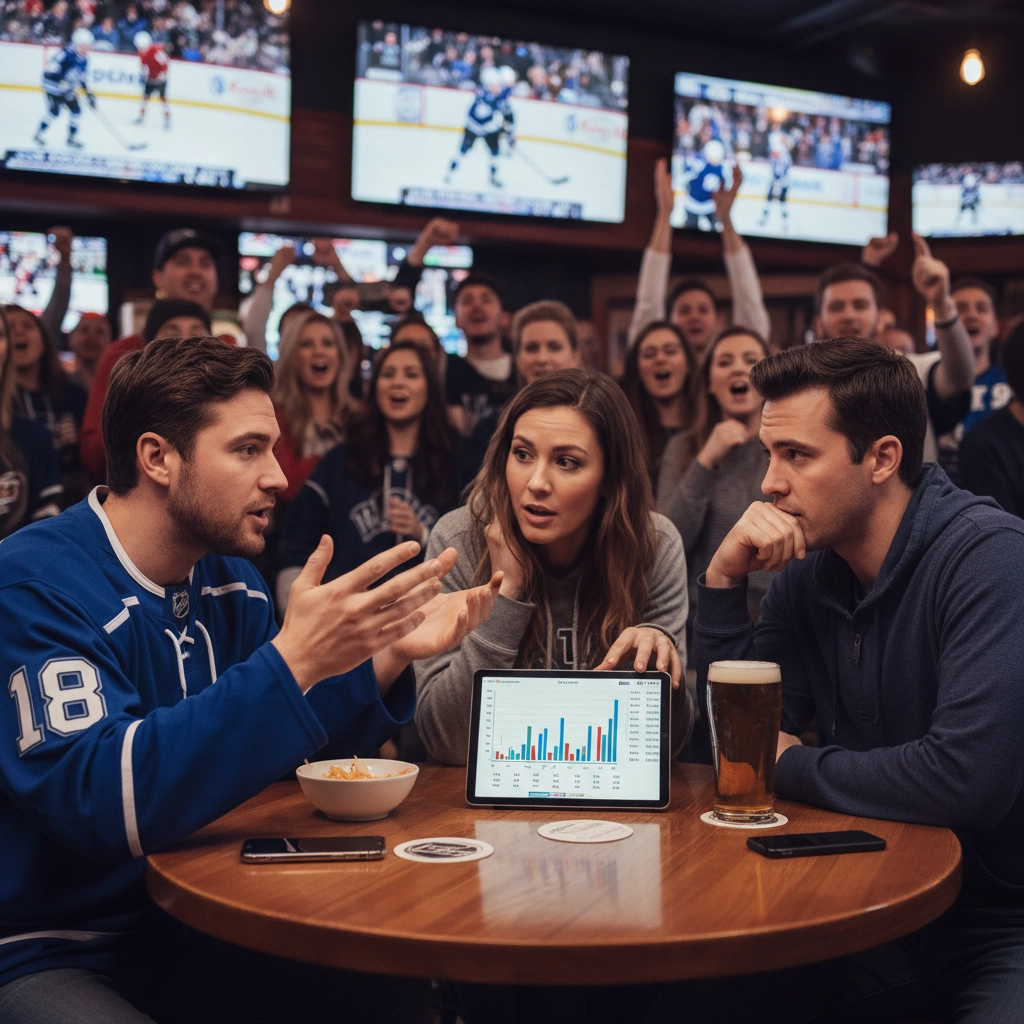
Successful in-play betting hinges on the quality and speed of the information you use. Relying only on the TV broadcast can leave you a step behind; instead build a compact dashboard of feeds that each serve a specific purpose.
– Official play-by-play and real-time boxscore (NHL.com or SportRadar): the primary source for puck location, penalty timing, and on-ice personnel. Use this for precise event timestamps and quick confirmation of game-changing plays.
– Live xG and high-danger chance trackers (Evolving-Hockey, Natural Stat Trick, MoneyPuck): these translate shot quality into scoring probability, which is invaluable for judging whether a flurry of low-quality shots is likely to produce a goal.
– Shift charts and line deployment tools (DailyFaceoff, InStat where available): know which forwards are getting extra shifts or facing weak opposition — that’s where short-term player props live.
– Rapid stat tickers and play visuals (Twitter account alerts, sportsbook live stats): for latency-sensitive decisions, a combined read of the play-by-play and a 10–15 second visual confirmation from a low-latency stream closes the gap between action and bet placement.
– Odds aggregators and multiple sportsbook apps: keep a comparison screen active. Lines can lag across books; the same prop can move several ticks in seconds.
Set up these feeds with a clear hierarchy on one or two monitors or split-screen on mobile. Favor tools that timestamp events and let you filter by shift/period so you can see patterns without scrolling through noise.
Bankroll Management and Bet Sizing for Short Windows of Value
Live markets reward speed and discipline. Your staking strategy should protect you from variance while allowing you to exploit small edges repeatedly.
– Define a session bankroll and a per-game cap: limit exposure to a fixed percentage (e.g., 1–3%) of your total bankroll per game, and an even smaller cap per short window (0.5–1%) when placing rapid micro-bets.
– Use fractional Kelly or flat-percentage staking for repeats: full Kelly is too volatile in live settings. A quarter-Kelly or a flat-percent model smooths variance while letting you scale into clear value plays.
– Scale with confidence: instead of one large bet, layer three small bets as evidence accumulates (e.g., pre-power play shot prop, in-power-play continuation, post-penalty adjustment).
– Hedge smartly, not emotionally: if a sudden goal erodes your position, calculate whether a hedge improves expected value or merely reduces variance at a sure cost. Only hedge when odds provide price efficiency, not to erase a loss.
– Track EV by play type: maintain a simple ledger of results for totals, shot props, and player scoring lines. Over time you’ll see which live markets you consistently beat and can adjust stake sizes upward within your risk rules.
Discipline beats intuition in playoffs: accept that you’ll lose streaks and keep wagers small enough to survive them.
Execution: Speed, Latency Awareness, and Smart Line Shopping
Execution is the last mile — even the best read fails if your bet doesn’t get placed at the right price.
– Know your app’s latency and UI quirks: practice quick order placement, use cash-out only when it demonstrably increases EV, and favor limit orders when you can anticipate a favourable price improvement.
– Watch for stream delay vs. book feed: many TV streams lag betting feeds by 10–20 seconds. Rely on the play-by-play ticker or low-latency streams for timing aggressive entries.
– Line shop constantly: keep at least three books open and use odds aggregators for rapid comparisons. A single tick often flips a prop from +EV to -EV.
– Use microstakes to probe markets: small diagnostic bets reveal how a book reprices a specific prop during certain game states and expose patterning you can exploit.
– Maintain execution rules: set maximum acceptable slippage (e.g., don’t take more than 1.5x the quoted price for a quick-play shot prop) and stick to it to preserve long-term edge.
Combine fast, reliable feeds with disciplined sizing and sharp execution and you’ll convert short windows of playoff chaos into repeatable advantages.

Putting the Plan into Motion
Live playoff betting rewards preparation and repetition as much as raw insight. Build your compact dashboard, rehearse quick decision-making at micro-stakes, and let disciplined bankroll rules govern how aggressively you press short windows of value. Use quality live inputs — for example, xG and high-danger trackers from resources like Evolving-Hockey — and keep execution rules simple and enforceable.
- Set up your feeds and practice placing micro-bets to learn latency and UI quirks.
- Run constrained live sessions (small bankroll, fixed game caps) to gather real results.
- Review outcomes by market (totals, shot props, scoring props) and iterate your staking plan.
Make learning the product of each session your priority: small, consistent improvements in feed quality, timing, and sizing compound into lasting advantage across a playoff run.
Frequently Asked Questions
Is live betting generally more profitable during the NHL playoffs than in the regular season?
Playoffs increase volatility and strategic rigidity (shorter benches, heavier reliance on top lines), which creates more rapid, exploitable micro-moves in totals and props. That said, higher volatility raises variance; profitability depends on your information edge, execution speed, and disciplined bankroll management rather than the stage of the season alone.
Which live data feed should I prioritize for making totals and prop decisions?
Prioritize feeds that translate on-ice events into immediate scoring probability: live xG/high-danger trackers and real-time play-by-play (for penalties, puck location, and time stamps). Shift charts and line deployment tools are the next most important for player props and matchup-based bets.
How should I size bets during short windows of live value?
Use conservative sizing: keep per-game stakes to a small percentage of bankroll (1–3%) and per-window stakes smaller (0.5–1%). Prefer fractional Kelly (quarter-Kelly) or flat-percent models, layer bets as evidence accumulates, and only hedge when the remaining odds materially improve expected value rather than simply cutting a loss.