







How European Leagues and the NHL Occupy Different Corners of the Ice Hockey World
You already know that ice hockey is played at a high level across multiple continents, but the way the game looks and feels in Europe often differs noticeably from what you see in the NHL. These differences arise from rink dimensions, rules and officiating traditions, developmental pathways, and cultural approaches to tactics. Understanding those early distinctions helps you appreciate why a player who thrives in one environment might face an adjustment period when moving to the other.
Rink size and spatial dynamics: more space, different decisions
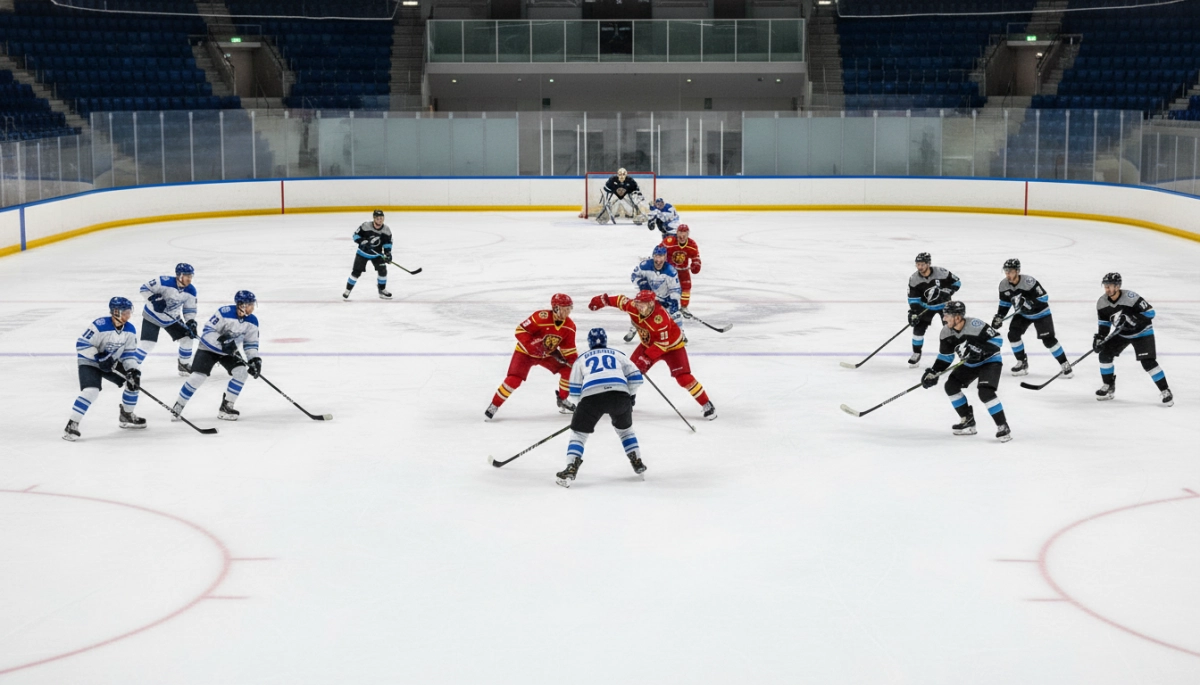
One of the most immediate differences you’ll notice is the size of the playing surface. European leagues commonly use the international-size rink (typically 60 m × 30 m), while the NHL uses a narrower North American sheet (approximately 60 m × 26 m). That extra width in Europe changes more than mere aesthetics:
- Tempo and spacing: With more lateral room, offensive systems emphasize puck possession, controlled zone entries, and wider cycling patterns. You’ll see longer passes and more lateral movement rather than the north-south, direct-attacking style favored in the NHL.
- Skating and conditioning: Players are often required to cover greater distances, which rewards high-end skating endurance and positioning. Quick bursts are still vital, but sustained skating and transitional mobility become more pronounced.
- Forechecking and board play: Narrower NHL rinks intensify board battles and create more chaotic forechecking lanes. On international ice, forechecks can be structured to funnel play rather than immediately pressure along the boards.
Rule implementation and officiating culture: subtle but impactful
Rules between European competitions and the NHL are similar at their core, but enforcement and interpretation can vary in ways that shape coaching and player behavior. You should take note of these operational differences:
- Physicality limits: The NHL historically tolerates a higher degree of contact and open fighting compared with many European leagues, where stricter checks on cross-checking, boarding, and fighting are enforced, reducing tolerance for sustained physical confrontations.
- Offside and icings: While the technical definitions may match, the frequency and strictness of whistle calls can differ. European referees sometimes allow more continuous play to emphasize flow, affecting strategies like delayed penalties or stretch passes.
- Overtime and shootout formats: Many European leagues use variations of overtime length and shootout rules that differ from the NHL standard, which can influence late-game tactics and roster decisions.
These early distinctions—surface size and the tenor of rule enforcement—shape everything from team systems to individual roles, and they set the stage for how players adapt when moving between leagues. Next, you’ll explore how coaching philosophies, player development pathways, and roster construction further diverge between Europe and the NHL.
Coaching philosophies and tactical emphasis: teaching the game differently
Coaching in Europe and the NHL often starts from different philosophical premises, and those upstream choices ripple through how teams practice, how players are scouted, and what skills are valued. European coaches traditionally prioritize skill retention, structured positional play, and multi-skill development; North American coaches frequently emphasize north-south pace, physical compete metrics, and rapid decision-making under pressure. Concretely, that shows up in a few consistent ways:
- Practice structure: European sessions tend to be longer on skating, puck-handling drills, and pattern work that reinforces possession and zone control. NHL practices are often shorter, more intense, and geared toward situational repetitions—breakouts, quick forecheck responses, set power-play looks—because players spend more time in-season on video and travel.
- System complexity: Many European clubs employ layered systems that adapt to ice width—more emphasis on lateral puck movement, overloads, and patient build-up. NHL systems usually favor compact structures that force turnovers and capitalize on quick transitions; the smaller rink rewards direct counterattacks and more aggressive gap control from defenders.
- Special teams and situational coaching: European teams often design power plays around puck circulation and creating seams rather than continual net-front traffic. Conversely, NHL power plays can lean on quick puck retrievals, traffic, and rebounds. On penalty kill, European units may prioritize blocking lanes and containment; NHL units often look to be opportunistic in counterattacks.
- Use of analytics and sports science: While analytics influence both spheres, the NHL has been quicker to integrate advanced metrics into tactical and personnel decisions. European clubs increasingly adopt these tools, but local scouting, coach intuition, and long-term player planning still carry heavier weight in some leagues.
Player development, contracts, and roster construction: different pipelines, different priorities
How teams acquire and build rosters is another major chasm. European hockey is driven by club-based development models, promotion/relegation in some countries, and league-specific rules about imports and junior quotas; the NHL operates within a draft-centric, salary-capped framework that shapes roster turnover and contract types.
- Development pathways: In Europe, clubs run academies that feed their pro teams; young prospects may play alongside veterans early, and loans between clubs are common to accelerate growth. In North America, the path is often through junior leagues, college hockey, or the AHL—systems that separate age groups more strictly and funnel talent toward the draft-and-pro contract timeline.
- Contract structures and mobility: European contracts can include transfer clauses, loyalty incentives, or mid-season escape options; there is also more frequent movement between national leagues. The NHL’s standardized contract system, waiver rules, and entry-level constraints create a different market rhythm—players face a binary decision to commit to the NHL/AHL ladder versus staying in Europe where they may receive larger roles and more stability.
- Roster construction and financial realities: Salary caps, revenue sharing, and a closed-league model force NHL teams to prioritize cost-effective depth and long-term cap planning. European clubs, depending on the country, may prioritize retaining local talent, balancing budgets through sponsorships and tiered ticketing, and using import limits to shape team identities.
- Veteran roles and career arcs: Many European leagues offer viable, high-level careers for players who either don’t fit the NHL mold or prefer a different lifestyle—senior pros play key leadership roles, and teams often invest in experienced domestic players to anchor lineups.
These contrasts in coaching, development, and roster mechanics explain why two players with similar raw skill sets can inhabit very different careers depending on whether they remain in Europe or transition to North America—and why adaptation is as much organizational as it is individual.
Bridging the Gap: What Transition Feels Like
Moving between European leagues and the NHL is less a single leap than a series of adjustments—skating patterns, decision speed, physical expectations, and daily routines all change. Players often report that the first weeks focus on spatial awareness and timing: the same plays exist, but the thresholds for contact and the angles of attack differ. Coaches and support staff who recognize those phased adjustments help shorten the learning curve.
Practical advice for players and coaches
- Players should prioritize adaptable habits—edge work, quick decision drills, and situational timing—so they can recalibrate to different rink sizes and officiating styles.
- Coaches moving between systems should simplify early messaging, focus on survivable routines, and use video to show concrete differences rather than abstract directives.
- Teams integrating imports can accelerate cohesion by staging mixed practices that preserve local tactical identity while teaching league-specific expectations.
Looking Ahead: A Truly Global Game
As player movement and information-sharing increase, European and North American hockey will continue to influence one another—tactics, training methods, and player development philosophies will cross-pollinate. That evolution benefits the sport: more adaptable players, richer spectacles for fans, and deeper strategic variety. For an authoritative view of international competitions and rule harmonization efforts, see the International Ice Hockey Federation.
Key Takeaways
- Rink size and officiating shape playing styles: more space in Europe favors possession and lateral play; the NHL rewards north-south speed and contact acceptance.
- Development and roster systems differ: club academies and varied contract norms in Europe contrast with the NHL’s draft, salary cap, and entry-level structures.
- Successful transitions rely on deliberate adaptation—coaching, practice design, and player habits determine how quickly skills translate across leagues.