








Why NHL playoff totals require a different approach than regular-season lines
When you bet totals (over/under) in the NHL playoffs, you’re not betting the same game you saw in the regular season. Playoffs compress pressure, change coaching decisions, and magnify matchup-specific factors that bookmakers price into totals lines. You need to shift from broad-season assumptions to short-series, matchup-driven thinking: small sample variance, elevated goaltender influence, and strategic adjustments all skew expected goal totals compared with midseason games.
Understanding these shifts helps you identify where the market may overreact (or underreact) and where there’s edge. Below are the early, high-impact indicators you should monitor before siding with the over or the under in a playoff game.
Primary indicators bookmakers use — and how you should interpret them
Goaltending form and matchup history
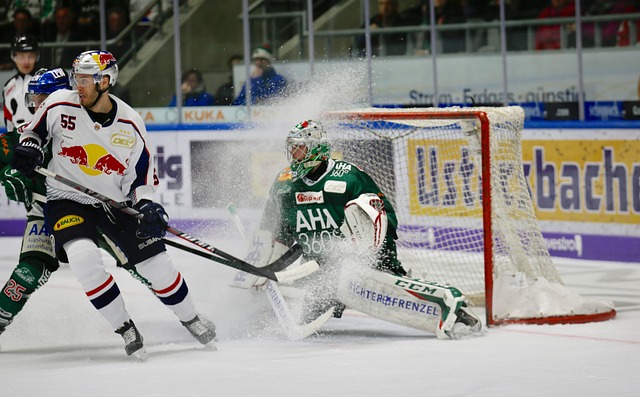
- Hot goalie variance: In playoffs, a hot goaltender can carry a series. If you see a starter on a multi-game save streak, expect lines to dip toward the under; conversely, a shaky starter can push totals up.
- Head-to-head tendencies: Look at recent matchups between the two goalies and teams. Some goalies consistently suppress certain teams’ scoring due to style matchups.
Team defense, system adjustments, and coaching style
- Defensive tightening: Coaches often tighten structure in the playoffs. Teams that over-index on defense in close games will lead market makers to lower totals.
- Special teams impact: Power-play and penalty-kill efficiency are magnified; a dominant penalty kill paired with an opponent that draws many penalties can reduce expected totals.
Game pace, shot quality, and scoring threat distribution
- Shot volume vs. shot quality: Bookmakers increasingly weight expected goals (xG) and shot quality over raw shot counts. You should too — a team producing fewer shots but higher xG can still push totals upward.
- Lineup matchups: If one team stacks top lines against the other’s scoring lines, anticipate fewer high-quality chances and lower totals.
Small sample sizes, travel, and situational context
- Series momentum and fatigue: Travel schedules, back-to-backs, and series length affect scoring. Expect totals to react to fatigue signals during long series.
- Sample-size danger: Playoff samples are tiny. Avoid overfitting to one or two games; instead, combine playoff performance with late-regular-season trends.
Knowing these indicators helps you deconstruct a posted total quickly: ask how the market treated recent goalie performance, whether special teams skew the expectation, and if travel or matchup tactics justify moving away from the closing line. In the next section, you’ll get a practical checklist and simple statistical checks you can run before placing a playoff totals wager, plus examples of when to favor the over versus the under.

A short pre-bet checklist and the simple stats you should run
Before you pull the trigger, run through this compact checklist — it’s built to be fast but high-impact. If more than two items point strongly the same way, you may have a play.
– Confirm the goalie situation (5–10 seconds): is the starter confirmed? Is there a recent midseries change or an emergency backup? Goalie uncertainty often inflates totals.
– Compare recent form windows: last 5 games, last 10 games, and the opponent-specific sample. Weight the last 5 more for playoffs, but don’t ignore the opponent matchups.
– Special teams snapshot: both teams’ PP% over the last 10 games and opponent PK% — if there’s a >3% gap either direction, expect the market to price that into the total.
– Rest and travel check: same-city rest, back-to-back, or cross-country trips? Downgrade offensive expectation if either team is clearly fatigued.
– In-game adjustments potential: does either coach historically tighten in Game 2/3/4? Behavioral patterns matter in short series.
Simple statistical checks to run (single-digit computations):
1. Implied team totals: split the posted total by relative offensive pace (e.g., Team A xG per 60 : Team B xG per 60). If Team A accounts for >60% of implied goals but matchup suggests suppression, flag the market.
2. xG differential over last 10 vs. goalie save %: take each team’s xG for/60 (last 10) and subtract the starter’s recent high-danger save% (HDSV%). If combined expected goals (after adjustment) differs from the market total by >0.5 goals, that’s a meaningful edge signal.
3. Special teams adjustment: add/subtract 0.15–0.35 goals to the game total for each expected extra power play advantage you forecast (use 0.15 for a single-PP swing, 0.3 for repeated dominance).
4. Context multiplier: if there’s travel/back-to-back, multiply combined expectation by 0.95; if both teams are healthy and rested and have high-shot-volume systems, multiply by 1.05.
Those are quick approximations you can do on a phone or in your head. The objective is not perfection but to find a gap large enough to overcome sportsbook vig.
Practical examples — when to favor the over and when to lean under
Example 1 — Lean under: Elite goalie heats up, coach tightens structure
Game context: Home underdog with a hot goalie (3 straight 0.950+ SV% games), visiting team known to tighten defensively in playoffs. Market total drops to 5.0.
Why under: Goalie hot streak + defensive clampdown + low power-play opportunities. Simple checks (xG suppressed vs. HDSV%) show expected combined goals ≈ 4.2. Bet the under.
Example 2 — Favor the over: Two high-volume offenses, weak netminders, PP mismatch
Game context: Both teams top-10 in xG/60 over last 10 but starters with declining HDSV% and one team draws a lot of penalties. Market total sits at 5.5.
Why over: High base xG, goalie vulnerabilities, and extra special-teams edge. Adjusted expectation (xG minus HDSV% penalty + PP bump) ≈ 6.2. Bet the over.
Example 3 — Sit or hedge: Conflicting signals and small edge
Game context: One team rested, one team on back-to-back; starter confirmed but with mixed form. Market total 5.25 and action is split.
Why sit/hedge: Mixed context increases variance. If you must act, take a half-unit or wait for live-market movement that clarifies goalie or PP deployment. In playoffs, patience beats marginal edges.
Use these patterns as templates, not rules. Match the checklist and quick stats to the scenario — if both align, you’ll be betting with discipline instead of emotion.

Putting the checklist into action
Before you place a playoff totals wager, run the quick checklist and the simple stats in real time — confirm the starter, weight the last 5 games, and apply the special-teams and context adjustments. Shop the total across books and consider a half-unit or live entry when signals are borderline. Keep stakes proportional to the confidence from your checks; the goal is steady, repeatable edges rather than chasing single bets.
Closing strategies for playoff totals
Betting NHL playoff totals rewards discipline and adaptability. Respect variance, track your lines and outcomes, and be ready to pivot when new information (injuries, goalie changes, lineup shifts) arrives. For deeper model resources and expected-goals research that can sharpen your pre-bet checks, see Evolving-Hockey xG models.
Frequently Asked Questions
How much should a hot goalie change my approach to totals?
Hot goaltending is one of the strongest single-game indicators in playoffs. If a starter is on a multi-game, high-save-percentage run and the coach historically tightens, give extra weight to the under — but still cross-check xG trends and special-teams context before committing.
Can small playoff samples be trusted for totals betting?
Small samples are noisy and can mislead if used alone. Combine short playoff windows with late-regular-season form, matchup history, and qualitative signals (rest, travel, coaching tendencies). Use small samples as a high-sensitivity input, not the sole decision-maker.
When is live betting totals more advantageous than pregame?
Live totals can offer value when goalie confirmations, line changes, or early-period tactics reveal information the market hasn’t fully priced. If a team starts very defensively or a goalie looks shaky early, live markets often move quickly — having a pre-run checklist helps you act decisively.