







Why European and North American Hockey Often Feel Like Different Sports
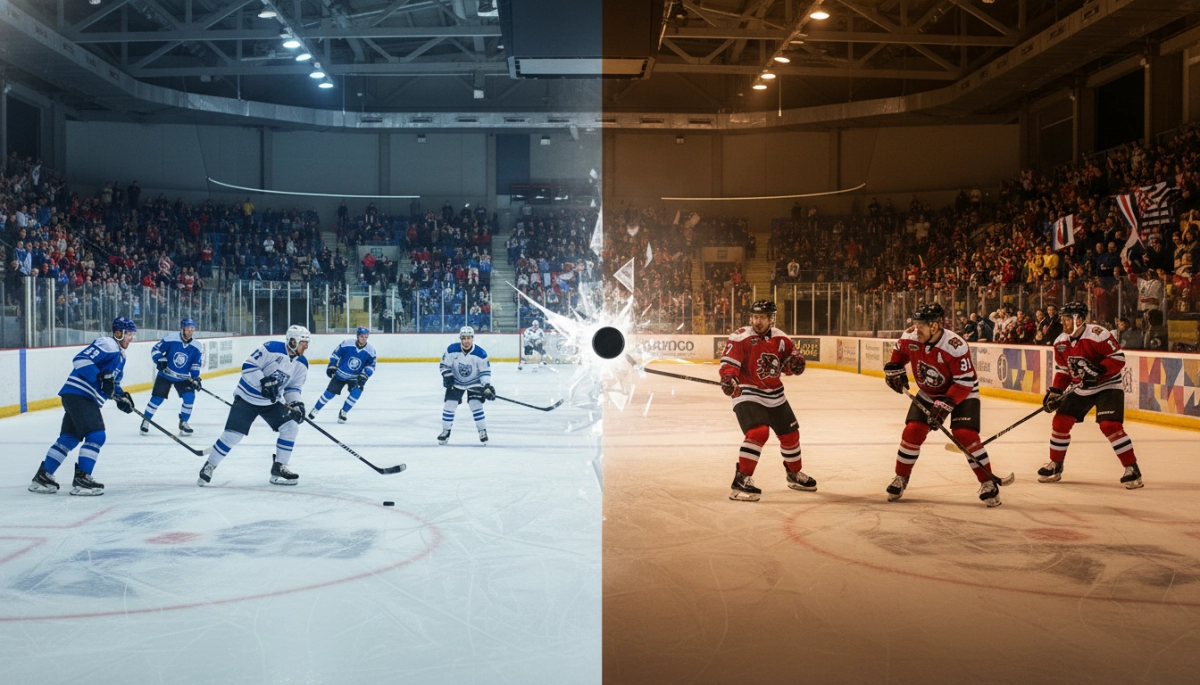
When you watch a game in Stockholm or a matchup in Toronto, the scoreboard and basic object of the game are the same: two teams, three periods, and a puck. Yet the way the game is played, managed, and celebrated can feel very different. Those differences come from rink size, coaching philosophies, competition formats, and cultural priorities. Understanding these early contrasts helps you decode why a player who thrives in one environment may struggle in the other.
How League Structures and Development Paths Shape Play
Closed franchises versus promotion and relegation
North American hockey is dominated by closed franchises. The NHL operates as a single, closed league with minor-league affiliates (AHL) and junior pipelines (CHL, USHL) feeding talent upward. This creates a laddered development model where you move within a franchise system. In Europe, you’ll encounter a more club-oriented model where many countries use promotion and relegation between tiers. Leagues such as the KHL, SHL, Liiga, and Switzerland’s National League operate as top-level competitions for clubs that recruit from local academies or international markets.
Player development and roster construction
- Younger players in North America often progress through junior systems (CHL) or NCAA hockey before turning pro, emphasizing physical maturity and a North American style of play.
- In Europe, clubs run youth academies tied to professional teams; players may debut at a high level as teenagers and develop in place, which encourages technical skill and tactical IQ.
- Roster composition also differs: European teams commonly sign veteran imports from abroad for skill or experience, while North American teams rely on draft-and-develop strategies and salary cap management.
Early On-Ice Differences: Rink Size, Tactics, and Tempo
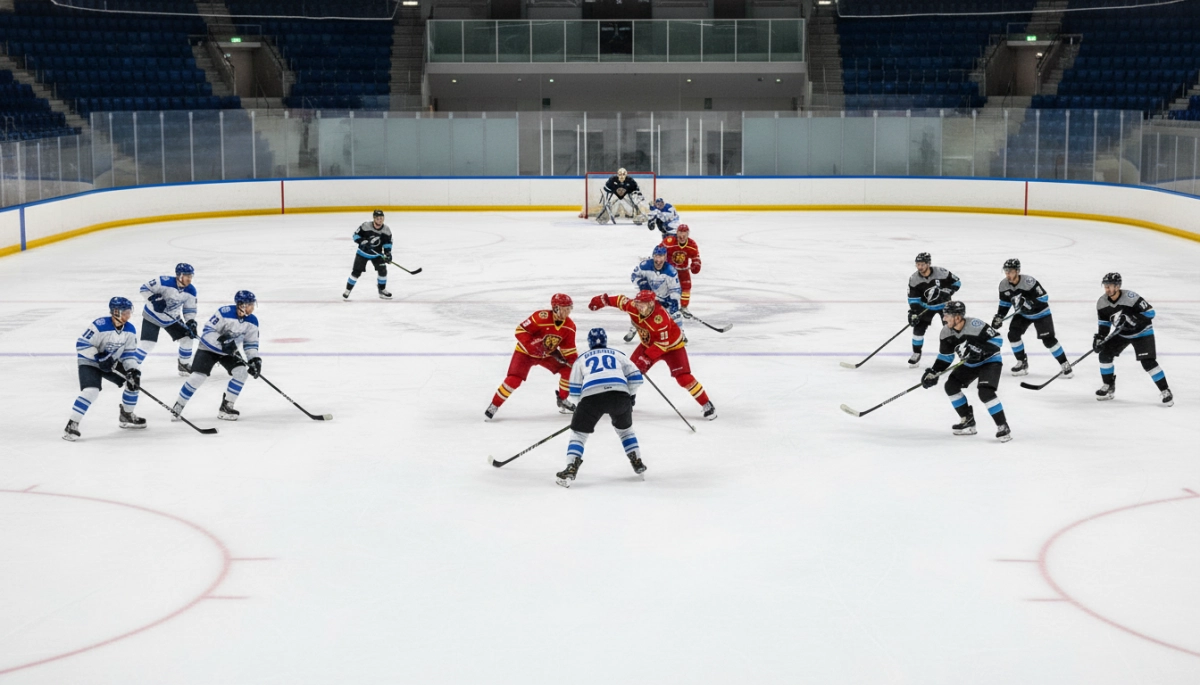
You’ll notice the first stark contrast visually when you compare rink dimensions. International (IIHF) rinks are wider than NHL rinks, which creates more lateral space and less immediate contact. That width affects tactics: European teams often emphasize puck possession, controlled zone entries, and positional play. North American hockey, played on a narrower sheet, tends to favor board battles, quick transitions, and more frequent high-impact contact.
- Tempo: North American games can feel faster in terms of physical engagement and forechecking intensity; European games may look more deliberate, with longer possession sequences.
- Special teams: Power play and penalty kill strategies differ because of space; you can expect more cross-ice puck movement on a larger rink.
- Physicality and fighting: While fighting still appears in the NHL culture, many European leagues penalize or discourage it more strictly, which changes how players impose themselves.
These foundational contrasts in structure and on-ice style set the stage for differences in rules enforcement, officiating, and fan culture — topics that you’ll explore next to complete the picture of how European and North American hockey truly diverge.
Officiating and Rule Interpretation: Different Priorities, Different Calls
Beyond the printed rulebooks, the key difference between European and North American hockey often comes down to interpretation. Leagues and federations share many of the same rules on paper, but what referees are encouraged to protect — speed and skill versus contact and physicality — shapes how games unfold. European officials and competition organizers tend to prize possession and the flow of play, which can translate into quicker whistles for dangerous contact and sterner penalties for fighting or deliberate obstruction. In North America, the NHL has historically allowed a higher tolerance for physical play and only recently has cracked down more consistently on head-contact and dangerous hits.
Operational differences also affect outcomes. Video review systems, coach’s challenges, and centralized replay units vary by league and sometimes by competition; that variance changes how tight calls are resolved. Communication styles differ too — in-game explanations, visible use of hand signals, and the way referees manage player behavior can feel more transactional in one market and more deferential in another. For players and coaches, understanding not just the rule but the referee’s philosophy is as important as any tactic.
Fan Culture, Atmosphere, and Matchday Rituals
Where clubs exist as civic institutions — common across much of Europe — matchday is as much about community ritual as sport. Supporter groups organize elaborate tifos, drumming sections, continuous singing and coordinated chants that create a cathedral-like atmosphere. Many arenas still have standing terraces and a culture of concentrated, sustained support that can intimidate visiting teams. The club-as-neighborhood-identity model means rivalries are often older, regional, and deeply embedded in local life.
North American arenas, by contrast, emphasize the spectator experience as entertainment. Music between whistles, mascot-driven family zones, and intermission contests are all designed to keep a broad audience engaged. Fan engagement tends to be louder in bursts — big goal celebrations, fights, or power plays — rather than the continuous backing seen in many European venues. Both approaches build intense atmospheres, but they reward different kinds of player personalities: the European stage rewards players who thrive on sustained pressure; the North American stage rewards those who feed off episodic momentum swings.
Business Models, Scheduling, and the Flow of Talent
Economics and calendars reinforce stylistic differences. The NHL’s 82-game schedule, heavy travel, and salary cap produce roster strategies centered on depth, durability, and role-specialists. European leagues typically play fewer regular-season games, sometimes supplementing schedules with domestic cups or international club competitions, which allows coaches to plan for different recovery rhythms and tactical preparation.
Financial rules and transfer markets also shape movement. European clubs can and do trade transfer fees, loan players, and negotiate midseason signings; the NHL’s draft-and-develop plus restricted/free-agent systems create a different talent pipeline. The result is a steady two-way migration: top European prospects head to North America to test themselves on a smaller rink and the highest pay, while many North American veterans extend careers in Europe, where style, schedule, and contract structures can be a better fit. Those transactions keep both ecosystems distinct yet deeply interconnected.
Looking Ahead: The Sport’s Shared Future
As hockey continues to globalize, the divide between European and North American styles will likely remain a defining feature, but it will also become more porous. Coaches, scouts, and players increasingly borrow training methods, tactical concepts, and analytics from one another, creating hybrid approaches that borrow the best elements of each tradition.
Fans benefit from that cross-pollination: exposure to different tempos, officiating philosophies, and matchday cultures broadens appreciation for the sport. For readers curious about how international rules shape play, see the IIHF rulebook. Ultimately, hockey’s vitality depends on preserving local identities while welcoming innovations that make the game safer, more entertaining, and more accessible worldwide.
Key Takeaways
- Rink size, league structures, and development systems create distinct European and North American playing styles.
- Officiating philosophy and business models shape how teams recruit, coach, and compete across regions.
- Cross-border player movement and shared coaching/analytics trends are narrowing differences while preserving local identities.