






Why Sweden’s youth hockey model matters to you as a coach or parent
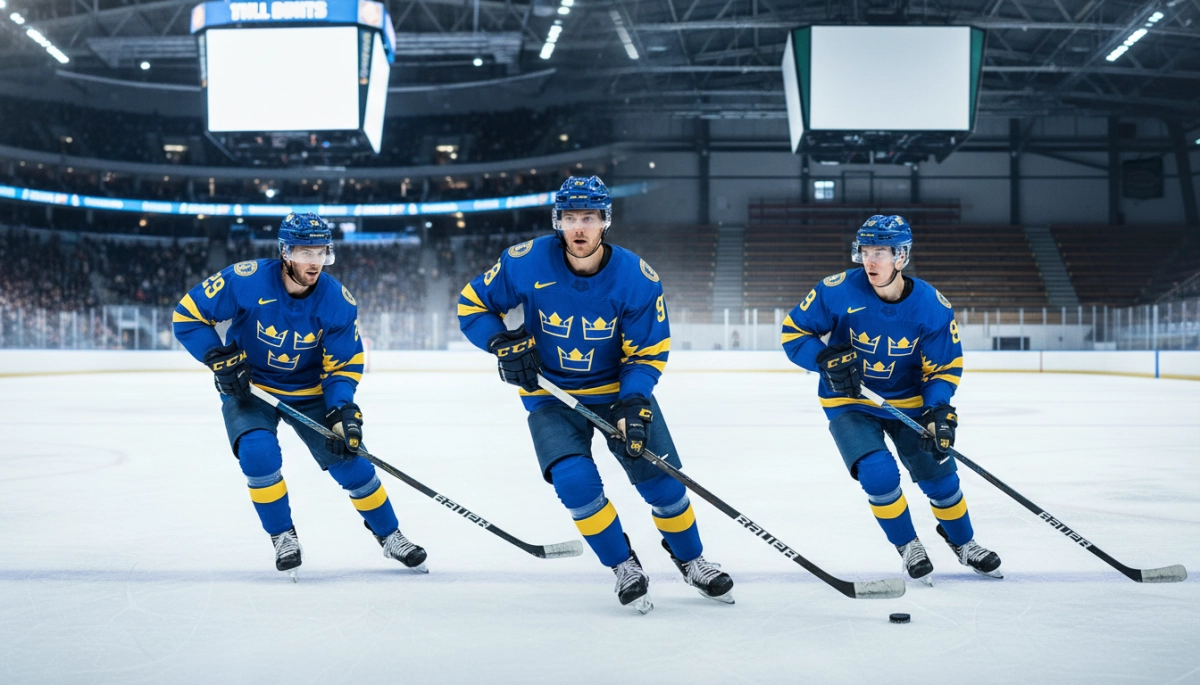
When you look at Sweden’s steady production of high-level players, you’ll notice it’s not luck — it’s a system. Swedish development emphasizes long-term growth over short-term wins. If you’re a coach, parent, or aspiring player, understanding this model helps you prioritize technical mastery, decision-making, and holistic athlete wellbeing rather than early specialization or win-at-all-costs youth competition.
The developmental timeline you should expect
Swedish academies and clubs organize development around age-appropriate goals. In practice you’ll see three broad stages:
- Early technical years (6–12): focus on skating, puck control, coordination, and fun. Ice time is varied, and playing multiple sports is encouraged to build motor skills.
- Transitional years (13–15): emphasis shifts to decision-making, small-area games, and tactical awareness. Players start structured strength and conditioning with an emphasis on injury prevention.
- Performance pathway (16–18+): integration with specialized gymnasiums, position-specific training, video review, and a gradual increase in competitive intensity while still protecting athlete health.
How academies, clubs, and schools work together
You’ll find Sweden’s strength comes from coordinated networks where community clubs, regional academies, and hockey-focused schools (hockeygymnasium) collaborate. This shared ecosystem ensures that talented players receive consistent coaching messages while maintaining academic education.
Typical academy structure and daily focus
At an academy level, training days are varied and planned with specific micro-goals. A typical weekly template you might see includes:
- 2–3 on-ice sessions prioritizing skill repetition, situational play, and controlled scrimmages
- 2 gym sessions focused on mobility, strength, and injury prevention tailored to adolescent bodies
- 1 session of video analysis or classroom tactics to build hockey IQ
- Recovery and education modules covering sleep, nutrition, and mental skills
When you design sessions, Swedish coaches intentionally put players in game-like scenarios that force quick decisions rather than isolated drills that remove context.
Coaching culture: how you can emulate Swedish principles
- Player-centeredness: prioritize individual skill development within team systems so every player understands their role and how to adapt.
- Deliberate play over early specialization: encourage varied physical activities to reduce burnout and create versatile athletes.
- Coach education and reflection: invest in continuous coach learning — you’ll see frequent use of video feedback, peer review, and evidence-based practice planning.
These early sections set the stage for the practical coaching methods and specific drills used across Swedish academies; next, you’ll explore on-ice session designs, sample practice plans, and the coaching cues that deliver measurable gains.
Designing game-like on-ice sessions that force decisions
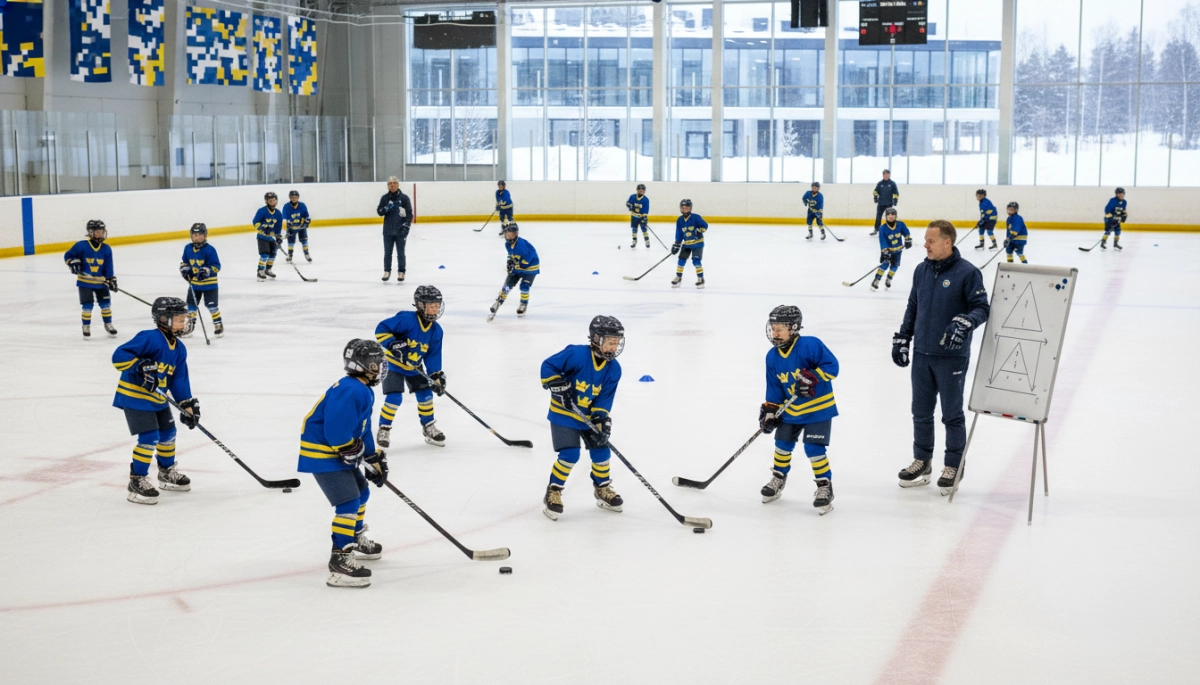
Swedish coaches build sessions around constrained games that replicate the cognitive load of real matches while keeping repetition high. The goal is to create controlled chaos: predictable constraints with unpredictable inputs, so players learn to scan, communicate, and choose quickly.
Session framework (45–75 minutes):
- Dynamic warm-up (8–12 min): multi-directional skating, puck touches, paired mirror drills to prime coordination and vision.
- Skill integration block (15–25 min): short, focused exercises that marry technique with decision-making — e.g., a passing-under-pressure lane drill where receivers must open to support and then immediately transition to attack.
- Small-area games (15–25 min): 3v3/4v4 inside neutral zones, overloads, or numerical disadvantages to emphasize quick puck retrieval, support angles, and tempo control.
- Situational play & transition (10–15 min): timed entries/exits, recovery runs, and 2-line transitions that replicate end-to-end momentum swings.
- Reflection & cool-down (5–8 min): quick group review or single-point video clip to reinforce one coaching message from the session.
Key design principles:
- Limit instructions — create constraints that naturally require solutions (e.g., two-touch limit, neutral-zone defender placement).
- Rotate roles so every player practices support, carrier, and recovery actions.
- Track repetitions and decision outcomes (successful exit, turnover, shot) to measure session impact over time.
Sample practice plans by age — practical blueprints you can replicate
Below are concise, Swedish-style session templates you can adapt. Times and intensity scale with age and recovery capacity.
- Age 8–10 (60 min):
- Warm-up: fun relay puck-handling (10)
- Skills: partner passing + receiving while skating (10)
- Small-area game: 3v3 cross-ice with bonus point for quick support (20)
- Cool game: “zone conquer” — score by carrying puck through two cones (15)
- Debrief: 5 minutes — one positive and one improvement point per player
- Age 13–15 (75 min):
- Warm-up: movement prep + puck-scan sequence (12)
- Skill integration: high-tempo breakout against passive pressure, progress to live pressure (20)
- Small-area game: 4v4 with neutral support, two-minute shifts, focus on quick outlet (20)
- Transition drill: odd-man rushes emphasizing puck protection and support timing (15)
- Video clip & talk: 8 minutes — one tactical focus for next session
- Age 16–18 (90 min):
- Warm-up: mobility + sprint cuts (10)
- Position-specific station work (20)
- Team tactical period: power play/penalty kill patterns in 10-minute blocks (25)
- Full-ice controlled scrimmage with coach-imposed constraints (25)
- Recovery and reflection: 10 minutes — athlete self-assessment
Coaching cues, feedback rhythms, and using video the Swedish way
How you communicate matters as much as what you teach. Swedish coaches favor concise, action-focused cues and feedback loops that empower player problem-solving.
- Short cues: use two- to four-word prompts players can recall under pressure — e.g., “support depth,” “eyes up,” “play to space,” “protect puck.”
- Feedback rhythm: use immediate corrective cues during drills, then a single, specific coaching point at drill end. Avoid constant interruption; allow 6–8 repetitions before feedback when developing automation.
- Question-based coaching: prompt players with targeted questions — “where’s the support?” or “what’s the safest play?” — to build reflection and hockey IQ.
- Video use: short clips (10–30s) highlighting one behavior work best. Show the clip, ask players to identify the key moment, then demonstrate the preferred alternative. Repeat weekly to track change.
- Measure what matters: record simple KPIs — successful zone exits, turnovers per shift, support ratio — and use them to evaluate drills and progress rather than just win/loss.
These practical session designs and communication habits mirror what top Swedish academies use: constrained practice, clear cues, and purposeful reflection that together accelerate player decision-making and technical consistency.
Putting Swedish principles into practice
Take a pragmatic, iterative approach: introduce one Swedish-inspired change at a time, evaluate its effect, and adjust. Encourage collaboration between coaches, parents, and athletes so development decisions are consistent across club, academy, and school environments. For coach education and federation resources, consider visiting Svenska Ishockeyförbundet to find courses and practical materials you can adapt locally.
Simple first steps
- Replace one isolated drill per week with a constrained small-area game that forces decision-making.
- Introduce a one-point feedback rhythm: one immediate cue during the drill and one targeted message at the end.
- Track a single KPI (e.g., successful zone exits per shift) to measure change over four weeks.
- Encourage multi-sport play and recovery education in parent communications to protect long-term athlete health.
Key Takeaways
- Prioritize long-term player development—technical mastery, decision-making, and wellbeing—over early specialization and short-term wins.
- Design sessions with game-like constraints and varied roles to increase decision repetitions and transfer to competition.
- Invest in coach education, concise cues, and simple KPIs to create a consistent, measurable path for athlete progress.