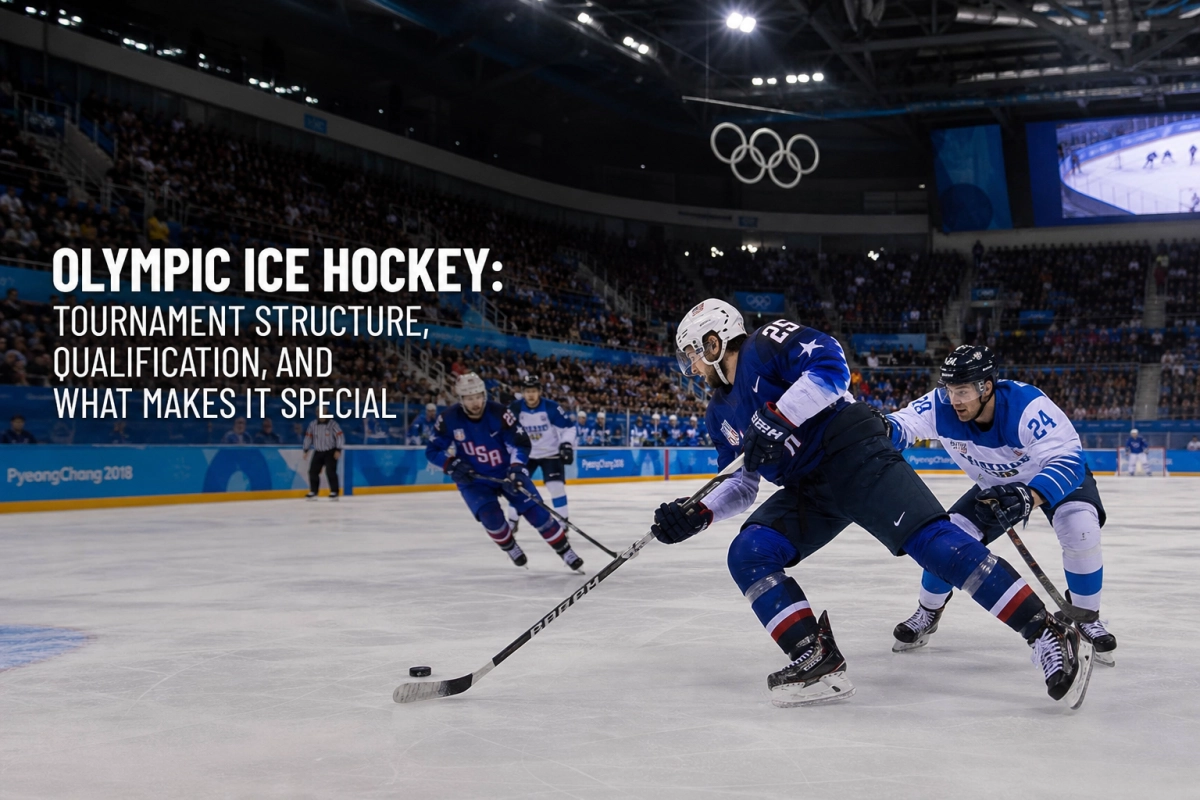









Why Junior International Hockey Tournaments Capture the Sport’s Biggest Spotlight
Few moments in hockey generate as much excitement as watching the world’s best teenage players compete under their national flags. International junior hockey tournaments serve as a proving ground where prospects transform from promising names on draft lists into genuine stars, and where entire countries rally behind players still years away from their professional prime. For fans, scouts, and coaches alike, these competitions offer high-stakes, fast-paced hockey played with visible hunger and national pride.
These tournaments bridge the gap between development hockey and the professional game, testing young athletes against international competition that domestic leagues cannot replicate. Understanding what they are, how they work, and why they matter is essential for any fan who wants to follow the sport more closely.
The IIHF World Junior Championship: The Tournament That Defines a Generation
The International Ice Hockey Federation (IIHF) World Junior Championship — commonly known as the World Juniors — is the centerpiece of international junior hockey. Held annually for players aged 20 and under, the tournament typically runs between late December and early January, making it a fixture of the holiday sports calendar in Canada, the United States, Russia, Sweden, and Finland. That timing has helped build its reputation as one of the most-watched junior sporting events in the world.
Ten national teams compete, split into two groups for a round-robin preliminary round. Teams accumulate points based on wins, overtime losses, and regulation losses. After the group stage, top teams advance to the quarterfinals, semifinals, and gold medal game. Teams finishing at the bottom face a relegation round, creating genuine stakes even for sides already eliminated from medal contention.
How Nations Qualify for the World Juniors
Qualification operates through a tiered system across multiple IIHF divisions, with promotion and relegation determining which ten nations compete at the top level each year. Traditional powerhouses — Canada, Russia, the United States, Sweden, and Finland — have historically maintained consistent presence. Nations like Slovakia, Switzerland, Latvia, and Germany have also become regular competitors, reflecting how the overall standard of junior hockey has risen across Europe.
Player eligibility adds further complexity. Rosters are assembled from players already in professional leagues, major junior competitions such as the Canadian Hockey League, and various European club systems. Building a cohesive team from players scattered across different leagues and training environments is itself part of what makes the tournament strategically compelling — and helps explain why individual games carry so much weight for the players and the NHL organizations watching closely.
Beyond the World Juniors: Other Major Junior Competitions
The World Juniors exists within a broader ecosystem of international junior tournaments, each serving a distinct purpose and targeting a different age group.
The IIHF Under-18 World Championship is perhaps the most significant complement. Reserved for players 18 and under, it captures prospects at an even earlier stage — often before they have been drafted by NHL teams and sometimes before they have become household names. For scouts, the Under-18 championship is invaluable precisely because it profiles players in a raw, unfinished state, revealing characteristics that polished statistics cannot always illuminate.
The Hlinka Gretzky Cup, held each summer, features under-18 national teams and operates as an early preview of the following year’s NHL Draft class. Because it takes place before most prospects have returned to their leagues for the season, it generates the first meaningful cross-national comparisons scouts can make between top draft-eligible players. A strong performance can elevate a prospect’s profile considerably, while struggles there prompt questions teams spend months trying to answer.
Regional Tournaments and Their Growing Importance
Outside the IIHF’s flagship events, regional junior tournaments serve as crucial stepping stones for nations still building their programs. For countries where professional infrastructure is still developing, these competitions function as both practical preparation and motivational benchmarks. Nordic countries in particular have long used regional tournaments to develop depth rather than simply relying on individual talent — an approach that has consistently produced NHL-ready players who understand positional play and defensive responsibility earlier than their North American counterparts sometimes do.
What These Tournaments Mean for Player Development
The developmental value of international junior hockey extends well beyond playing against top competition. The environment these tournaments create is genuinely unlike anything players encounter in domestic leagues.
Consider the compressed timeline. Unlike a regular season unfolding over months, an international junior tournament demands peak performance within days. Players must adapt quickly to new linemates, absorb a coaching system with limited practice time, and manage the psychological weight of elimination hockey almost immediately. This accelerates growth that a full domestic season cannot replicate — particularly the ability to perform under pressure in unfamiliar circumstances.
There is also something uniquely revealing about how players carry themselves when representing their country. The absence of contract negotiations and individual statistics strips away professional distraction. What remains is competitive instinct, willingness to sacrifice personal opportunity for team success, and the ability to lead under pressure. NHL organizations have long acknowledged that international junior performances offer a window into a prospect’s character that domestic statistics struggle to provide.
- Players must adapt to wider international ice surfaces, which demand different positioning and decision-making than standard NHL rinks.
- International refereeing styles and rule interpretations test a player’s ability to adjust their game in real time.
- Living and competing alongside teammates from different leagues builds adaptability that professional organizations increasingly value.
- Performing on a global stage with significant media coverage prepares prospects for the scrutiny of NHL life far sooner than domestic competitions typically would.
For NHL teams, these tournaments have become essential to the evaluation calendar. Scouts who track the same prospect across multiple international tournaments build a longitudinal picture that single-season statistics cannot offer, following how a player responds to adversity, handles increased responsibility, and develops year over year.
The Lasting Weight of a Junior Tournament Moment
International junior hockey tournaments are not simply auditions for the professional game, though they function as that too. They are complete competitions in their own right, carrying genuine stakes for the nations involved and real meaning for the players who represent them. A gold medal at the World Juniors is not a consolation prize on the way to a real career — for many players, it remains one of the defining achievements of their hockey lives, sitting alongside Stanley Cups and Olympic medals in how they remember what the sport has given them.
That emotional weight is part of what makes these competitions so effective as development tools. Players are not going through the motions of an exhibition. They are competing with urgency, playing every shift as though it genuinely counts, because it does. The lessons absorbed under those conditions — about composure, trust, sacrifice, and resilience — tend to stay with a player in ways that ordinary league games rarely produce.
For the sport itself, these tournaments serve a function no domestic league can replicate: they make hockey feel like something shared across borders. A fan in Finland watching their country face Sweden in a quarterfinal is connected to a fan in Saskatchewan watching Canada chase gold, not because their leagues overlap, but because the game becomes the common language. Junior international hockey reminds both audiences that the sport they love is genuinely global, and that its next generation of stars is being shaped, right now, on those same sheets of ice.
Scouts will continue refining their models, coaches will continue debating systems, and prospects will continue arriving at these tournaments carrying the hopes of entire national programs. What will not change is the fundamental truth that international junior hockey has always understood: that some of the most honest, revealing, and thrilling hockey ever played happens when young players compete for something larger than themselves, in front of a watching world that already knows their names.