






How the Winter Olympics Changed When NHL Players Were Finally Allowed to Compete
For most of the twentieth century, Olympic ice hockey operated under a strict amateur code. The world’s best professional players — the men who filled NHL arenas every winter and competed for the Stanley Cup — were simply not allowed to participate. That changed in 1998, when the International Olympic Committee and the NHL reached an agreement that transformed Olympic ice hockey into the most talent-rich international tournament on the planet. The story of how that happened, what it produced, and how it unravelled makes for one of the most compelling chapters in the history of the sport.
Before 1998, Olympic ice hockey was dominated by national amateur programs and, during the Cold War era, by Soviet and Czechoslovak teams whose players were technically classified as state-employed amateurs despite competing at a professional standard. Countries like Canada and the United States, whose top players competed openly in a professional league, were at a structural disadvantage. Canada, the country that invented the sport, went without an Olympic gold medal in men’s hockey from 1952 all the way until 2002. The exclusion of NHL players was widely seen as a significant reason why.
The 1998 Nagano Games and the Birth of a New Olympic Era
The Nagano Winter Olympics marked the first time active NHL players were eligible to represent their countries on the Olympic stage. The arrangement required the NHL to pause its regular season for approximately two and a half weeks — an extraordinary logistical concession reflecting enormous pressure from players, national federations, and broadcasters to finally assemble the world’s best talent in one tournament.
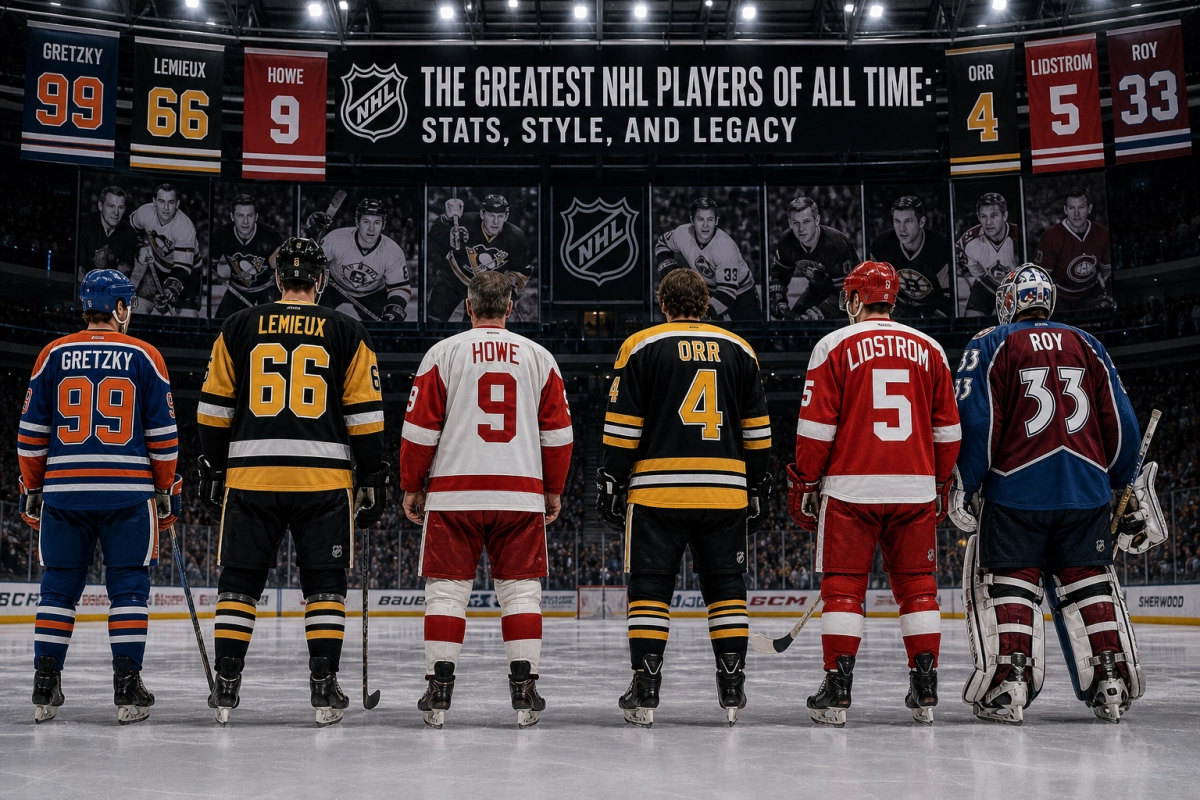
What followed was a genuine spectacle. Canada featured Wayne Gretzky, Eric Lindros, and Patrick Roy. The Czech Republic countered with Jaromír Jágr and goaltender Dominik Hašek, whose performance was arguably the finest goaltending display in Olympic history. He carried the Czech Republic to a gold medal that stunned the hockey world, while Canada and the United States were eliminated earlier than anticipated.
Nagano demonstrated something important: when NHL players competed on the wider Olympic sheet of ice — which encourages more skating space and a different style of play — the game became faster, more tactical, and more creative. That contrast generated enormous interest and set expectations for every Olympic tournament that followed.
Salt Lake City to Sochi: The Golden Era of NHL Olympic Hockey
If Nagano proved the concept, the tournaments that followed refined it. The 2002 Salt Lake City Games delivered what many Canadian fans consider the most emotionally significant moment in their country’s hockey history. Canada had not won Olympic gold in fifty years, and with a roster built around Mario Lemieux, Joe Sakic, and Steve Yzerman, they finally ended the drought with a gold medal victory over the United States. Streets across the country filled with celebrating fans, and the NHL’s decision to pause its season felt entirely vindicated.
The 2010 Vancouver Games pushed the drama further. Played on home ice with an entire nation watching, Canada navigated to the gold medal game against the United States. Sidney Crosby scored the winning goal in overtime — a moment replayed so frequently it has become embedded in Canadian cultural memory. It was the kind of singular event that only high-stakes international competition between the world’s finest players can generate.
The 2014 Sochi Games added further complexity. Canada successfully defended its gold medal, with Carey Price playing at a similarly dominant level to Hašek sixteen years earlier. Russia endured the agony of losing on home ice in the quarterfinals — a result carrying enormous political and cultural weight in a country where ice hockey occupies a near-mythological place in national identity. Across sixteen years of NHL participation, the Olympics had consistently delivered theatre that no other hockey tournament could match.
Why the NHL Walked Away in 2018
Given the goodwill and compelling sport the arrangement had generated, the NHL’s announcement in 2017 that it would not send players to the Pyeongchang Winter Olympics came as a genuine shock. The decision was driven primarily by economics.
At the heart of the dispute was money. The IOC had previously provided financial contributions to cover costs associated with pausing the NHL season — injury insurance, travel expenses, and lost revenue from rescheduled games. For 2018, the IOC declined to continue that arrangement, leaving the NHL to absorb costs valued in the tens of millions of dollars. From a business perspective, bearing significant financial risk for an event the league did not control and from which it derived limited commercial benefit was difficult to justify to protective team owners.
Secondary factors compounded the problem. The time zone difference between North America and South Korea meant games would air in the middle of the night for viewers in New York or Chicago, limiting the ratings boost that had made previous Olympics attractive. The NHL also pointed to disruption caused to playoff races during the regular season’s final stretch, when standings tighten and every game carries consequence.
The Players’ Perspective and the Collective Agreement
The league’s decision did not sit well with many of its players. For most elite hockey players, representing their country at the Olympics is categorically different from anything the NHL itself can offer. The Stanley Cup carries unmatched prestige within the professional game, but the Olympics connect players to national identity, amateur traditions, and a global audience extending well beyond the sport’s usual footprint. Several prominent veterans, recognising their Olympic windows were closing with age, expressed genuine frustration.
The NHLPA had historically driven NHL participation in the Olympics, and the 2017 withdrawal represented a rare instance where the league’s position directly contradicted what the union advocated. Because Olympic participation is governed in part by the collective bargaining agreement, any future return requires negotiated consensus rather than a unilateral decision by either side.
- The NHL cited the absence of IOC financial compensation as the primary reason for withdrawing from the 2018 Games.
- Time zone difficulties reduced the commercial value of Olympic broadcasts for the league’s main audience.
- Player sentiment remained strongly in favour of participation, creating persistent internal tension within the sport.
- The collective bargaining agreement gives players a formal role in future negotiations, preventing the league from acting alone.
The Road Back and What the Future Holds
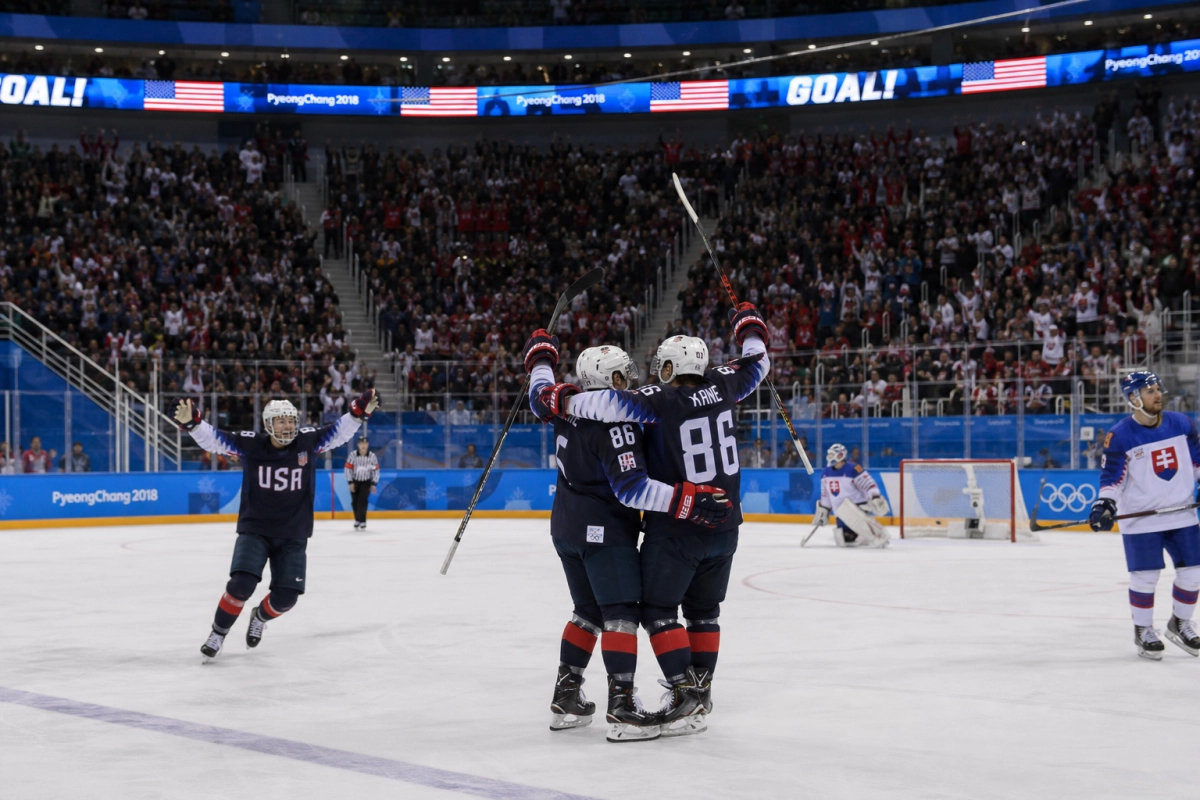
The 2018 Pyeongchang Games proceeded without NHL players, and the drop in quality was noticeable. Rosters were filled with AHL and European league professionals — talented, but not the men whose names filled highlight reels and sold out arenas. The tournament functioned as a sporting event, but lacked the narrative gravity that comes from knowing the absolute best in the world are competing.
The NHL and IOC subsequently agreed to restore participation for the 2022 Beijing Games, but that arrangement unravelled when the COVID-19 pandemic forced rescheduling of NHL games during precisely the window the Olympics required. The outcome was the same — a second consecutive Games without the world’s best players — though the circumstances were meaningfully different. The distinction mattered because it suggested the will to return existed, even when events conspired against it.
For the 2026 Milan-Cortina Winter Olympics, negotiations between the NHL, NHLPA, and IOC have continued with visible intent on all sides. The financial framework that collapsed ahead of 2018 remains the central point of discussion, alongside questions about insurance, scheduling, and fitting the two-and-a-half-week pause within an increasingly congested modern hockey calendar. There is genuine reason to believe a deal is achievable — both because the players want it and because the IOC understands that Olympic ice hockey without NHL professionals is a fundamentally diminished product.
What Twenty-Five Years of NHL Olympic Hockey Actually Proved
Strip away the negotiations and collective bargaining language, and what remains is a body of sporting evidence difficult to argue with. From Hašek’s singular performance in Nagano to Crosby’s overtime winner in Vancouver, the tournaments played between 1998 and 2014 produced moments that transcended the sport’s normal audience and reached people who never followed the NHL. That is what genuine global competition at the highest possible level does — it creates shared reference points and a standard of drama that no internally organised league can fully replicate.
The NHL’s withdrawal in 2018 interrupted the accumulation of new memories without diminishing the old ones. It reminded everyone involved that the arrangement between professional sport and the Olympics is always a negotiation, always contingent, and never guaranteed. The players understood instinctively what was being lost. The executives weighing insurance costs against scheduling disruption understood something different but equally real.
Both perspectives are legitimate. What the history ultimately demonstrates is that when the logistical and financial conditions align, NHL participation in the Winter Olympics produces something neither institution can manufacture independently — a tournament where the world’s best hockey players compete for national pride rather than a paycheck, under rules that reward skating and skill, in front of an audience stretching from downtown Toronto to the streets of Prague and Moscow. That combination, when it works, is genuinely irreplaceable.
The answer, when it eventually comes, will say a great deal about what professional hockey believes itself to be.