






Why Hockey Tournaments Shape the Sport’s Greatest Moments
Hockey is a sport defined by its competitions. While the regular season builds narratives over months, major hockey tournaments create the moments fans remember for decades — overtime goals, upset victories, dynasty runs, and national pride on full display. Understanding these tournaments, how they are structured and what they represent, gives any fan a far richer appreciation of the sport.
Competitive hockey spans both professional club competition and international play, operating on different calendars, different eligibility rules, and different emotional registers. A franchise chasing a championship for its city feels distinctly different from a national team carrying a country’s expectations. Yet both produce hockey of the highest intensity, drawing millions of viewers worldwide.
The Stanley Cup Playoffs: Professional Hockey’s Ultimate Prize
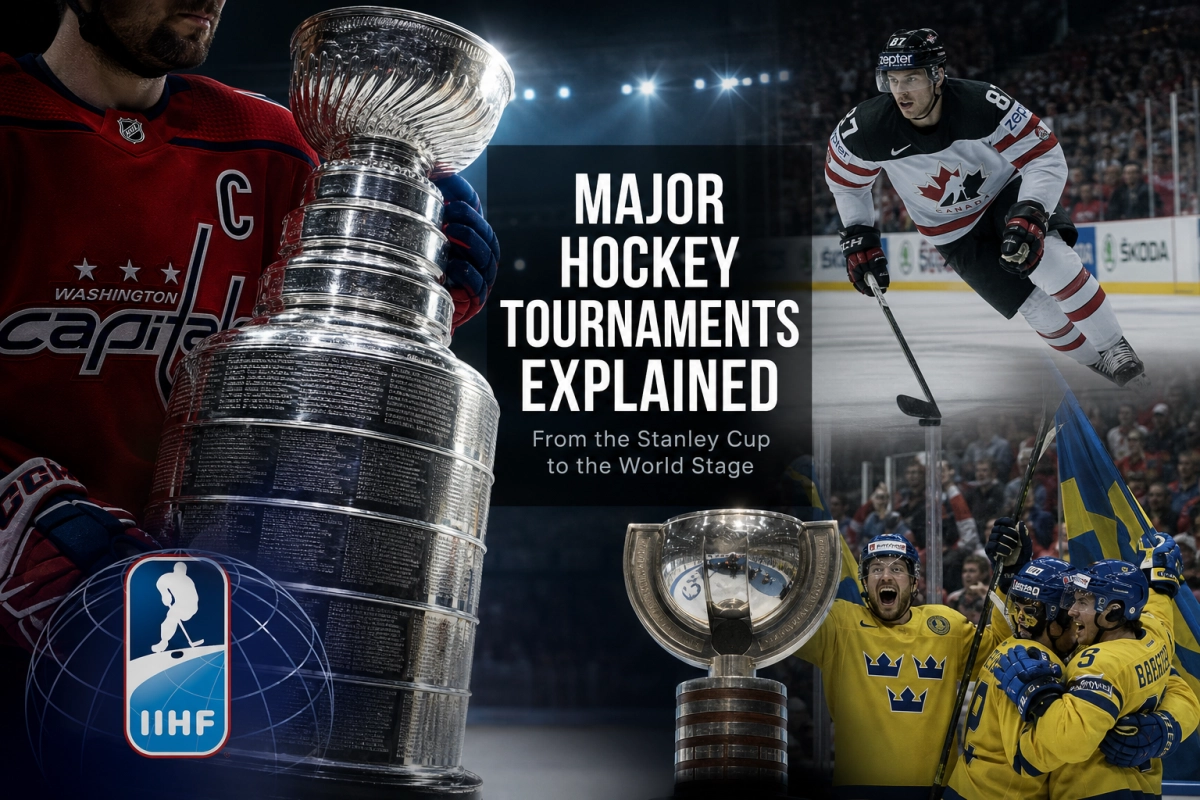
No trophy in team sports carries a legacy quite like the Stanley Cup. Awarded annually to the NHL champion, it is the oldest professional sports trophy in North America, first presented in 1893. The journey to lift it runs through one of the most demanding postseason formats in professional sport.
After an 82-game regular season, 16 clubs compete in a best-of-seven knockout format. To win the Stanley Cup, a team must win four such series — 16 victories across potentially 28 games of elimination hockey. The playoffs reward defensive structure, goaltending excellence, and the ability to perform under maximum pressure. Coaches tighten their systems, physicality increases, and the margin between winning and losing shrinks considerably.
A power play — when one team has a numerical advantage because an opponent is serving a penalty — becomes especially important in the postseason, where converting those opportunities can swing a series. Equally, penalty killing often separates playoff contenders from genuine champions.
The Cup itself carries a unique tradition: every player on the winning team has their name engraved on it, and each gets to spend a day with the trophy during the summer — reinforcing that it represents a shared achievement earned through collective sacrifice. The playoffs run from late April through mid-June, allowing momentum swings, comeback series, and breakout performances that define any given NHL season.
The IIHF World Championship: National Pride on the Postseason Stage
While the Stanley Cup Playoffs unfold in North America each spring, a separate and equally passionate competition runs simultaneously across the Atlantic. The IIHF World Championship brings together national teams from across the globe each May in a tournament that carries enormous cultural weight, particularly in Europe.
The timing creates an interesting dynamic. Teams whose NHL players are eliminated earliest field the strongest rosters, since those professionals become available. A country like Sweden or Finland benefits significantly when its players exit the playoffs early — but this is a well-understood feature of the tournament rather than a flaw in its design.
Participating nations compete in a preliminary round-robin stage, with top teams advancing to a knockout quarterfinal, then semifinals and a gold medal game. The tournament typically features sixteen nations in the top division, with promotion and relegation connecting it to lower tiers that give smaller hockey nations a meaningful structure to aspire toward.
For countries like Czech Republic, Slovakia, Latvia, and Denmark, the World Championship is not a consolation competition — it is the centrepiece of their hockey calendar. The tournament regularly fills large arenas, with fans traveling internationally to follow their teams. That atmosphere, combining club football passion with Olympic patriotism, gives the event an energy that professional league hockey cannot replicate.
The Winter Olympics: Hockey’s Most Prestigious International Stage
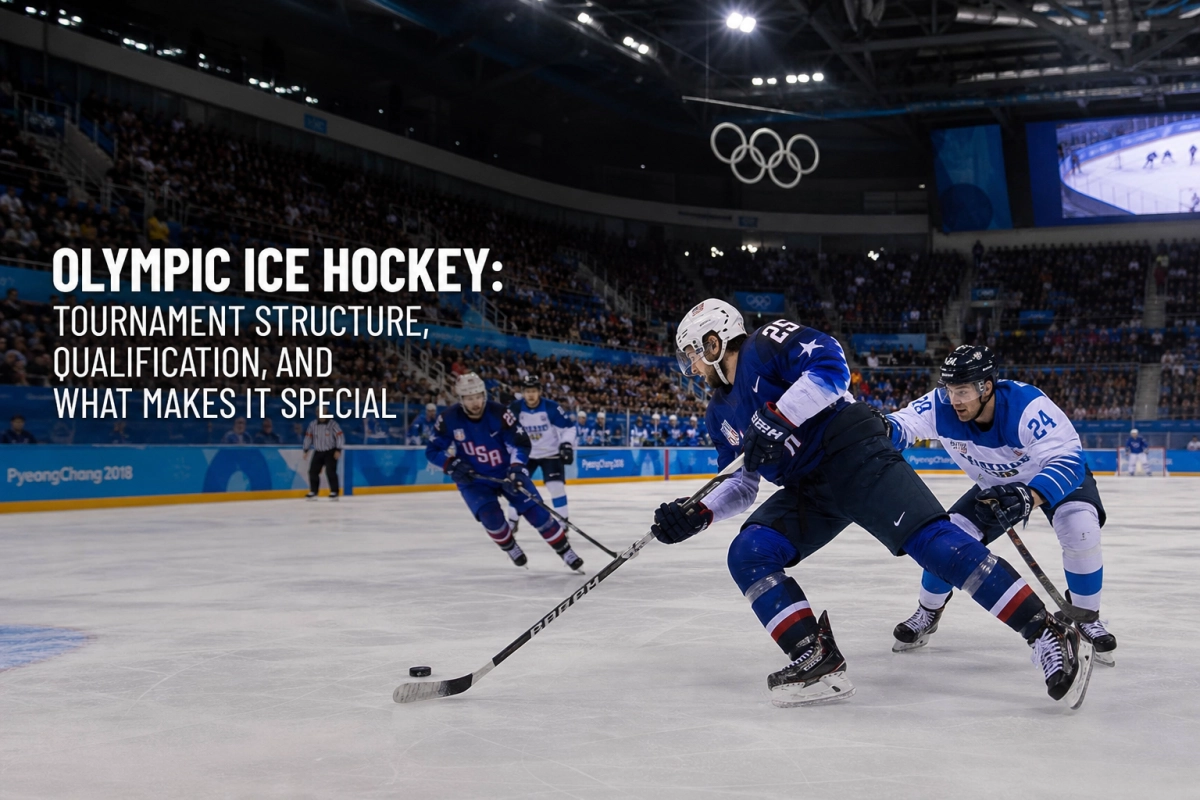
Every four years, the Winter Olympics elevates international hockey to an audience far beyond the sport’s core followers. The Olympic tournament carries a symbolic weight no other event can match. Winning Olympic gold in hockey means something distinct from every other championship in the sport.
The format condenses an entire national tournament into roughly two weeks. Teams play a short preliminary round before entering a single-elimination bracket, meaning one bad game ends a country’s tournament entirely. That compressed pressure produces extraordinary drama — and heartbreaking exits for teams that, over a longer format, might have proven themselves the stronger side.
NHL participation has shaped the modern Olympic tournament considerably. When the league began sending its players to the Games in 1998, the tournament transformed into a genuine best-versus-best competition. The gold medal game between Canada and the United States at the 2010 Vancouver Games, decided in overtime, is widely regarded as one of the finest hockey games ever played. Without NHL players, tournaments remain competitive and meaningful but inevitably prompt debate about whether results reflect the true global hierarchy.
The Olympic tournament also uses wider international ice surfaces than NHL rinks — a distinction that meaningfully changes the game, opening space for skilled players and reducing the grinding, board-battle style of professional playoff hockey. European players accustomed to the larger surface often adapt more naturally, adding another layer of competitive intrigue.
The World Junior Championship: Where Future Stars Announce Themselves
If the Olympics represent international prestige and the Stanley Cup Playoffs define professional excellence, the World Junior Championship occupies a uniquely exciting space: it is where the sport’s next generation announces itself to the world.
Held annually between Christmas and New Year’s, the tournament features players aged twenty and under, almost all on the doorstep of professional hockey. For NHL scouts, general managers, and fans of prospect development, it functions as a showcase of extraordinary importance. A dominant performance can reshape how a player is perceived heading into the NHL draft or a professional contract negotiation.
The holiday timing has become central to its identity in North America. Families gather to watch games that carry genuine competitive intensity alongside the added narrative of teenagers competing with the ferocity of seasoned professionals. Canada and the United States command North American attention, but Russia, Sweden, and Finland consistently contend for medals, and the tournament has produced breakthrough moments for countries not traditionally considered hockey powerhouses.
What distinguishes the World Juniors emotionally is the visibility it gives players before fame arrives. Watching a nineteen-year-old carry his country’s expectations — knowing that in two or three years he may be a household name — creates a particular investment no other tournament can manufacture. It does not just reflect the sport’s present. It previews its future.
European Club Competitions: The Champions Hockey League and Domestic Leagues
Beyond the international calendar, European club hockey operates through domestic leagues and cross-border competitions that give the sport a rich infrastructure entirely separate from the NHL. The Champions Hockey League brings together top clubs from Sweden’s SHL, Finland’s Liiga, Switzerland’s National League, Germany’s DEL, and others in a continental competition modeled loosely on European football. The tournament has grown steadily in prestige since its relaunch in 2014.
The domestic leagues carry enormous weight within their own borders. The Kontinental Hockey League, spanning Russia and several neighboring nations, operates as arguably the world’s second-strongest professional league, attracting European talent and North American players who prefer the international ice surface and a different style of game. The SHL and Liiga consistently produce players who arrive in the NHL already seasoned by high-level professional competition.
What distinguishes European club hockey culturally is how local identity anchors fanbases. Teams like Frölunda in Gothenburg, HIFK in Helsinki, or Metallurg Magnitogorsk carry regional pride in ways that mirror the most storied franchises in North American sport — a reminder that hockey’s heartbeat extends well beyond the cities on the Stanley Cup.
What Every Major Tournament Reflects About the Sport Itself
Taken together, the landscape of major hockey tournaments reveals why the sport endures across vastly different cultures and continents. Each competition serves a distinct purpose and produces a distinct kind of drama — yet all share the same essential quality: the game demands excellence in the same moment it punishes complacency.
The Stanley Cup Playoffs reward the deepest, most battle-tested organizations. The IIHF World Championship gives nations without professional league prominence a stage of genuine consequence. The Winter Olympics distill international competition into its most emotionally concentrated form. The World Juniors make the sport’s future visible and thrilling before it fully arrives. The European club competitions prove that the hunger to compete at the highest level is universal, not geographical.
For any fan approaching hockey seriously, following these tournaments across a full calendar year is the surest way to understand the sport in its entirety. The game does not live in any single event, league, or tradition. It lives in the accumulation of all of them — in the weight of the Cup, the roar of an Olympic crowd, the breakout performance of a teenager at the World Juniors, and the late-season intensity of a European club fighting for continental glory.
That breadth is not a complication. It is precisely what makes hockey one of the most richly layered competitive sports in the world.